Why a Dry Creek Bed Might Be Your Yard's Best Friend
A dry creek bed is a stone-lined channel that mimics a natural stream, designed to redirect rainwater runoff while adding visual interest to your landscape. When built correctly, it solves drainage problems, prevents erosion, and creates a low-maintenance landscape feature that looks beautiful year-round.
Quick Answer: How to Build a Dry Creek Bed
- Plan the path- Follow natural water flow and mark with spray paint
- Excavate- Dig a trench 12-18 inches deep with a 2:1 width-to-depth ratio
- Install fabric- Lay landscape fabric to prevent weeds and rock settlement
- Add gravel base- Cover with crushed pea gravel for drainage
- Place rocks- Position large boulders first, then fill with river rock
- Plant edges- Add native, drought-tolerant plants for a natural look
Materials Needed: Landscape fabric, river rock (2-8 inches), boulders (10+ inches), crushed pea gravel, sand or topsoil
Estimated Cost:$3-5 per square foot | Time Required: 8-16 hours
Yard drainage problems like puddles, muddy patches, and water pooling near your foundation are frustrating. A dry creek bed offers a neat solution that works with nature, preventing rainwater from carving channels through your landscaping or turning your lawn into a swamp.
This project has a dual purpose. In dry weather, it's an attractive landscape feature—a winding stone path adding texture to your yard. When it rains, it becomes a functional drainage system, channeling water where you want it. Dry creek beds can manage significant water flow with minimal maintenance once installed.
I'm David Shelly, a construction and landscaping professional with nearly two decades of experience designing and installing drainage solutions like dry creek beds. In this guide, I'll walk you through building a dry creek bed that solves drainage issues and becomes a standout feature of your landscape.
Planning Your Perfect Dry Creek Bed
The success of your dry creek bed is determined long before you pick up a shovel. Rushing into excavation can lead to a creek bed that doesn't follow the natural water flow or, worse, directs water toward your foundation. The planning phase ensures your drainage solution works and looks like it belongs in your landscape. We'll cover assessing your yard, gathering supplies, and checking local regulations.
Assessing Your Yard and Mapping the Path
To understand how water moves through your property, observe your yard after a heavy rain. Note where puddles form, where water flows, and identify any areas of erosion or persistent sogginess. Water flows downhill along the path of least resistance. Your dry creek bed should follow these natural patterns, enhancing what nature is already doing. Identify low spots, natural channels, and areas where water collects.
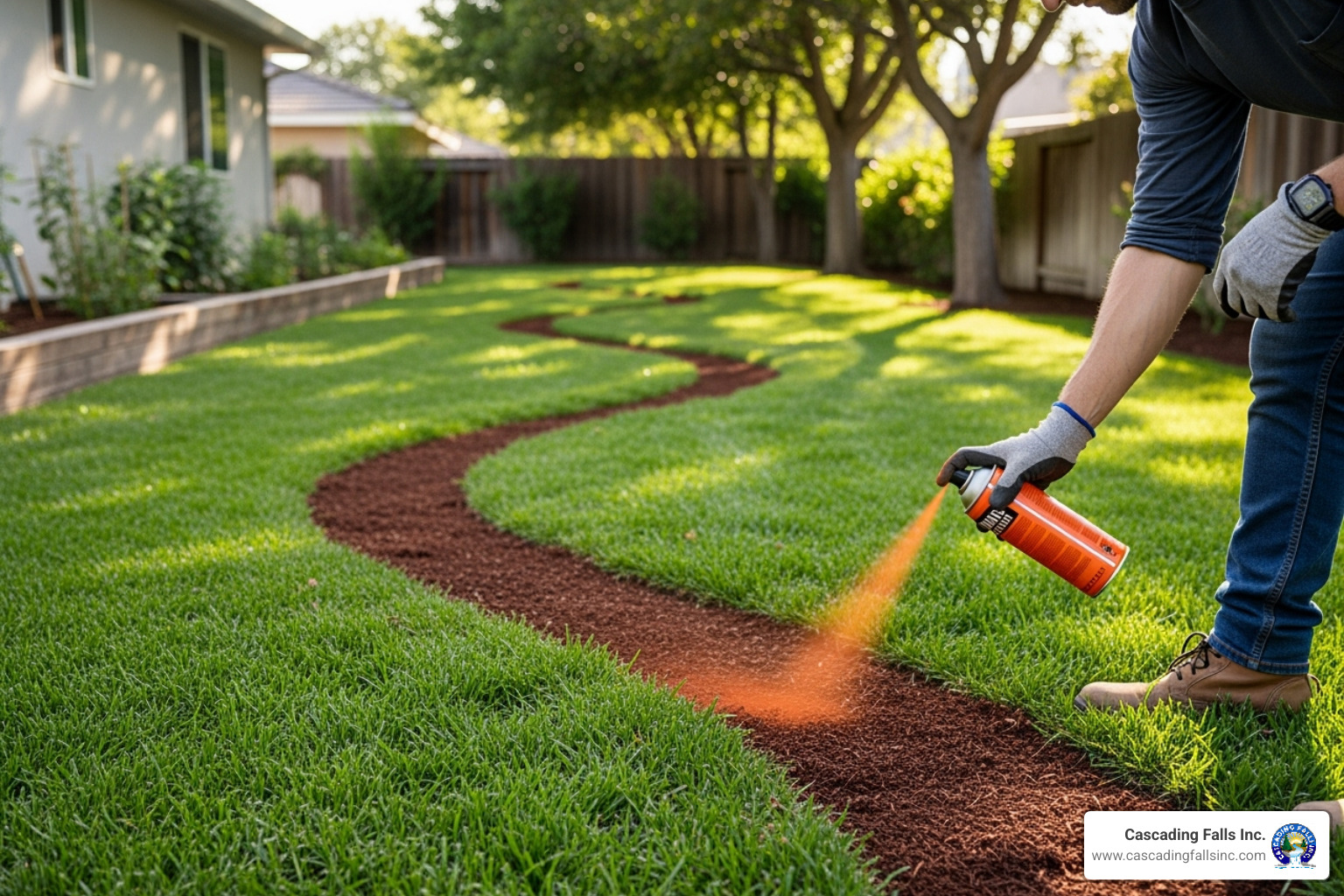
Once you've identified the general direction of water travel, map out your path. A gently meandering path looks more natural than a straight line. Use a garden hose to lay out and visualize the proposed route, experimenting with curves. Once satisfied, mark the edges with landscaper's spray paint. A narrower bed (2-3 feet) suits smaller yards, while larger properties may need a wider channel (4-6 feet or more). Match the size to your water volume and space.
Crucially, keep your creek bed at least 10 feet away from your home's foundation to move water away from structures.
Gathering Essential Tools and Materials
Avoid multiple trips to the hardware store by gathering all your supplies first. You'll need a digging shovel, a flat-bladed shovel, a wheelbarrow, and a hand tamper(or a rented plate compactor for larger jobs). Also, have a utility knife, work gloves, a level, measuring tape, string, and spray paint or garden hoses for marking.
For materials, you'll need river rock in various sizes (2 to 8 inches) for a natural look. Boulders(10 inches or larger) will anchor the design and define edges. Crushed pea gravel will form a drainage base.
Using the right landscape fabric is essential. Choose a heavy-duty, porous fabric that allows water to filter through, like this quality landscape fabric. It prevents weeds while allowing drainage. Never use plastic sheeting, as it will prevent water from absorbing into the ground. When selecting rocks, look for variety in size and color to create depth and interest.
Budgeting and Legal Considerations for Your Dry Creek Bed
A dry creek bed typically costs between $3 and $5 per square foot for materials. A modest 10-foot by 4-foot creek bed might run $120 to $200, while a larger 30-foot by 6-foot installation could cost $540 to $900. Plan on 8 to 16 hours for a typical residential project.
Before digging, address two legal points. First, check local drainage ordinances. It's typically illegal to direct runoff onto a neighbor's property or into the street. Your creek bed must end on your property, ideally in a rain garden, dry well, or natural settling area. The EPA offers great resources on rain gardens.
Second, and this is non-negotiable, call 811 before you dig. This free service marks underground utility lines, preventing dangerous and expensive accidents. Call a few days before you start. In our service areas of Sacramento and Roseville, varied terrain makes this step especially critical. With planning complete, you're ready to build with confidence.
Step-by-Step Construction Guide
Now that we've planned our dry creek bed, it's time for the physical work. This part is demanding, but seeing the first rainfall flow gracefully through your creation makes it all worthwhile.
Step 1: Excavation and Trenching
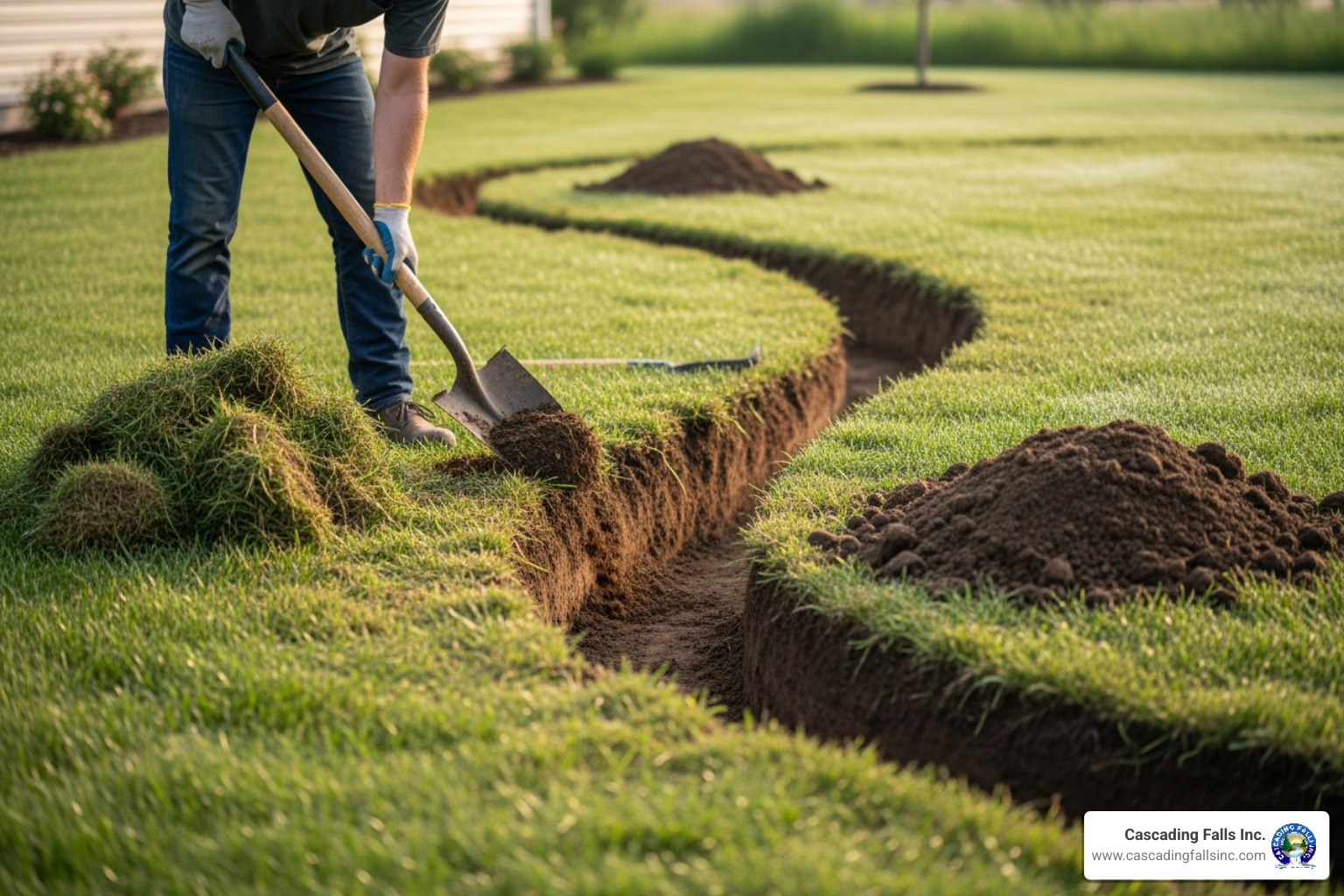
With the path marked, begin by removing grass and sod using a flat-bladed shovel. You can set the sod aside for use elsewhere.
Next, dig a trench 12 to 18 inches deep. For a natural look, follow a 2:1 width-to-depth ratio(e.g., a 12-inch deep trench should be 24 inches wide). The trench's center should be its deepest point, creating a bowl shape to channel water. Ensure a gentle, consistent downhill slope from start to finish, using a level to verify it.
Once the trench is dug, firmly tamp down the soil on the bottom and sides with a hand tamper or plate compactor. A well-compacted base is crucial for long-term stability and prevents future settling.
Step 2: Installing Landscape Fabric and Gravel
With the trench excavated and compacted, it's time to install the landscape fabric. This essential material prevents weeds and stops soil from mixing with the rock layers.
Unroll your heavy-duty, porous landscape fabric across the entire trench, including the sides. If you need more than one roll, overlap the seams by at least 6 inches to prevent weeds from breaking through. Secure the fabric with landscape pins or U-shaped staples, especially on curves.
Next, add a 1/2-inch to 1-inch layer of crushed pea gravel. This base provides drainage and creates a stable foundation for the decorative rocks, preventing them from shifting during heavy water flow.
Step 3: Placing Rocks and Boulders for a Natural Look
Now for the creative part: placing the rocks. Thoughtful placement is key to a natural look that mimics a real stream.
Start with your large boulders(10+ inches). Position them along the edges, especially on outside curves. For an authentic look, partially bury the boulders so about two-thirds is visible, making them appear settled into the landscape. Ensure they are level and stable.
Next, place your medium river rocks(2 to 6 inches) around the boulders and along the sides in irregular, organic patterns. Finally, fill the remaining areas with smaller river rock and gravel(3/4 to 1 1/2 inches), covering all visible landscape fabric.
To create a stunning, authentic look, vary the rock sizes, shapes, and colors. Mix smooth river rocks with more angular pieces and different shades (grays, tans, rust). Place smaller rocks on larger ones or in clusters to mimic natural formations. This detail creates depth and realism. Step back frequently to assess your work from a distance and make adjustments as you go.
Enhancing and Maintaining Your Creation
With construction complete, it's time to improve your dry creek bed with plants and creative features, and to understand the simple maintenance required to keep it looking great.
Landscaping Your Dry Creek Bed with Plants
Adding plants along the edges softens the rock lines, blends the creek bed into the landscape, and helps with bank erosion. The right plants transform the feature into a natural-looking part of your yard.
Choose plants suited to your local climate. Drought-tolerant and native species are excellent choices for the well-drained soil near a creek bed. Using native plants creates a sustainable landscape that supports local ecosystems and requires less maintenance.
Good plant choices include Agave americana, Blackfoot Daisy, Gulf Muhly, Liatris(Blazing Star), Purple Coneflower, and Yarrow. To plant, cut an "X" in the landscape fabric, fold back the flaps, and plant in the soil beneath. This integrates the plants while maintaining the fabric's weed-blocking benefits.
Integrating Creative Features and Designs
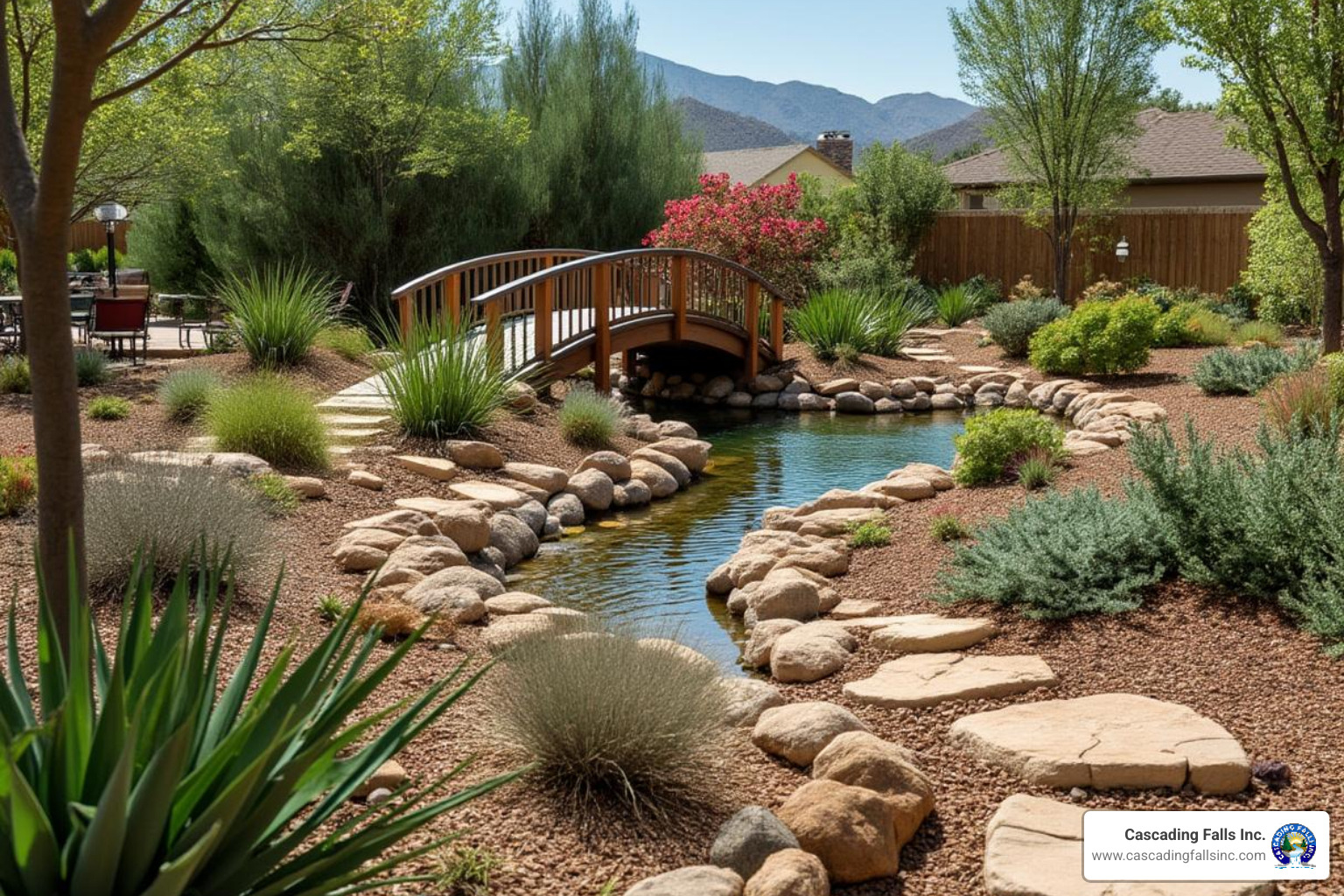
A dry creek bed is also a chance for creative expression. Integrating features can improve its aesthetic appeal and functionality. For wider beds, a small bridge adds a charming focal point. You can anchor flat-top rocks with cement to create stable supports.
Stepping stones are another practical option, creating an informal path across the bed. You can also add decorative elements like driftwood, a mossy log, or low-voltage lighting to highlight the feature at night.
For a quick dose of inspiration, check out this TikTok video of a homeowner's DIY dry creek bed project. These creative touches can significantly improve curb appeal.
Long-Term Maintenance Tips
A key benefit of a dry creek bed is its low maintenance. Once installed, it requires far less attention than a lawn or garden bed, letting you enjoy your yard more.
Your main task is removing leaves and debris in the fall and spring with a rake or leaf blower. This prevents organic matter from breaking down into soil that encourages weeds.
Occasional weeding may be necessary. Simply pull any weeds that pop through the fabric by hand. After heavy rains, do a quick check for rock displacement and reposition any stones that have shifted. That's it! Your dry creek bed is a resilient, self-sufficient feature that solves drainage issues while looking beautiful year after year.
Frequently Asked Questions about Dry Creek Beds
Here are answers to some of the most common questions we hear from homeowners considering a dry creek bed.
How does a dry creek bed compare to a French drain?
This is a common question. While both manage water, they work differently, and choosing the right one is crucial.
A dry creek bed is a visible, aesthetic solution for managing surface water runoff. It catches and redirects water flowing across your yard during rain, slowing it down to allow for absorption.
A French drain is a hidden, underground system that handles subsurface water (groundwater). It consists of a perforated pipe in a gravel-filled trench. If your yard is constantly soggy or your basement is wet, a French drain is the appropriate solution.
In short: use a dry creek bed for surface runoff and erosion during storms. Use a French drain for a constantly soggy yard. The two can be combined for a comprehensive solution.
Where should the water from a dry creek bed go?
Planning a proper destination for the water is critical for responsible water management. The best endpoint is a natural settling area on your property where water can slowly soak into the ground.
A rain garden is an excellent terminus. These planted depressions are designed to absorb runoff and are beautiful additions to a landscape. The EPA has wonderful information about how rain gardens manage stormwater.
Another option is a dry well, an underground chamber that stores and slowly releases water into the soil. Never direct water onto a neighbor's property or into the street; it's often illegal and creates other problems. The solution must be contained on your property.
Can a dry creek bed be installed on a steep slope?
Yes, a dry creek bed is an excellent solution for a steep slope. Slopes are prone to erosion as rushing water carves channels and washes away soil and plants.
A dry creek bed on a slope slows water down. The rocks and boulders create friction, dissipating the water's energy and allowing it to soak into the ground instead of causing erosion. This turns a problem into an attractive feature.
For steeper slopes, use larger boulders and consider digging a deeper channel for stability. Creating small cascades or "spill rocks" can further reduce water velocity and add visual interest.
In our work across Roseville and Sacramento, we've seen dry creek beds effectively turn erosion-prone slopes into stunning, functional landscape features.
Conclusion
We've covered the entire process of building a dry creek bed, from planning and excavation to the artful placement of rocks. This project transforms a drainage problem into a beautiful landscape feature.
This project solves two problems at once: it manages drainage and prevents erosion while creating a beautiful, low-maintenance feature that adds character to your property year-round. There's deep satisfaction in a DIY project like this. A weekend of work provides years of improved curb appeal and functionality with minimal maintenance—just occasional debris removal.
However, not every project is suited for DIY. If the scope is too large, the slope too challenging, or the drainage issue too complex, calling an expert is a wise choice. There's absolutely no shame in calling in the experts.
At Cascading Falls Inc., we've spent nearly two decades creating beautiful, functional outdoor spaces throughout Roseville, Sacramento, and across California. Our team brings that "Whatever It Takes..." commitment to every project, whether it's installing a comprehensive drainage system, designing custom hardscaping, or creating the complete landscape change our clients envision.
If your project feels too big, too steep, or too time-consuming—or if you simply want the peace of mind that comes with professional installation— explore our professional Landscaping Services to see how we can help bring your vision to life. From drainage solutions to complete yard makeovers, we're here to make it happen.