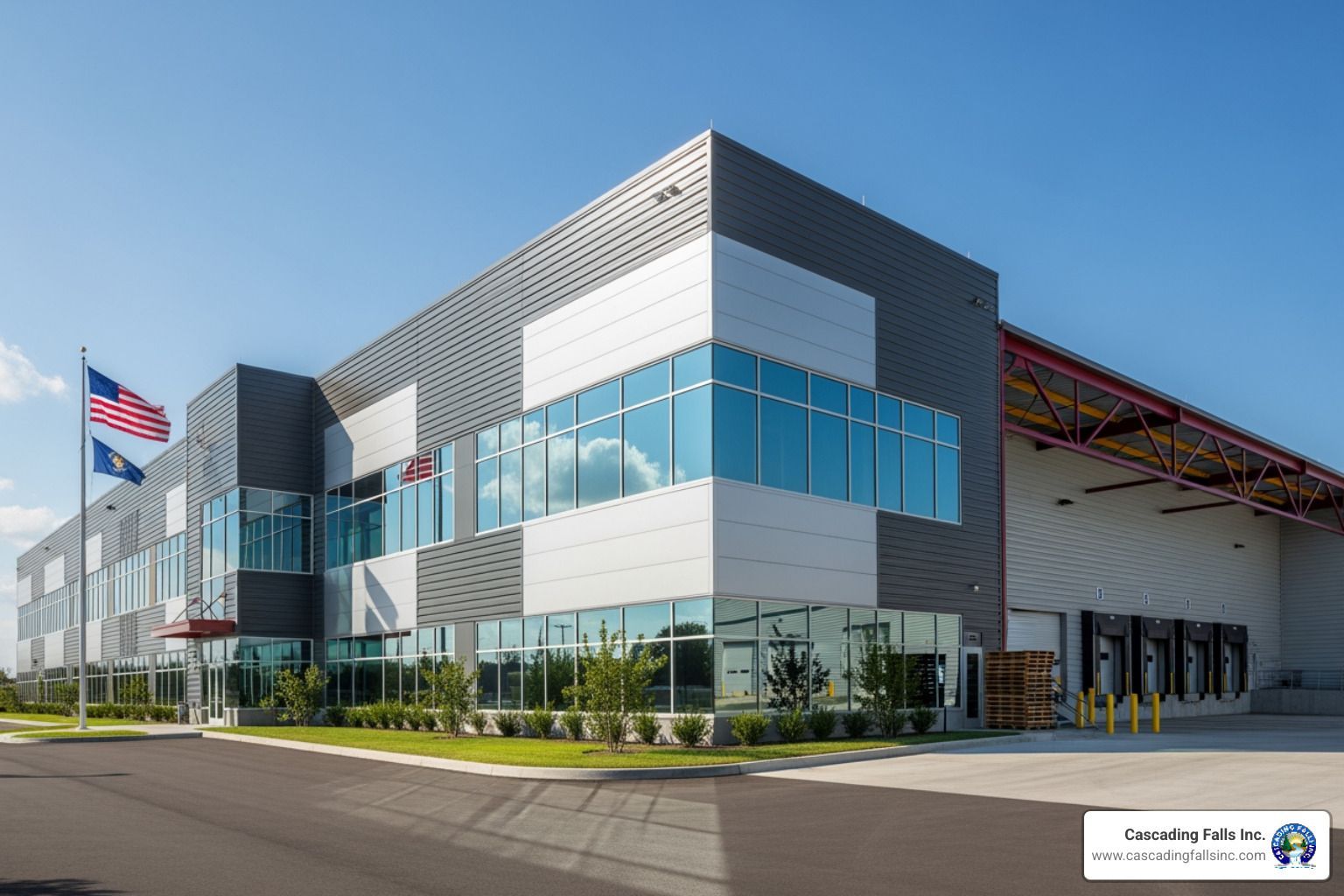
Why Adding Outdoor Lighting Transforms Your Property
When you add outdoor light to your home, you immediately improve safety, boost security, and improve curb appeal. From illuminating a dark entryway to highlighting architectural features, outdoor lighting serves both functional and aesthetic purposes.
Quick Answer: How to Add Outdoor Light
- Plan your lighting- Identify areas needing light (entryways, pathways, security zones).
- Choose your power source- Hardwired, solar, plug-in, or low-voltage.
- Select appropriate fixtures- Ensure they're rated for wet or damp conditions.
- Install safely- Turn off power at the breaker and use proper wiring techniques.
- Test and adjust- Verify all fixtures work and provide the desired coverage.
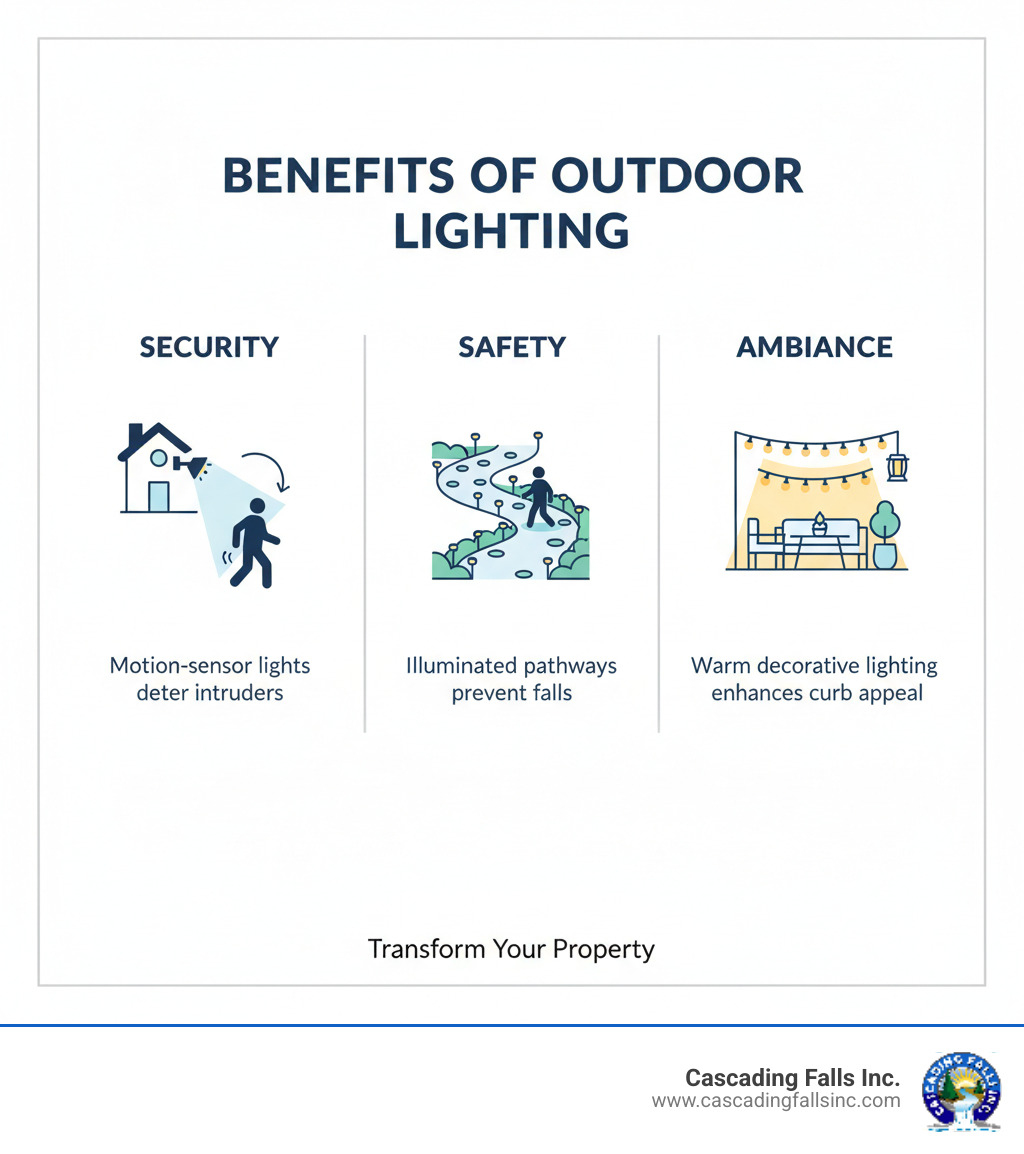
The benefits are clear: security lighting deters intruders, safety lighting prevents falls, and decorative lighting adds character and value to your property. While a professional installation can cost between $2,000 and $4,000, many DIY projects can be done for as little as $50 per fixture.
This guide will walk you through everything you need to know to add outdoor lighting, from planning and fixture selection to installation. I'm David Shelly, and with nearly two decades in construction and landscape design, I'll share practical insights to help you confidently tackle your lighting project.
Planning Your Outdoor Lighting Project
A successful outdoor lighting project begins with a solid plan. Think of your outdoor areas as extensions of your home; light them with the same intention you would your living room. Start by defining the purpose: Do you need to illuminate a dark stairway, create a cozy patio space, or secure your property? Understanding the goal will guide your choices.
Modern outdoor lighting blends functionality with aesthetics. Let your home's architecture guide your style—craftsman homes suit warm, oil-rubbed bronze fixtures, while modern homes pair well with sleek stainless steel. Your power source is another key consideration: hardwired lights are reliable but require more work, while solar and plug-in options offer convenience and flexibility.
Key Lighting Concepts
- Layering Light: Combine different types of lighting to create depth and interest. Use general lighting for overall illumination, safety lighting for paths and stairs, and accent lighting to highlight features like trees or stonework.
- Types of Lighting: Mix and match decorative, landscape, and security lights. Decorative fixtures like wall sconces and string lights create ambiance. Landscape lights, such as path lights and spotlights, improve safety and showcase your yard. Security lights, including motion-sensor floodlights, deter intruders.
- Choosing Fixtures and Bulbs: Pay attention to brightness (lumens) and color temperature (Kelvin). Use 100-200 lumens for path lights and 700-1300+ for security floodlights. Warm white light (2700K-3000K) is inviting for social areas, while cool white light (4000K-5000K) is ideal for security and task zones. Always choose energy-efficient, long-lasting LED bulbs.
- Weather Resistance: Fixtures must be rated for outdoor use. Use UL Damp rated lights for covered areas like porches and UL Wet rated lights for locations directly exposed to rain and snow. You can learn more about these safety standards from organizations like Underwriters Laboratories (UL). Consider Dark Sky-compliant fixtures to reduce light pollution.
Strategic Placement
- Entryways: Use porch lights or wall sconces to create a welcoming and safe entrance.
- Pathways and Stairs: Essential for preventing trips and falls. Use path lights, step lights, or bollard lights for consistent illumination.
- Architectural Features: Use uplighting to highlight textured walls or downlighting from eaves to create dramatic shadows.
- Gardens and Trees: Use spotlights and in-ground lights to extend your landscape's beauty into the evening.
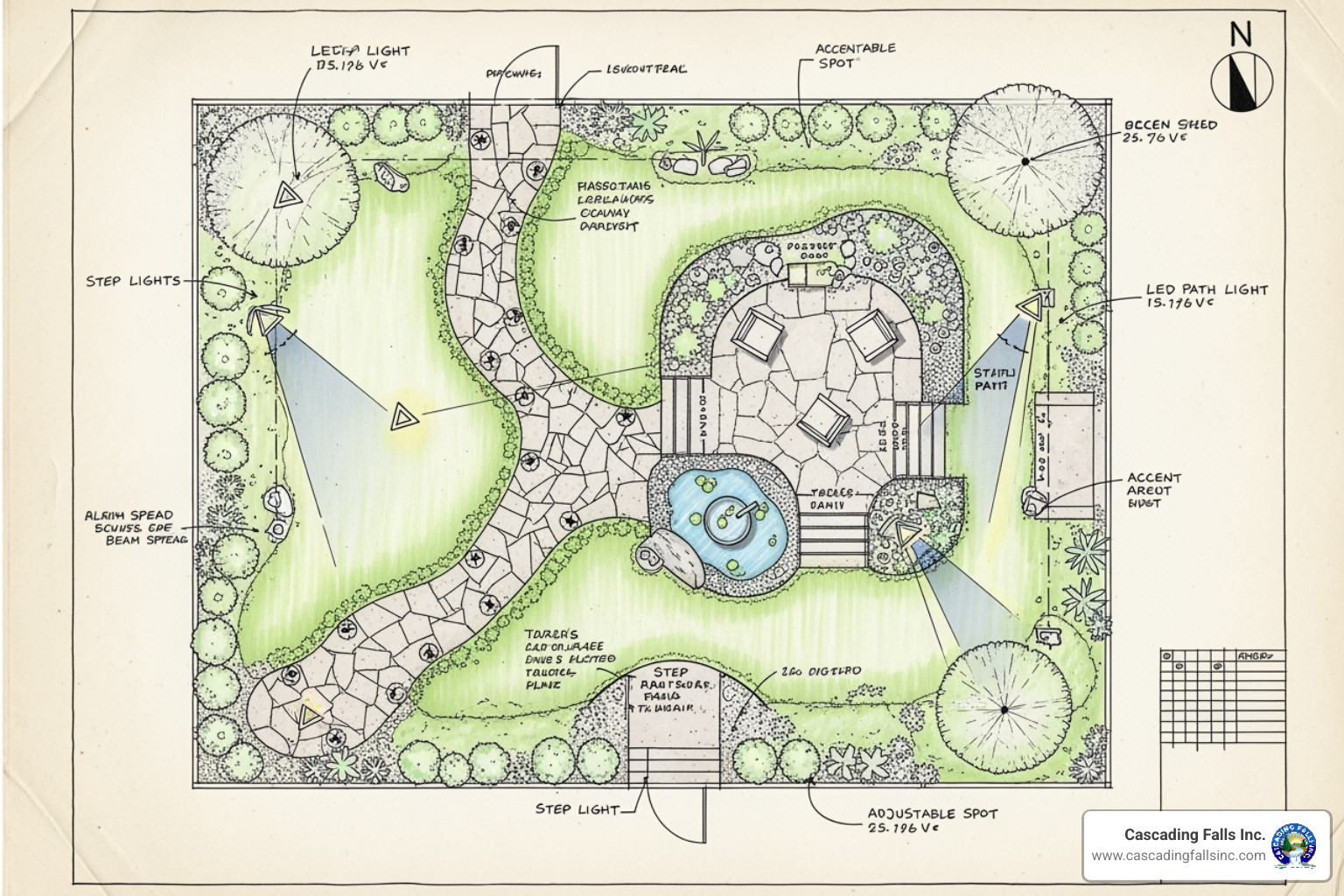
Creating a simple sketch of your property, marking where you want lights and what type they should be, will help you visualize the final result and ensure a cohesive design. For homeowners seeking a transformative design, our team at Cascading Falls Inc. creates custom lighting plans. More info about our design services.
How to Add an Outdoor Light: A Step-by-Step DIY Guide
Installing a basic outdoor light fixture is a satisfying weekend project for those with intermediate DIY skills, typically taking about 2 hours. However, electricity demands caution. If you feel uncertain at any point, call a qualified electrician. Your safety is paramount.

Equipment and Materials
Gather your supplies before you start. You'll need a drill, jigsaw, non-contact voltage tester, wire strippers, pliers, screwdrivers, and a level. For materials, you'll need your new UL-rated outdoor light fixture, an old-work electrical box, 12-gauge electrical wire (if running a new line), wire nuts, and exterior-grade caulk. A basic installation should cost around $50 for the fixture and materials.
Safety First: Preparing for Installation
This step is non-negotiable. Turn off the power by flipping the correct circuit breaker at your main electrical panel. If you're unsure which breaker it is, turn off the main breaker for the entire house. Always verify the power is off with a voltage tester before touching any wires. Work only in dry conditions and read the fixture's instructions before you begin.
The Installation Process
With safety confirmed, you can begin the installation.
- Drill a Pilot Hole: Choose your fixture location and drill a small pilot hole through the exterior wall. Check inside for obstructions like studs or pipes before cutting a larger opening.
- Cut the Opening: Trace the outline of your old-work electrical box and use a jigsaw to cut the opening.
- Run the Wire: Route new 12-gauge electrical wire from a power source (like a nearby switch or outlet) to the new fixture location. Use fish tape to guide the wire through wall cavities. Leave 8-10 inches of extra wire at both ends. If running wire on the exterior, it must be protected by conduit.
- Install the Electrical Box: Secure the old-work box into the opening. Its built-in clamps will hold it firmly in place.
- Strip and Wire the Fixture: Use wire strippers to remove about 3/4 inch of insulation from the black (hot), white (neutral), and copper/green (ground) wires. Connect the wires using wire nuts: ground to ground (green/copper), neutral to neutral (white), and hot to hot (black). Gently tuck the connections into the box.
- Mount and Seal the Fixture: Attach the fixture's mounting strap to the electrical box, ensuring it's level. Secure the light fixture to the strap. Apply a bead of exterior-grade caulk around the base where it meets the wall to create a weatherproof seal.
- Restore Power and Test: Flip the circuit breaker back to the ON position and test your new light. If it doesn't work, turn the power off again and double-check your connections.
If you'd rather have professional help, our team at Cascading Falls Inc. is ready to ensure the job is done safely and beautifully.
Exploring DIY-Friendly and Alternative Lighting Options
If you want to add outdoor light without complex wiring, several easy-to-install alternatives can transform your space in minutes. These options are perfect for renters, for testing layouts, or for anyone preferring a simpler project.
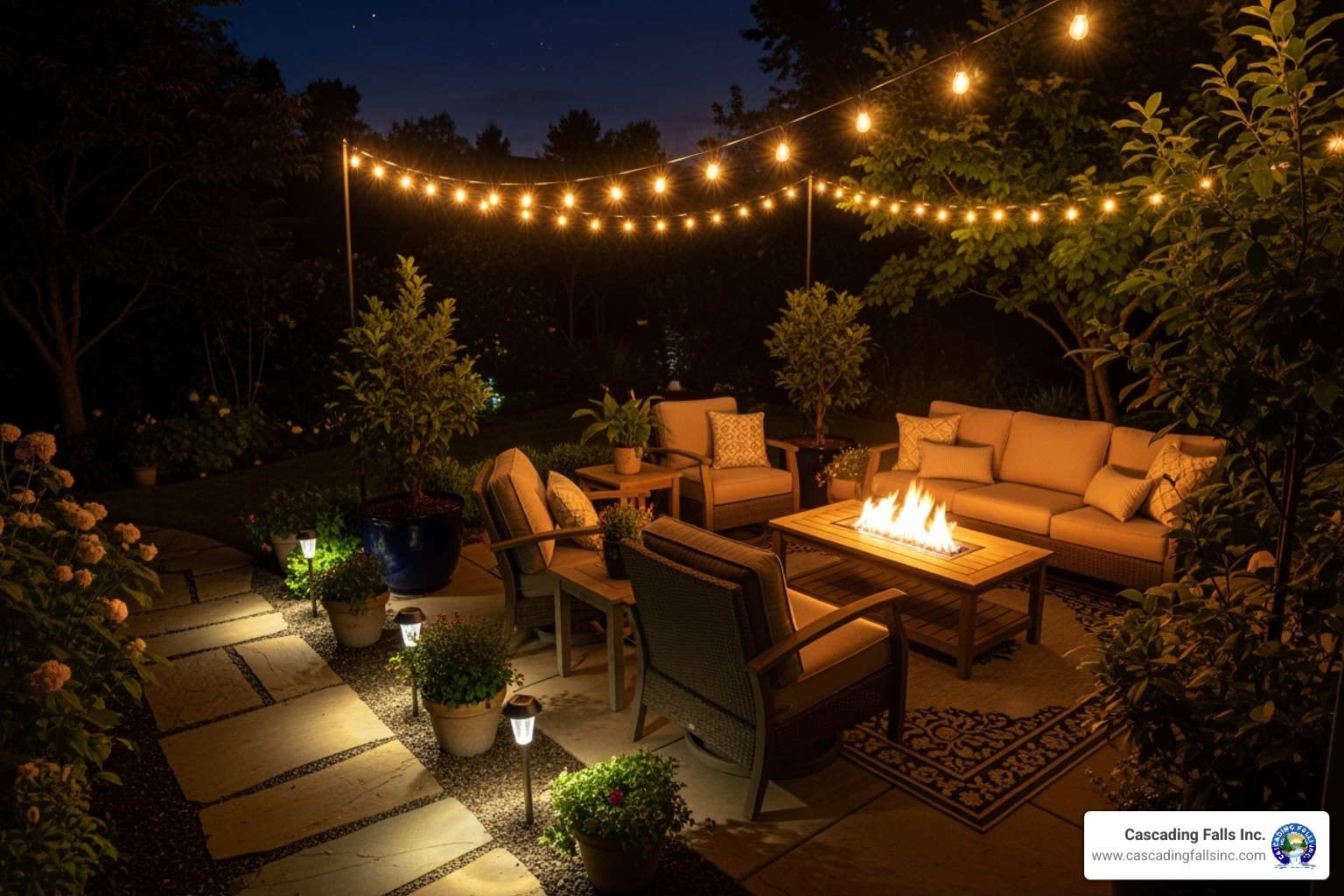
Easy-to-Install Solar and Plug-In Lights
Solar-powered lights are incredibly convenient. They charge during the day and turn on automatically at dusk, requiring no wiring or energy costs. Simply stake solar path lights along walkways, mount solar step lights on stairs, or use solar spotlights to highlight garden features. While great for ambient and safety lighting, they may not be as bright as hardwired fixtures for high-security needs.
Plug-in string lights, especially popular Edison-bulb styles, create instant ambiance on patios and decks. They plug into any standard outdoor GFCI outlet. Similarly, low-voltage landscape kits include a transformer that plugs into an outlet, powering multiple path or spotlights via safe, easy-to-run wires.
The Power of LED and Smart Lighting
We almost always recommend LED options for outdoor lighting. They are far more durable and energy-efficient than traditional bulbs, with lifespans of 25,000 to 50,000 hours. This means lower electricity bills and years of maintenance-free operation.
Smart lighting features add another layer of convenience:
- App and Voice Control: Turn lights on/off, dim them, or even change colors using your smartphone or a voice assistant like Amazon Alexa or Google Assistant.
- Timers and Scheduling: Automate your lighting to turn on at dusk and off at dawn, or create schedules to improve security when you're away.
- Motion Activation: A key security feature, motion sensors trigger lights only when movement is detected, saving energy while deterring intruders and alerting you to activity.
Frequently Asked Questions about Adding Outdoor Lights
When homeowners decide to add outdoor light, a few common questions always come up. Here are the answers to the ones we hear most often.
Is warm white or cool white better for outdoor lights?
There's no single best option; it depends on the purpose.
- Warm white (2700K-3000K) provides a cozy, inviting glow. It's perfect for seating areas, patios, and anywhere you want to create a relaxing atmosphere.
- Cool white (4000K-5000K) offers clear, bright light. Use it for security lighting, task areas, and pathways where clear visibility is a priority.
For a balanced design, we often recommend using warm white for social spaces and cool white for security and safety zones.
How can I add an outdoor light for improved security?
Effective security lighting is a powerful deterrent. Here are the key strategies:
- Use Motion-Activated Floodlights: Place them near entry points, the garage, and dark side yards. The sudden light startles intruders.
- Proper Placement: Mount lights at least 9 feet high to cover a wide area and prevent tampering. Aim them downward to illuminate the ground effectively.
- Eliminate Shadows: Layer different types of lighting (overhead, wall-mounted, landscape) to remove hiding spots.
- Consider Dusk-to-Dawn Sensors: These automatically turn lights on at sunset and off at sunrise for consistent, hassle-free protection. For security, choose fixtures with 700 to 1300+ lumens.
What should I budget when I add an outdoor light?
Costs vary widely based on the project's scope.
- DIY Projects: A simple DIY installation, like a single porch light, can cost as little as $50 for the fixture and materials, assuming you own basic tools.
- Professional Installation: For a comprehensive, professionally designed and installed system covering your entire property, homeowners typically invest between $2,000 and $4,000. This covers design, high-quality fixtures, wiring, transformers, and labor. For example, a system with eight LED step lights and 12 hardscape lights averages around $3,000.
While DIY saves money on smaller jobs, professional installation is ideal for complex designs, ensuring a safe, cohesive, and beautiful result. At Cascading Falls Inc., we apply our "Whatever It Takes..." approach to deliver the lighting you envision.
Conclusion
We've covered everything from planning and fixture selection to DIY installation and smart lighting alternatives. You should now feel confident and inspired to add outdoor light to your property. Thoughtful lighting does more than just illuminate; it increases home value, improves safety for your family and guests, and boosts security for true peace of mind.
A simple DIY project like installing a new porch light is an achievable and rewarding goal. However, for a complete outdoor change with layered, architectural, and landscape lighting, professional expertise is invaluable. A pro ensures a cohesive design, flawless execution, and long-term safety.
At Cascading Falls Inc., we bring years of design experience and our "Whatever It Takes..." commitment to every project in Roseville, Sacramento, and beyond. Your home deserves to shine after the sun goes down. Let's make it happen.
Contact Us for a professional landscape lighting consultation