Why a Dry Yard is a Happy Yard
Yard drainage solutions are systems designed to prevent water from pooling in your landscape by redirecting it away from your home's foundation. Whether you're dealing with soggy patches, mosquito breeding grounds, or basement moisture, proper drainage protects your property value and your family's health.
Common Yard Drainage Solutions:
- Grading and Swales- Reshaping your yard's slope to direct water naturally ($500-$2,000)
- French Drains- Subsurface pipes that collect and redirect groundwater ($1,000-$4,000)
- Channel Drains- Surface systems for driveways and hardscapes ($3,000-$9,000 per 100 ft)
- Catch Basins- Collection points that funnel water into underground pipes
- Dry Wells- Underground storage that slowly releases water into soil (up to $5,000)
- Rain Gardens- Native plantings that absorb excess water naturally ($500-$3,000)
- Downspout Extensions- Simple fixes to move roof water away from foundations
Standing water is more than an eyesore; it kills grass, attracts mosquitoes, and can cause serious foundation damage. Water pooling near your home weakens the surrounding ground, leading to mold, wood rot, and costly structural issues that are far more expensive than prevention.
I'm David Shelly, and for nearly two decades, my landscape construction business has designed and installed effective yard drainage solutions for clients in Roseville and Sacramento. I've seen how the right system transforms a muddy, unusable yard into a beautiful, functional outdoor space.
Recognizing and Understanding Yard Drainage Problems
Before fixing your drainage issues, you need to identify the warning signs.
Puddles that stick around after rain are a clear red flag. If water sits for more than a few hours, it can suffocate your grass and plant roots.
Water in your basement or crawl space is a more serious sign that water is pooling against your foundation. This intrusion can lead to expensive mold, mildew, and structural damage.
Look for cracks or water stains on your foundation. When waterlogged soil expands and contracts, it puts enormous pressure on foundation walls, eventually causing them to crack.
Soil erosion, where dirt washes away from slopes or plant beds, indicates your yard isn't handling water flow properly. This can undermine hardscapes and kill plants.
Constant mosquito problems often point to standing water, as these pests breed in stagnant puddles.
Dying grass or yellowing patches can be a sign of too much water. Waterlogged soil drowns plants by cutting off oxygen to the roots.
Muddy spots that never dry out are clear evidence that water isn't moving through your soil as it should.
Ignoring these warning signs can lead to expensive repairs, such as foundation work that can run into tens of thousands of dollars. Proper yard drainage solutions protect your biggest investment—your home. Recognizing the problem is the first step toward fixing it.
More info about our landscaping services.
The Critical Role of Gutters and Downspouts
Your home's first line of defense against water damage is its gutters and downspouts. They are designed to collect rainwater from your roof and direct it safely away from your foundation.
Clogged gutters are a common culprit. When leaves and debris create dams, water overflows and pools directly against your house. The fix is simple: clean your gutters at least twice a year, typically in the spring and fall.
Even with clean gutters, the water needs to be moved far from your home. Downspout extensions are an inexpensive and effective way to channel water several feet away from the foundation. Splash blocks placed under downspouts also help by dispersing water to prevent erosion and mud splatter on your siding.
Before investing in complex systems, inspect your gutters and downspouts. Ensure they are clean, properly sized, and direct water at least 4-6 feet from your foundation. These basic DIY tips are incredibly effective at protecting your home and often solve more drainage problems than you'd expect.
Simple & Natural Yard Drainage Solutions
Often, the best yard drainage solutions work with nature, are DIY-friendly, and can be beautifully integrated into your landscape.
1. Grading and Swales
A fundamental drainage principle is grading: ensuring your yard slopes away from your home. Ideally, the ground should drop about 6 inches over the first 10 feet from the foundation. This gentle slope directs water away, preventing accumulation and damage. Regrading can cost between $500 and $2,000, but smaller areas can be a DIY project using topsoil.
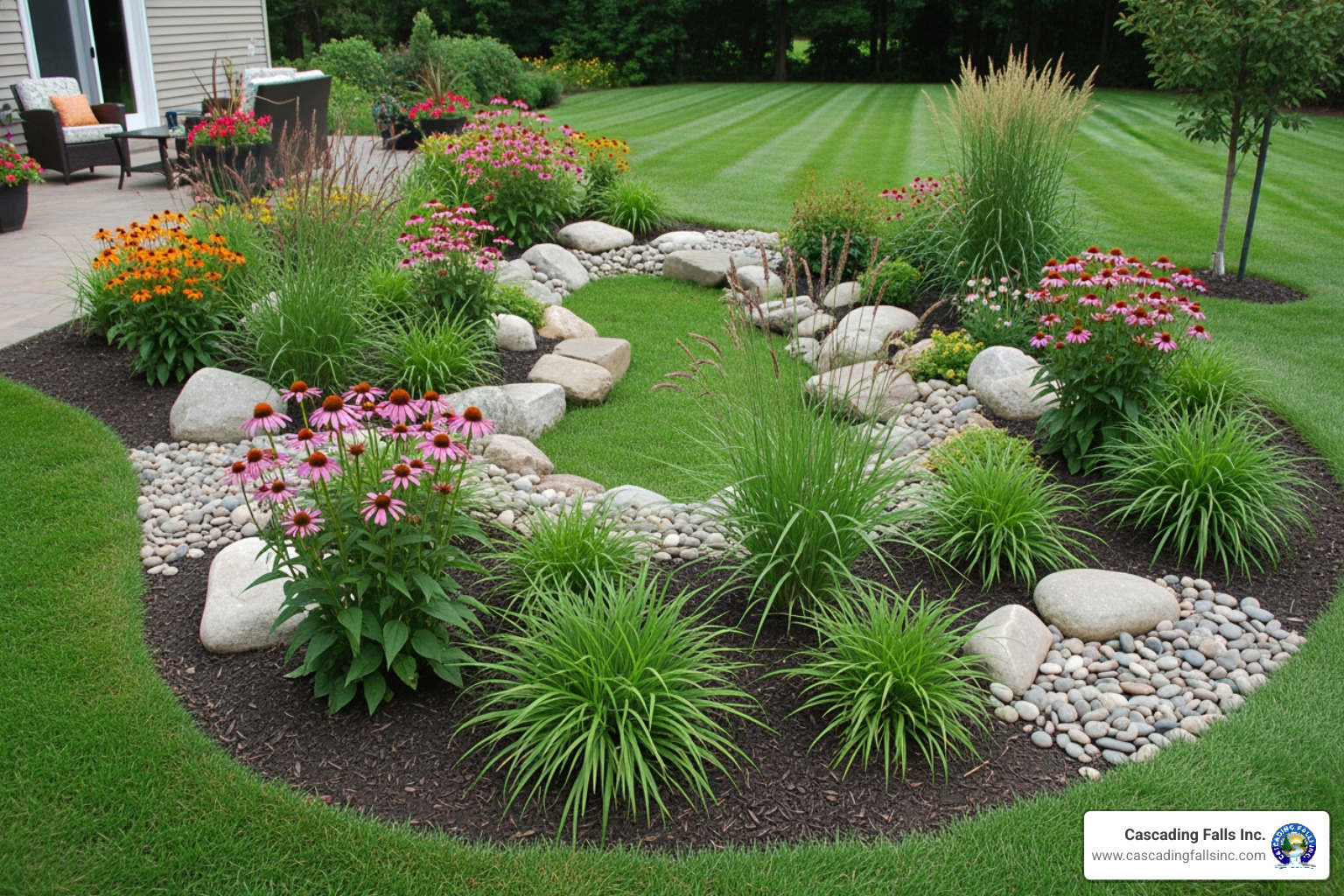
A swale is a shallow, broad, vegetated channel that collects and slowly conveys surface water. It functions as a subtle ditch that blends into your lawn, guiding water to a suitable drainage point. For a more decorative approach, a dry creek bed uses river rocks instead of grass, creating an attractive feature that directs runoff during rain. Swales are a natural and affordable option for managing surface water, with installation costing between $5 to $15 per linear square foot.
2. Rain Gardens and Barrels
Rain gardens are shallow depressions filled with water-loving native plants. Placed in low spots, they capture and absorb runoff from roofs and driveways. The deep roots of these plants help water percolate into the soil, reducing runoff and filtering pollutants. A rain garden installation can range from $500 to $3,000 and adds beauty and wildlife habitat to your yard.
Rain barrels are another excellent way to manage roof runoff. Placed under downspouts, they collect rainwater that you can later use for irrigating your garden or lawn. This conserves water and prevents pooling. Be sure to check local regulations regarding rainwater harvesting.
3. Improving Soil Permeability
Compacted soil, especially dense clay, can't absorb water effectively, leading to pooling. A simple DIY solution is lawn aeration, which creates small holes in the lawn to allow air and water to penetrate the soil. Professional aeration for a large lawn costs around $270.
You can also improve drainage by amending the soil. Incorporating organic matter like compost improves the structure of heavy clay soil, making it more permeable.
Materials for improving soil drainage:
- Compost: Adds organic matter to improve soil structure.
- Coarse Sand: Breaks up clay particles to create larger pore spaces.
- Pea Gravel: Can be mixed into soil or used as a permeable top layer.
- Gypsum: Helps break up compacted clay soils.
- Organic Mulch: Prevents compaction and improves soil over time.
Engineered Yard Drainage Solutions for Persistent Water Issues
When simple fixes aren't enough, it's time for engineered yard drainage solutions. These systems work beneath the surface to tackle serious water problems.
4. French Drains
The workhorse of subsurface drainage is the French drain. This system consists of a sloped trench containing a perforated pipe surrounded by gravel and wrapped in filter fabric. Water seeps through the soil and gravel, enters the pipe, and is carried away to a safe disposal point like a dry well or storm drain. The entire system is buried, making it an invisible solution for soggy lawns and groundwater issues.
When is a French drain the right choice? It's ideal for persistent soggy patches, intercepting groundwater on a slope, or protecting a foundation from subsurface water. However, it requires a proper slope to function and won't solve issues related to widespread surface flooding.
French drain costs vary by depth and complexity. A professionally installed system typically costs $1,000 to $4,000 for 60 linear feet. While it's an investment, it can prevent far more expensive foundation repairs.
5. Channel and Slot Drains
For hardscapes like driveways and patios where water can't soak in, channel drains and slot drains are the solution. A channel drain is a long, narrow trench with a grate on top, installed at surface level. It intercepts sheets of water, dropping it into the channel to be carried away by pipes. They are perfect for preventing water from entering a garage with a sloped driveway.
Slot drains function similarly but have a much slimmer opening, making them virtually invisible. They offer a sleek, aesthetic alternative for patios and walkways where appearance is a priority. Installation for these systems typically runs between $3,000 and $9,000 per 100 linear feet.
6. Catch Basins and Dry Wells
For specific low spots where water collects, catch basins and dry wells are targeted yard drainage solutions. A catch basin is a buried box with a grate at ground level that collects surface water and funnels it into an attached drainpipe. Many include a filter to catch debris and prevent clogs.
Often, that drainpipe leads to a dry well, which is an underground storage tank or gravel-filled pit. Water directed into the dry well slowly percolates into the surrounding soil, recharging the groundwater naturally. This prevents surface puddles and overwhelming storm drains. The cost for dry well installation can be up to $5,000, but they are an effective, environmentally friendly way to manage significant stormwater runoff, especially where directing water to storm drains is restricted.
Connecting catch basins to a dry well creates a complete system: water is collected at the surface, transported underground, and dispersed safely.
Making the Right Choice: DIY vs. Hiring a Professional
Now for the big question: should you tackle your drainage problem yourself or hire a professional? The answer depends on the project's complexity and your comfort level.
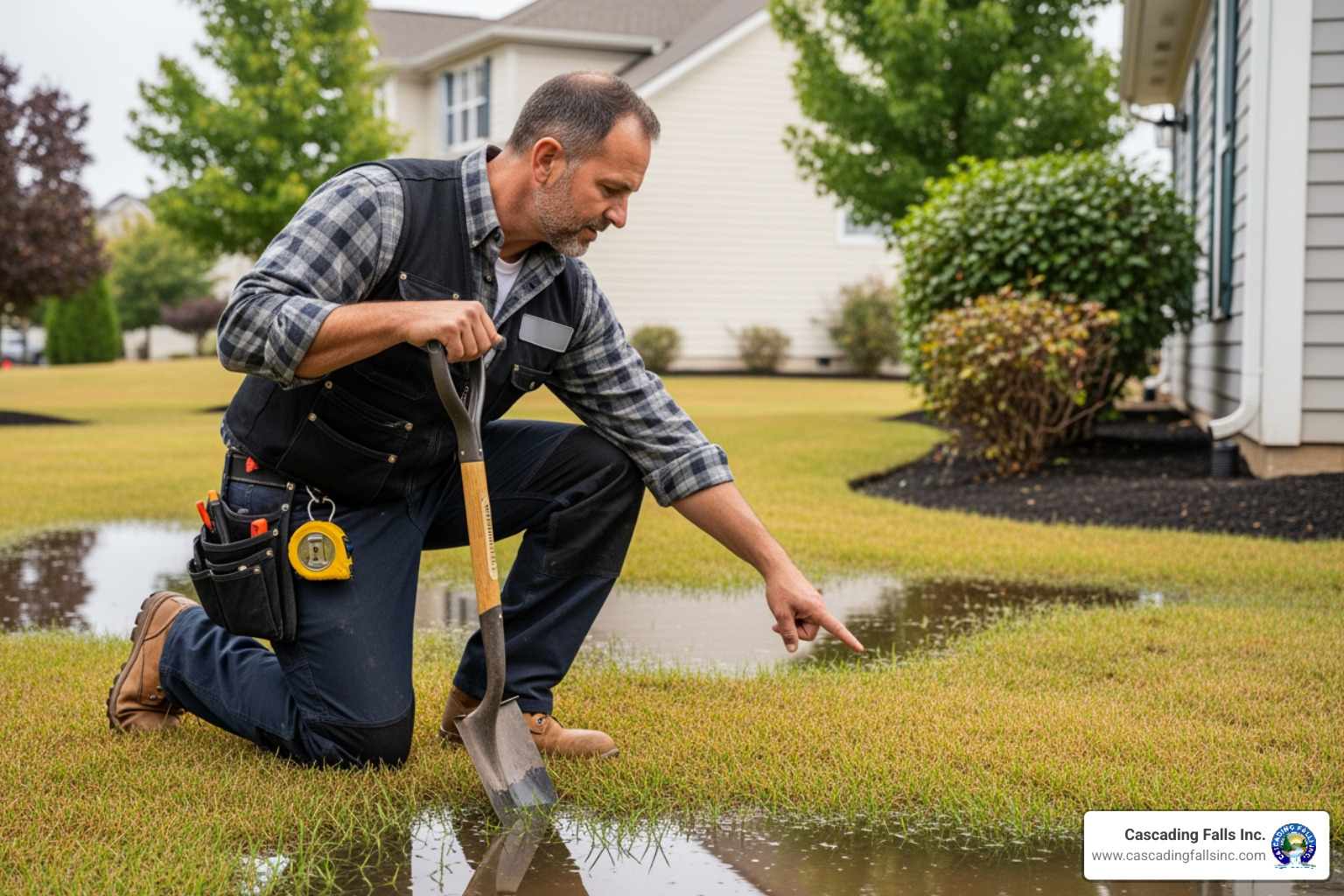
When to DIY
DIY solutions are suitable for minor, straightforward issues. Simple, effective projects you can often handle yourself include:
- Installing downspout extensions.
- Cleaning gutters regularly.
- Creating a small rain garden in a low spot.
- Performing lawn aeration to improve water absorption.
- Fixing minor low spots with topsoil and a rake.
Even for simple projects, assess your capabilities honestly. A critical safety precaution for any digging project is to call 811 before you start. This free national service marks underground utility lines to prevent dangerous and costly accidents.
When to Hire a Professional for Yard Drainage Solutions
Some drainage problems are too large or complex for a DIY approach. It's time to call a professional for:
- Complex issues: Persistent basement flooding or water problems affecting your entire property require an expert assessment.
- Major regrading: Reshaping your entire yard requires heavy machinery and training to ensure the proper slope is created safely.
- French drain installation: Digging near your home's foundation is risky. Improper installation can worsen water problems or even compromise your home's structural integrity.
- Foundation risk: If you see cracks, seepage, or other signs of foundation damage, professional intervention is non-negotiable.
- Permitting: Professionals are familiar with local regulations in Roseville and Sacramento and can manage the permitting process for larger projects.
Most importantly, hiring a professional ensures a lasting solution. Their experience with different soil types and drainage designs provides peace of mind that the job is done right the first time.
At Cascading Falls Inc., we've spent nearly two decades perfecting our approach to yard drainage solutions. When your project requires expert design and professional installation, we're here to help. Contact our team for expert help and let's create a solution that protects your home.
Frequently Asked Questions about Yard Drainage
Here are answers to the most common questions we hear from homeowners dealing with yard drainage issues.
What is the cheapest way to fix yard drainage?
The most budget-friendly yard drainage solutions are often the simplest. Start with these before considering more complex systems:
- Cleaning your gutters: This is free if you do it yourself and is the first line of defense.
- Adding downspout extensions: These are inexpensive and immediately move water away from your foundation.
- Simple grading: For minor low spots, adding topsoil to create a slope can solve the problem.
- Creating a DIY swale: A shallow, grassy channel can effectively redirect surface water with minimal cost.
Often, a combination of these simple fixes is all that's needed.
What is the difference between a French drain and a swale?
This is a common point of confusion. The key difference is their location and function.
- A swale is a visible, shallow, grassy channel on the surface that guides rainwater runoff.
- A French drain is a hidden, underground trench with a perforated pipe that collects and removes groundwater that has already soaked into the soil.
In short, swales manage surface water, while French drains manage subsurface water. They can also be used together for a comprehensive solution.
How much does it cost to install a drainage system?
Costs vary significantly based on the type of system, your property's accessibility, and soil conditions. Here are some typical price ranges for professional installation in areas like Roseville and Sacramento:
- French Drains:$1,000 - $4,000 for 60 linear feet.
- Channel Drains:$3,000 - $9,000 per 100 linear feet for patios and driveways.
- Dry Wells: Up to $5,000, depending on size and excavation needs.
- Yard Regrading:$500 - $2,000 for basic work.
- Rain Gardens:$500 - $3,000.
- Swales:$5 - $15 per linear square foot.
Investing in proper drainage now can save you from far more expensive repairs for foundation damage or flooding in the future.
Protect Your Investment with the Right Drainage Solution
You now have a complete toolkit of yard drainage solutions, from simple DIY fixes to professional-grade systems. Every step you take toward better drainage is an investment in your home's future, protecting your foundation, landscaping, and property value from the threats of standing water.
For nearly two decades, I've seen how the right drainage solution transforms properties for homeowners in Roseville, Sacramento, and surrounding areas. A muddy mess can become a lush lawn, and puddles near your foundation can disappear for good, preventing costly structural damage.
The key is to act before small problems become big headaches. This might mean a simple weekend project cleaning gutters or a call to professionals for a comprehensive system that will protect your home for decades.
At Cascading Falls Inc., we've built our reputation on delivering solutions that work. Our "Whatever It Takes..." approach means we are committed to quality craftsmanship that solves your drainage problem correctly. We understand California's soil and rainfall patterns and build systems that last.
Your home is your biggest investment. Don't let water damage threaten it. For complex drainage challenges that require expert design and installation, trust the professionals at Cascading Falls Inc. to deliver a lasting solution. Contact us today to explore our comprehensive drainage services and see how we can help protect your home and improve your Landscaping.