Transform Your Concrete Slab into a Beautiful Brick Patio
Laying brick on concrete slab is a practical way to upgrade your outdoor space. This method uses your existing concrete as a solid base, saving you the cost and hassle of removal while adding curb appeal, durability, and a timeless look to your patio, porch, or walkway.
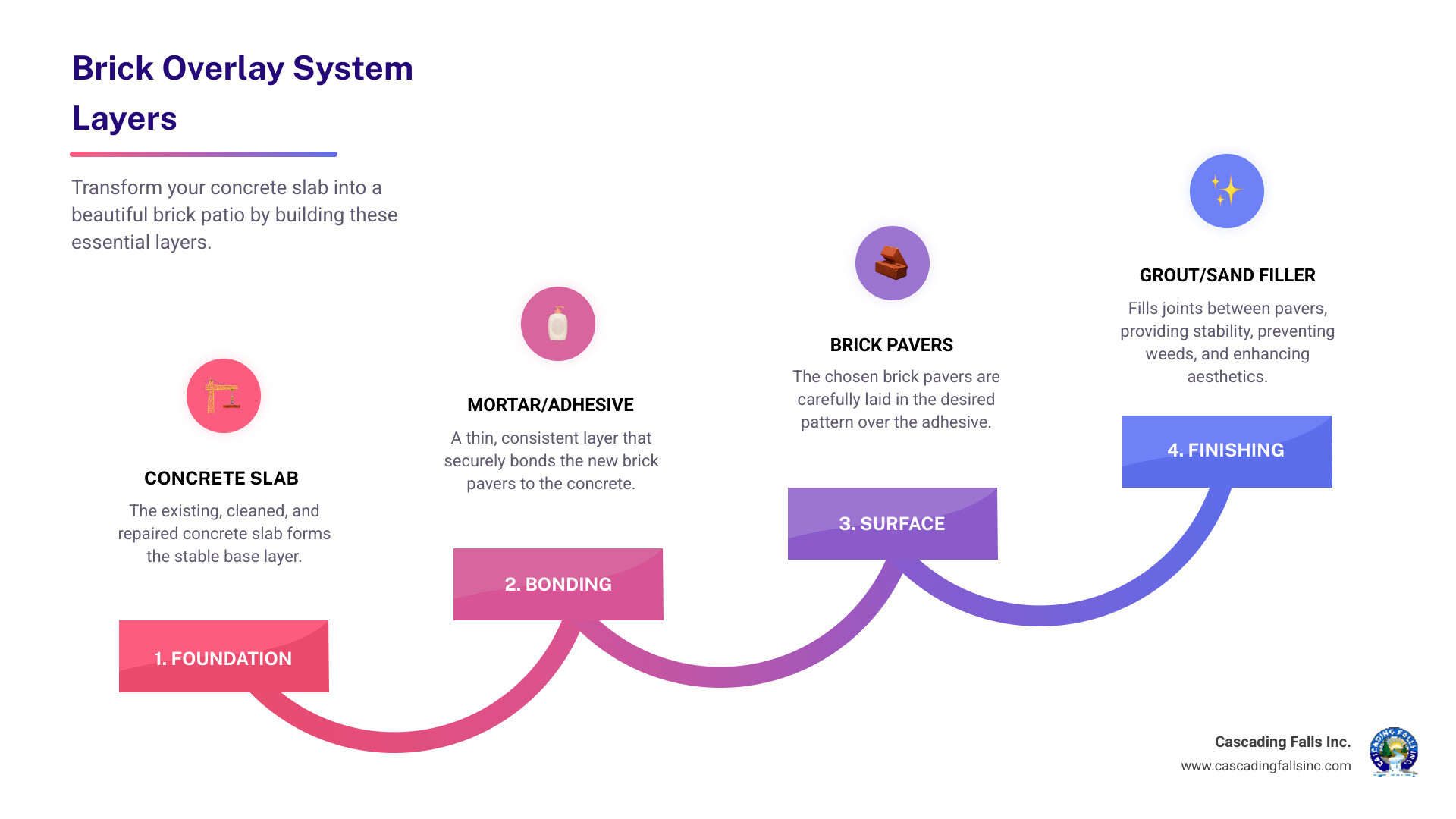
Quick Answer: The Essential Steps
- Clean the concrete surface thoroughly with a power washer
- Apply a mortar bed in small sections using a notched trowel
- Set brick pavers into the mortar, maintaining consistent spacing
- Cut edge pieces with a wet tile saw for a precise fit
- Fill joints with grout or polymeric sand
- Seal the finished surface to protect against stains and moisture
The main advantage is using your established base—no digging or hauling away old concrete is required. This project adds historic charm and is beginner-friendly enough to be accomplished in a weekend.
I'm David Shelly, and with nearly two decades in the construction industry, I've managed countless landscape and home improvement projects, including many successful laying brick on concrete slab installations. My experience balancing quality craftsmanship with practical solutions has taught me the techniques that deliver lasting results for both residential and commercial clients.
Why Choose a Brick Overlay for Your Concrete Slab?
Changing a plain concrete slab into a brick patio is a smart investment that boosts home value and makes your outdoor space more enjoyable. Laying brick on concrete slab offers numerous advantages.
Benefits of Laying Brick Pavers Over a Concrete Slab
- Improved Aesthetics: Brick pavers instantly add warmth, character, and timeless charm, replacing a boring concrete slab. Tumbled bricks, in particular, can create an authentic, aged look.
- Increased Durability: Brick is a resilient surface that handles extreme temperatures, heavy furniture, and foot traffic. Properly installed pavers resist cracking, chipping, and fading.
- Cost-Effective Base: Using your existing slab saves significant time and money. You avoid the labor and expense of demolition, hauling, excavation, and pouring a new foundation.
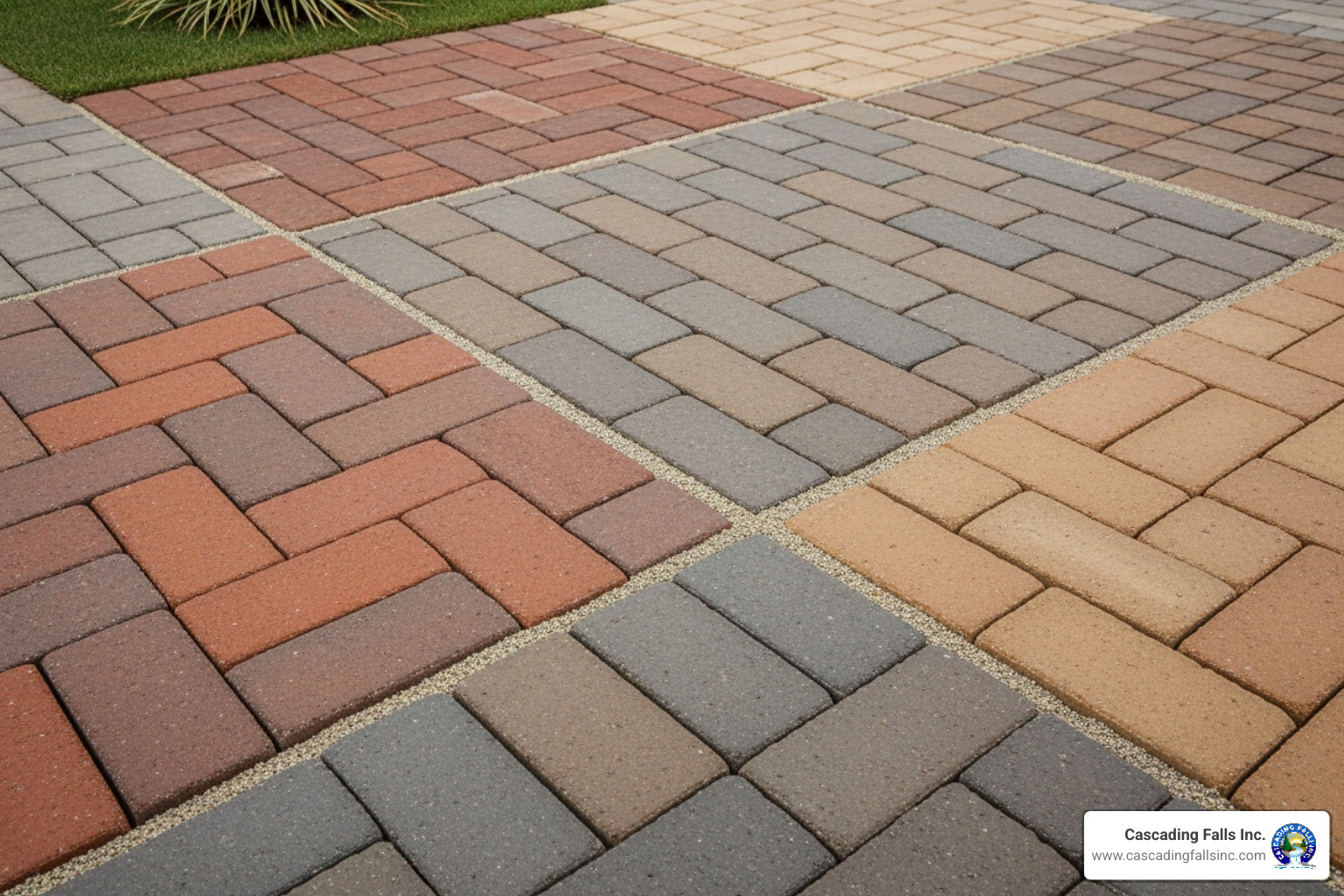
- Versatile Design Options: Brick offers endless design possibilities with numerous colors, textures, and sizes. Popular patterns like running bond, herringbone, and basketweave allow you to customize the look to match your home's style.
- Improved Drainage: An overlay is a perfect opportunity to correct poor slope on an old slab. By adjusting the mortar bed thickness, you can create proper drainage away from your home's foundation, preventing water pooling.
Considerations Before Starting
Before you begin, consider these important factors:
- Added Height: The overlay will add 1 to 2.5 inches of height. This can affect door clearances and stair riser heights. Check that your plan won't create a tripping hazard and complies with local building codes.
- Drainage Planning: Maintain a consistent slope of about a quarter-inch per foot away from your house. You may also need to add weep holes or leave gaps near walls for water to escape.
- Structural Implications: For covered porches with columns, the added height may require temporarily supporting the roof to adjust column lengths. This is a task where professional expertise is often beneficial.
Want to explore more ways to upgrade your outdoor spaces? Check out our comprehensive Landscaping Services. We bring the same attention to detail and quality craftsmanship to every project, whether it's in Roseville, Sacramento, or anywhere across California.
Planning Your Project: Materials, Tools, and Design
Proper planning is the key to a successful brick overlay project. Taking the time to choose materials, gather tools, and finalize your design will prevent frustration and help bring your vision to life.
Choosing the Right Bricks or Pavers
The brick or paver you choose defines your project's final look and performance. When laying brick on concrete slab, the main choice is between thin brick veneer and full brick pavers.
| Feature | Thin Brick Veneer | Full Brick Pavers |
|---|---|---|
| Thickness | Typically 1/2" to 1" | Generally 1.5" to 2.5" |
| Weight | Lighter, easier to handle | Heavier, more substantial |
| Cost | Often lower per square foot for the material itself, but can vary | Generally higher per square foot for the material |
| Installation | Applied with adhesive or thin-set mortar, often mesh-backed for quicker application | Set individually into a mortar bed |
| Primary Use | Aesthetic overlay for existing surfaces, interior and exterior walls, floors with height limitations | Durable outdoor flooring, driveways, patios, walkways where a solid, traditional brick feel is desired |
| Insulation | Can offer some improved insulation properties, especially in vertical applications | Minimal direct insulation benefit when laid on a concrete slab |
| DIY Friendliness | Often considered more DIY-friendly due to lighter weight and mesh-backed options | Requires more precision and strength, but still very doable for a dedicated DIYer |
Thin brick veneer is a slice of real brick, ideal for projects where adding height or weight is a concern. Many come on a mesh backing for faster installation.
Full brick pavers are the traditional, solid choice. They are heavier and thicker, set individually into mortar for a classic, substantial feel.
Other options include durable clay pavers, versatile concrete pavers, and tumbled bricks that are weathered for an antique look. Always choose pavers rated for exterior use and local freeze-thaw cycles.
Essential Tools and Materials
Gathering all your tools and materials beforehand is essential. Here’s a checklist:
- Safety Gear: Gloves, safety glasses, knee pads, sturdy boots
- Cleaning: Power washer, concrete degreaser
- Layout: Measuring tape, straightedge, chalk line, level
- Mortar Work: Mortar mixer (or hoe and bucket), 1/4-inch notched trowel, rubber mallet
- Cutting: Wet tile saw
- Grouting: Grout bag, grout float or trowel, stiff brush, sponges
- Materials: Polymer-modified thin-set mortar, brick pavers, 1/2-inch brick spacers, paver adhesive (e.g., Loctite Premium), exterior-grade grout, water-based penetrating sealer
- General: Buckets for water and cleanup
Designing Your Paver Pattern
Your chosen pattern significantly impacts the final look and installation complexity.
- Running Bond: The classic pattern with rows offset by half a brick. It's straightforward, strong, and great for beginners.
- Herringbone: Bricks are laid in V-shapes at 45 or 90-degree angles. This pattern is exceptionally strong but requires more cuts and careful planning.
- Basketweave: Bricks are laid in alternating pairs (horizontal and vertical) to create a woven look, ideal for traditional or cottage styles.
Consider adding a soldier course edging —a border of bricks laid vertically—to frame your patio for a professional finish. Always dry-fit your pattern to plan cuts and ensure a good visual flow. Use chalk lines to establish straight starting points to keep your pattern consistent across the entire slab.
For more inspiration on changing your outdoor spaces with quality materials and expert design, explore our comprehensive Landscaping Services. We bring that same attention to detail to every project across Roseville, Sacramento, and throughout California.
A Step-by-Step Guide to Laying Brick on a Concrete Slab
With your materials and design ready, it's time to begin the installation. This guide walks you through the mortar-set method for laying brick on concrete slab to achieve a durable, beautiful finish.
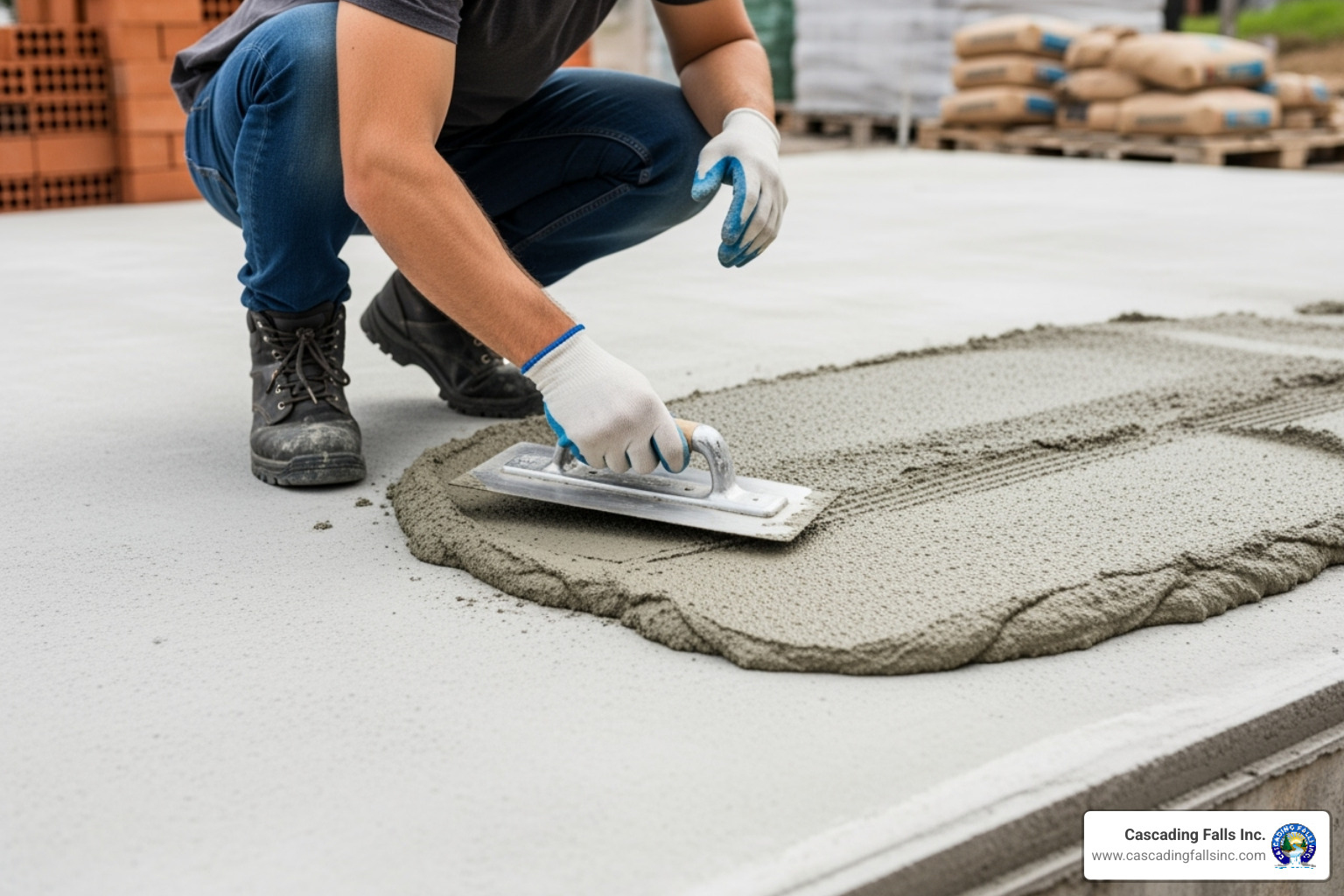
Step 1: Preparing the Concrete Slab
Proper preparation of the concrete slab is critical for a lasting installation. A clean, solid foundation ensures the mortar will bond correctly.
- Clean the Surface: The slab must be completely free of dirt, grime, grease, oil, and loose paint. A power washer is the best tool for this job. Use a concrete degreaser for any oil or grease stains.
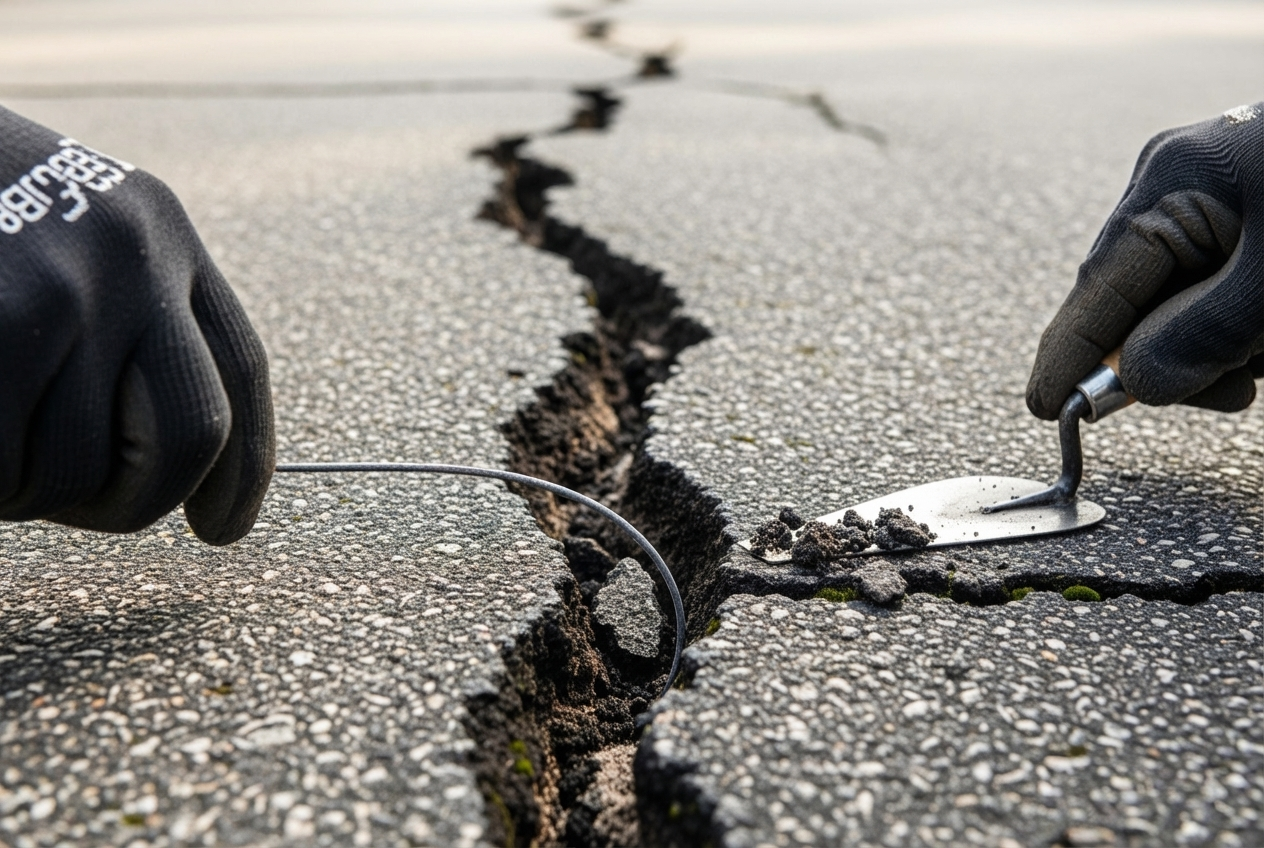
- Repair Damage: Inspect the clean, dry slab for cracks or uneven areas. Use concrete crack filler for small cracks and a patching compound for larger damage. Allow all repairs to cure fully.
- Ensure Proper Drainage: The slab should slope away from your home's foundation by about 1/8 to 1/4 inch per foot. Check this with a long level. You can correct an improper slope by adjusting the thickness of the mortar bed. The bricks next to the house must be higher than the outer edge to direct water away.
Step 2: The Mortar-Set Method for laying brick on a concrete slab
The mortar-set method creates a rigid, durable bond ideal for outdoor applications.
- Establish Layout Lines: Snap chalk lines to guide your first row of bricks. This ensures your pattern remains straight.
- Mix Thin-Set Mortar: Following the manufacturer's instructions, mix your polymer-modified thin-set mortar to a thick, peanut-butter-like consistency.
- Apply Mortar in Small Sections: Mortar dries quickly, so work in small, manageable sections (e.g., 3x3 feet). Spread the mortar evenly with a 1/4-inch notched trowel. For the first course, also "butter" the back and sides of each brick to ensure a void-free bond.
- Set the Bricks: Start from a corner or your border course. Press each brick firmly into the wet mortar with a slight wiggle. Use 1/2-inch spacers for consistent joints. Gently tap bricks into place with a rubber mallet, checking frequently with a level to maintain the correct slope and an even surface. Scrape away any excess mortar that squeezes up before it dries.
Step 3: Handling Edges, Cuts, and Corners
Achieving a professional finish requires precise cuts and clean edges.
- Plan and Mark Cuts: Dry-fit bricks along edges and around corners, marking exact cut lines with a pencil.
- Use a Wet Tile Saw: For clean, smooth cuts with minimal dust, use a wet tile saw. Always wear safety glasses and other appropriate PPE.
- Install Cut Pieces: Apply mortar to the back of each cut brick and set it into place, ensuring it aligns with your pattern. Use corner-specific bricks for an authentic look on porch edges.
Step 4: Grouting, Finishing, and Sealing
These final steps protect your patio and give it a polished look.
- Grout the Joints: After the mortar has cured (24-48 hours), mix your exterior-grade grout. Use a grout bag to pipe the grout into the joints, slightly overfilling them. After a few minutes, tool the joints with a shaping tool or a wet gloved finger to create a smooth, concave profile.
- Clean Grout Residue: Gently wipe away large smears from the brick faces with a damp sponge. After the grout has dried for a few hours, remove any remaining haze by scrubbing the brick surfaces with a stiff, wet brush or scouring pad, rinsing the pad frequently.
- Seal the Brick: Once the grout is fully cured (24-72 hours), apply a water-based penetrating sealer with a brush. Let it penetrate for a few minutes, then wipe off any excess with a clean rag. Two coats are recommended for maximum protection against stains and moisture.
For a flawless and lasting finish on your next outdoor project, explore our professional Concrete Services. Our team at Cascading Falls Inc. specializes in delivering quality and craftsmanship, ensuring your concrete work is a solid foundation for any beautiful overlay.
Aftercare and Avoiding Common Pitfalls
Congratulations on your new brick overlay! Here’s how to maintain its beauty and avoid common mistakes.
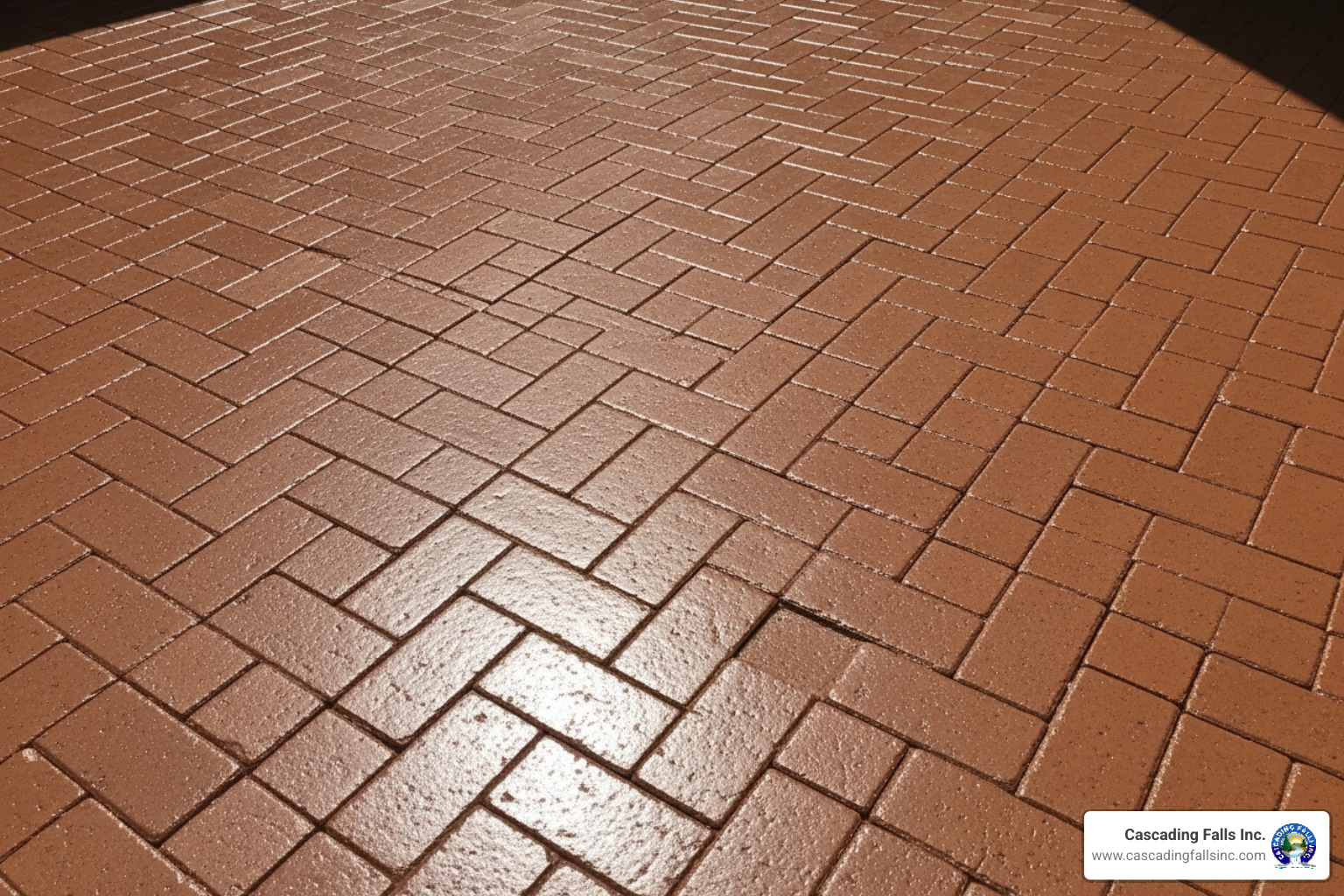
Long-Term Maintenance for Your Brick Patio
Maintaining your brick patio is straightforward with a little regular care.
- Routine Sweeping: Sweep weekly to prevent dirt and debris from settling in the joints, which can lead to stains or weed growth.
- Cleaning Stains: For most dirt, use mild detergent, water, and a stiff brush. For tougher stains like oil or rust, use a cleaner specifically formulated for brick.
- Re-sealing: The penetrating sealer will wear down over time. Re-seal the surface every 2-5 years, depending on traffic and sun exposure, to maintain stain and water resistance.
- Efflorescence: This normal, white, powdery deposit is caused by salts migrating to the surface. It can usually be removed with a stiff brush and water. Proper sealing is the best prevention. For more details on moisture management, see this guide: DOE Building Foundations Section 4-2 Concrete Wall with Brick Veneer.
Common Mistakes When laying brick on a concrete slab and How to Prevent Them
Knowing what to watch for can help you avoid these common DIY errors.
- Poor Slab Preparation: Failing to thoroughly clean the concrete slab will cause poor mortar adhesion and lead to loose bricks. Take the time to power wash and degrease the surface completely.
- Incorrect Mortar Mix or Application: Use a polymer-modified thin-set mortar mixed to the correct consistency. Apply a generous, even bed to ensure full coverage and a strong bond.
- Inadequate Drainage: Water pooling against your home's foundation can cause serious damage. Ensure a slope of about 1/8 to 1/4 inch per foot away from the house.
- Uneven Spacing and Leveling: Inconsistent joints and a wavy surface look unprofessional. Use spacers for every brick and check your work constantly with a level, making adjustments as you go.
- Not Accounting for Height Increase: The added height of the brick and mortar can block doors or create a tripping hazard at steps. Building codes often require stair risers to be uniform (e.g., not varying more than 3/8 inch). Measure thresholds and step heights beforehand and plan accordingly.
Frequently Asked Questions
Here are answers to some of the most common questions about laying brick on concrete slab.
Can I do this project myself, or should I hire a professional?
Laying brick on concrete slab is a very achievable DIY project for those comfortable with basic construction tasks like measuring, cutting with a wet tile saw, and working methodically. However, you should be realistic about the required tools and time commitment.
Consider hiring a professional if:
- Your existing concrete slab has significant structural issues (large cracks, severe unevenness).
- The project involves complex structural adjustments, like altering porch columns.
- You are covering a very large area or using a highly intricate pattern.
- You lack the time, tools, or desire to take on a hands-on project.
At Cascading Falls Inc., we embody a "Whatever It Takes..." approach to quality and craftsmanship. Whether you DIY or hire an expert, understanding the process is key. For more on our capabilities, visit Our Services.
How does adding brick affect the height of my porch or patio?
Adding brick and mortar will raise your surface height by 1 to 2.5 inches. This is a critical planning consideration.
- Door Thresholds: Ensure doors can still open freely without scraping the new surface. You may need to trim the door or adjust the threshold.
- Step Riser Height: Building codes require stair risers to be a consistent height (e.g., not varying more than 3/8" or exceeding 7-1/2"). The added height must be factored in to keep all steps uniform and safe.
- Porch Columns: On covered porches, columns supporting the roof will need to be shortened to accommodate the new floor height. This often involves temporarily jacking up the roof.
What are the cost considerations for this type of project?
The cost of laying brick on concrete slab is generally less than a full slab replacement, but it varies. Key factors include:
- Materials: The largest expense is the bricks or pavers themselves. You'll also need to budget for polymer-modified mortar, grout, and a penetrating sealer.
- Tools: If you don't own specialized tools like a wet tile saw or power washer, factor in rental or purchase costs.
- Labor: If hiring a professional, labor will be a significant part of the total cost. Labor rates vary by region, so it's wise to get multiple quotes.
To estimate your budget, calculate your square footage and research material costs. Add a 10-15% buffer for waste and unexpected issues.
Transform Your Space with Timeless Brick
You've just learned how laying brick on concrete slab can completely change an ordinary outdoor space into something truly special. This approach combines the stability of your existing concrete base with the timeless character and warmth of brick pavers.
You gain a beautiful, durable surface that looks like it's been part of your home for decades. This project also solves practical issues like poor drainage and adds significant value, all without the expense of a full slab replacement.
While it requires some elbow grease, the project is achievable for many homeowners. Each step, from preparation to sealing, is straightforward when broken down.
At Cascading Falls Inc., we've seen how these projects can transform a home. Our "Whatever It Takes..." approach reflects our commitment to quality craftsmanship and customer satisfaction on every project in Roseville, Sacramento, and across California.
Whether you're inspired to tackle this as a DIY project or decide to bring in professionals, the appeal of brick pavers will improve your home's curb appeal and create a space you'll enjoy for years to come.
For a flawless and lasting finish on your next outdoor project, explore our expert Concrete Services. We're here to help with everything from foundation work to full professional installation.