What Are My Construction Options? (Poured vs. Precast)
A concrete steps builder is a specialized contractor who constructs safe, durable, and code-compliant steps that improve your property's value and curb appeal. Hiring the right professional is critical, as properly built concrete steps can last 100 years, while a poor job can lead to cracks, safety hazards, and code violations.
Key factors when hiring a builder:
- Experience with both poured and precast concrete
- Knowledge of local building codes
- Portfolio of quality work
- Clear communication and transparent pricing
- Proper licensing and insurance
I'm David Shelly, founder of Cascading Falls Inc. With over 15 years of experience as a concrete steps builder, I know that asking the right questions is the key to a successful project that saves you time, money, and frustration.
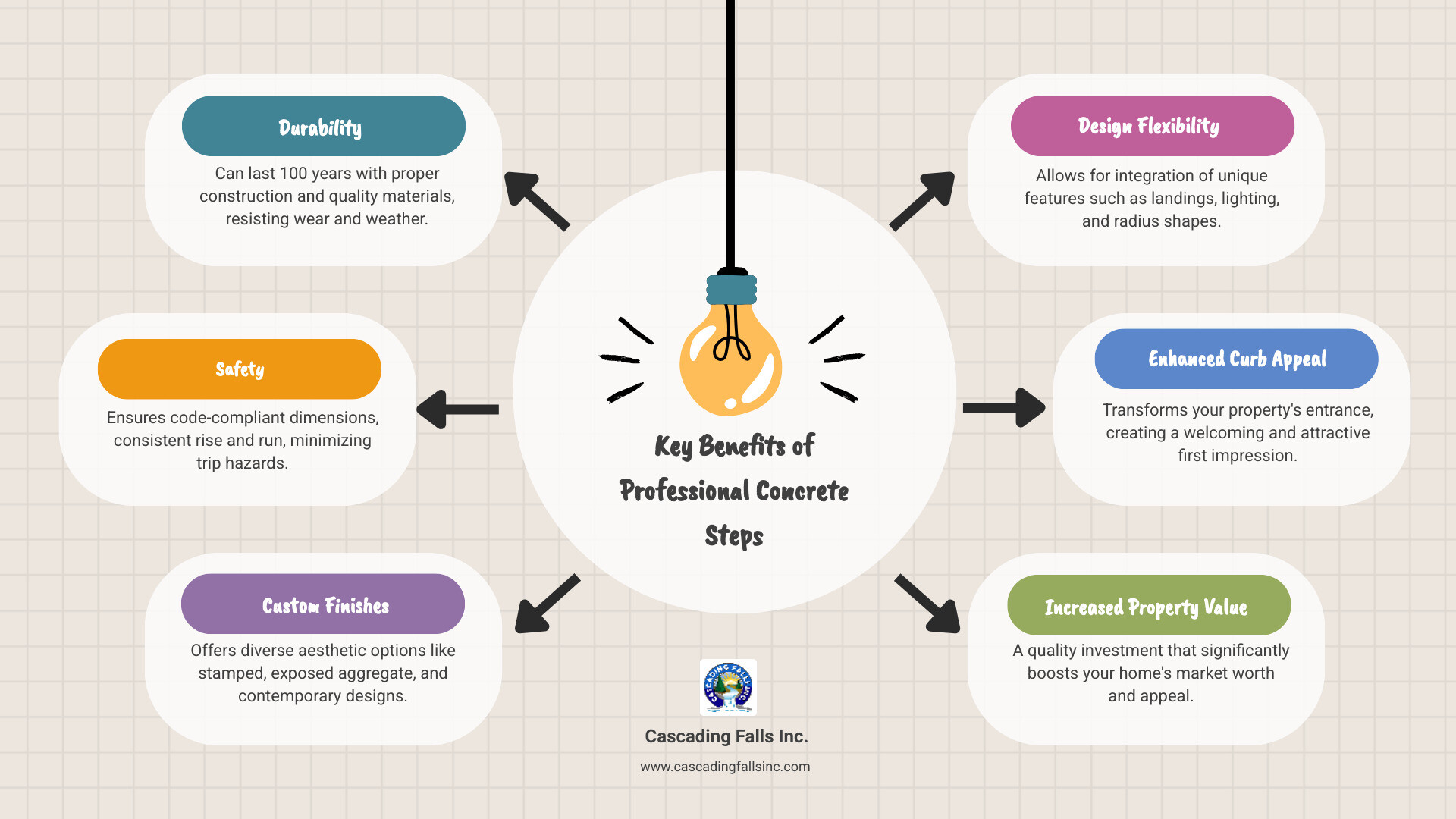
One of the first decisions is choosing between poured-in-place and precast concrete. Poured steps are built on-site for maximum customization, while precast steps are manufactured off-site for speed and consistency.
Here's a quick comparison:
| Feature | Poured-in-Place Concrete Steps | Precast Concrete Steps |
|---|---|---|
| Cost | Generally higher due to on-site labor | Often more cost-effective |
| Installation Speed | Longer (formwork, pouring, curing) | Very fast (can be installed in a day) |
| Customization | High (unlimited design options) | Limited to standard sizes and finishes |
| Durability | Excellent (seamless structural integrity) | Excellent (consistent quality) |
| Weather Dependency | Highly dependent on good weather | Can be installed in most weather |
| Immediate Use | Requires significant curing time | Can be used immediately |
What are the pros and cons of poured-in-place steps?
Poured-in-place steps are a popular choice in Roseville, Sacramento, and other parts of California for their design flexibility.
Pros:
- High Customization: Allows for any shape, size, or curve, creating a seamless, integrated look that can match surrounding hardscapes like stamped driveways or patios.
- Structural Integrity: When properly reinforced, these steps become an integral part of your property's foundation, offering superior strength.
- Unique Finishes: A wide array of finishes can be applied on-site, including smooth, broom, exposed aggregate, and stamped designs.
Cons:
- Longer Installation: The process involves demolition, formwork, pouring, and extensive curing, which takes more time.
- Weather Dependent: The quality of the pour and cure can be affected by extreme heat, cold, or rain.
- Higher Labor Costs: Custom on-site work requires more skilled labor, increasing the overall cost.
What are the pros and cons of precast steps?
Precast steps are known for their efficiency and consistent quality.
Pros:
- Fast Installation: Precast units can often be installed in a single day, minimizing disruption and labor costs.
- Consistent Quality: Manufactured in a controlled environment, they have predictable strength and a uniform finish.
- Immediate Use: They can be walked on immediately after installation, with no curing time needed on-site.
- Less Weather Dependent: Installation is not typically delayed by adverse weather.
Cons:
- Design Limitations: Available in modular units with standard dimensions and finishes, offering less flexibility for custom designs.
- Visible Seams: Seams may be visible where units connect to each other or to existing structures.
- Transportation & Handling: Large units require specialized equipment for transport and placement, which can be a challenge on sites with limited access.
What Design and Customization Choices Do I Have?
Your concrete steps don't have to be a simple gray slab. A skilled concrete steps builder can customize the shape, size, texture, and color to create an entryway that complements your home's style and flows with existing hardscapes.
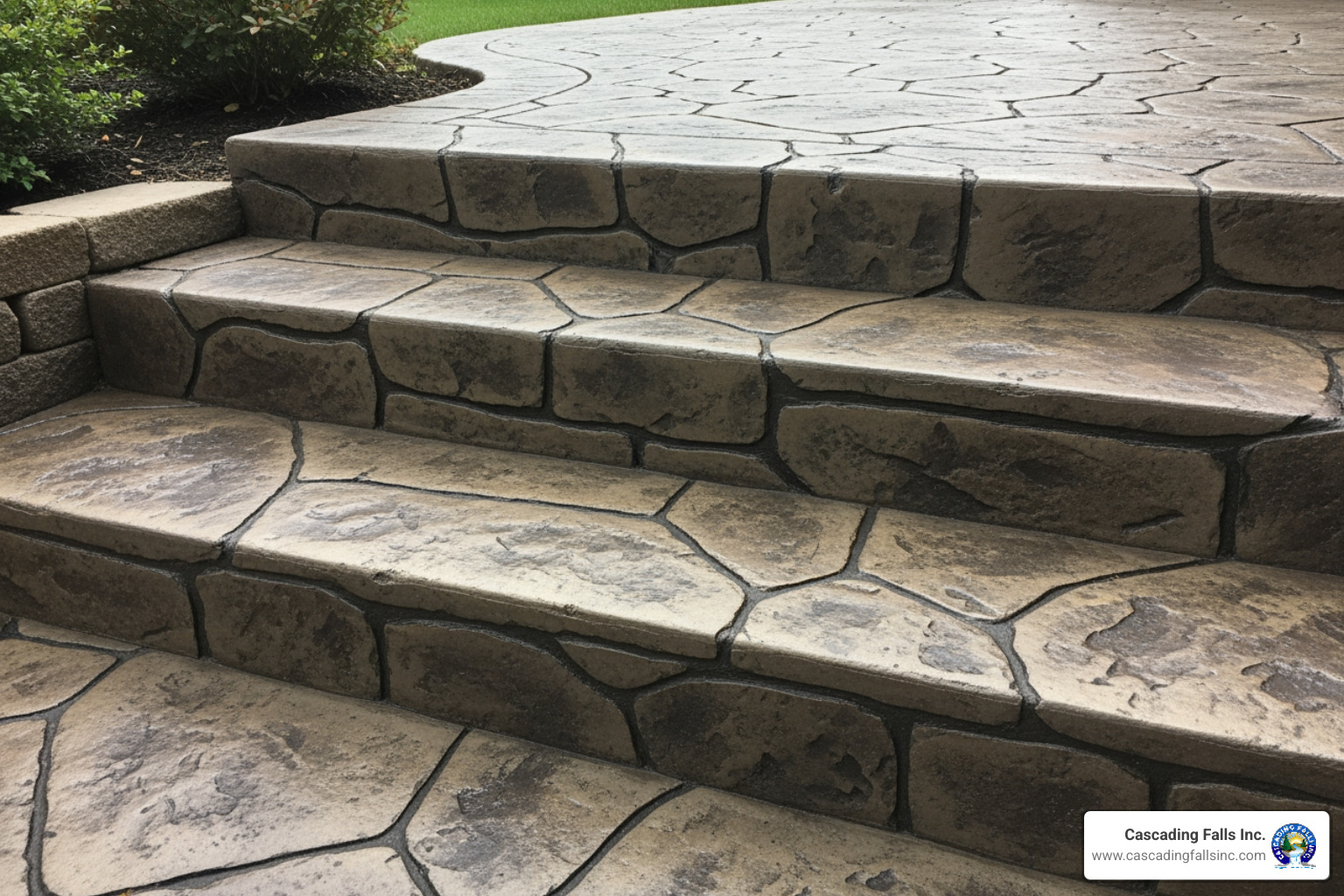
At Cascading Falls Inc., we specialize in matching new concrete to existing driveways, walkways, and patios for a cohesive, well-designed look. To see what's possible, view More info about our Concrete Services.
What are the most popular concrete finishes?
The finish you choose defines the look and feel of your steps.
- A smooth finish provides a clean, sleek look perfect for modern and contemporary homes.
- A broom finish creates fine, parallel lines that offer excellent traction, especially in wet conditions, without looking overly rough.
- Exposed aggregate reveals the colorful stones within the concrete for a textured, slip-resistant surface that is durable and hides dirt well.
- Stamped concrete uses patterns and colors to replicate the look of natural stone, brick, or even wood, allowing for a unified design with other stamped surfaces.
- Colored concrete, with pigment mixed throughout, offers a permanent color that won't chip or fade like a surface coating.
Can I add custom features like landings or lighting?
Yes, custom features can lift your steps from functional to exceptional.
- Landings break up long staircases, provide resting points, and add visual interest. They are often required by code where stairs change direction.
- Integrated lighting improves safety and adds a warm, inviting ambiance after dark by highlighting your home's architecture.
- Decorative nosings, the horizontal edges of each step, add visual definition and can increase the usable tread depth.
- Radius steps use gentle curves to create a welcoming, flowing entrance that makes a strong first impression.
- Floating steps are a dramatic, modern statement piece. They appear to hover in mid-air, requiring significant structural engineering and expert craftsmanship from an experienced concrete steps builder.
- Integrated planters soften the hardscape by adding living color and balancing the structure with natural elements.
How Will You Ensure My Steps are Safe, Durable, and Code-Compliant?
A beautiful entrance means nothing if it isn't safe and structurally sound. At Cascading Falls Inc., we prioritize safety, durability, and strict code compliance in every project we build as a concrete steps builder in Roseville, Sacramento, and surrounding California areas.
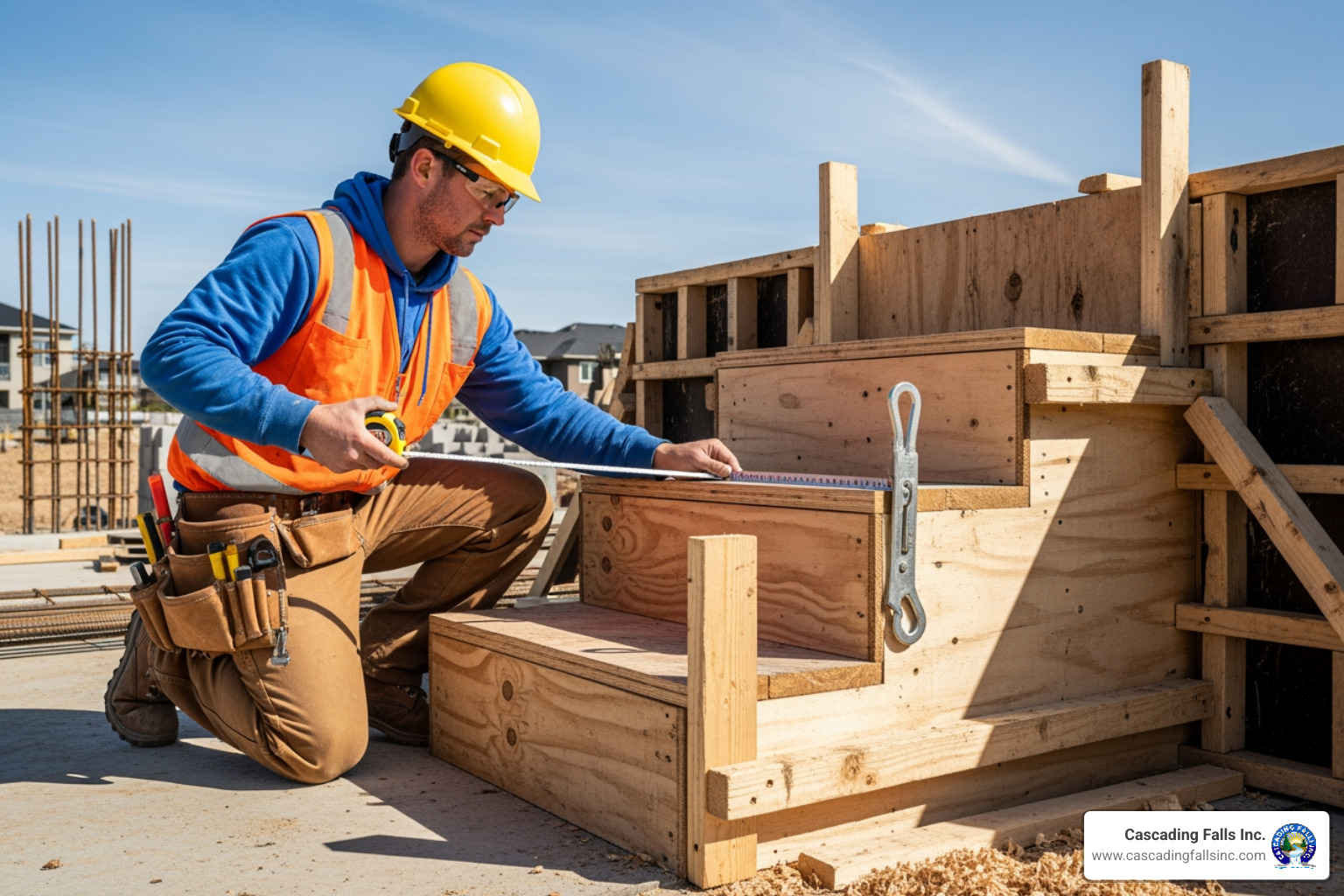
Building concrete steps requires technical precision to meet local building codes and ensure long-term performance. Here’s how we guarantee your steps meet these critical standards.
What are the standard dimensions for safe concrete steps?
Consistency in step dimensions is the key to preventing trips and falls. Your brain expects each step to be the same, and even a small variation can be a hazard. California building codes specify these dimensions for safety:
- Rise Height: The vertical height of each step, typically limited to a maximum of 7 to 7.75 inches to ensure a comfortable climb.
- Tread Depth: The horizontal surface of the step, usually requiring at least 10 to 11 inches for secure footing.
- Step Width: A minimum of 36 inches is standard, allowing for comfortable passage and a more welcoming appearance.
- Consistency: This is the most critical rule. Every rise and every run must be identical. We measure obsessively to ensure uniformity.
- Handrails: If steps exceed a certain height or number of risers, codes require handrails, and we design the steps to accommodate proper installation.
How do you ensure the steps will last for decades?
Properly constructed concrete steps can last 100 years. The difference between steps that last and those that crumble is in the materials and methods.
- Proper Footings: We dig deep to stable soil and design footings to prevent movement from settling or frost heave.
- Steel Rebar Reinforcement: A grid of steel rebar acts as a skeleton within the concrete, providing tensile strength to prevent cracks from ground movement or heavy loads.
- High-Strength Concrete: We use professional-grade concrete mixes rated at 25 MPa (around 3600-4000 PSI) or higher for maximum durability.
- Proper Drainage: We slope the step surfaces slightly (about 1/4 inch per 4 feet) away from your house to ensure water runs off, preventing pooling, staining, and deterioration.
- Concrete Sealer: After curing, we apply a high-quality sealer to protect the surface from moisture, stains, and UV damage. We recommend reapplying it every 2-3 years.
What building codes should a concrete steps builder follow?
Navigating building codes is a key part of a professional builder's job. In Roseville, Sacramento, and throughout California, specific codes govern every aspect of step construction, from footing depth to handrail requirements.
As your concrete steps builder, we handle this entire process. We stay current on all local regulations, manage the municipal permit process, and coordinate all required inspections with local officials. This ensures your project is reviewed and approved for safety and structural integrity. For commercial properties, we also ensure ADA compliance where required. You shouldn't have to worry about the red tape; that's our job.
What is the Process and Timeline for a Concrete Steps Builder?
Understanding the construction process helps set realistic expectations. As your concrete steps builder, we manage every phase, from permits to cleanup, keeping you informed along the way. The timeline depends on the project's complexity, whether it's poured-in-place or precast, and weather conditions. A simple precast installation may take a day, while a custom poured project can span several weeks.
For a deeper look into the mechanics, A detailed construction guide offers more technical details.
What should I expect during the installation process?
A poured-in-place project unfolds in several key stages:
- Demolition & Removal: If replacing old steps, we break up and haul away the existing structure.
- Excavation & Sub-Base: We dig to the proper depth for footings and create a stable sub-base of compacted crushed rock.
- Formwork Construction: We build precise wooden forms that create the exact shape and dimensions of your new steps, reinforcing them to withstand the pressure of wet concrete.
- Reinforcement: A grid of steel rebar is placed within the forms to provide critical structural strength.
- Pouring & Finishing: The concrete is poured, worked to remove air pockets, and then finished with your chosen texture (e.g., broom, stamped, or exposed aggregate). Control joints are added to manage potential cracking.
- Curing: This critical chemical process can take weeks. We keep the surface moist for at least seven days to ensure the concrete reaches its maximum potential strength and resists cracking.
- Form Removal & Cleanup: Once the concrete is strong enough, we remove the forms and clean the entire site, leaving you with beautiful new steps.
How do weather conditions affect the project?
Weather plays a major role in poured concrete projects, especially in California.
- Temperature: Extreme heat can cause concrete to dry too quickly, leading to cracks. Cold can prevent it from curing properly. We use admixtures and other techniques to manage these effects.
- Rain: Rain during or just after a pour can weaken the concrete surface. We monitor forecasts closely and only pour in dry conditions.
- Humidity: Humidity levels affect the drying rate. We manage this to ensure a proper, steady cure.
Choosing precast steps largely eliminates weather-related delays, as the units arrive fully cured and can be installed in most conditions.
What is the Long-Term Plan for Maintenance, Repair, and Cost?
Understanding the long-term maintenance, repair, and cost of your concrete steps ensures you get lasting value. As your concrete steps builder in the Roseville and Sacramento areas, we build for longevity, but a little care goes a long way.
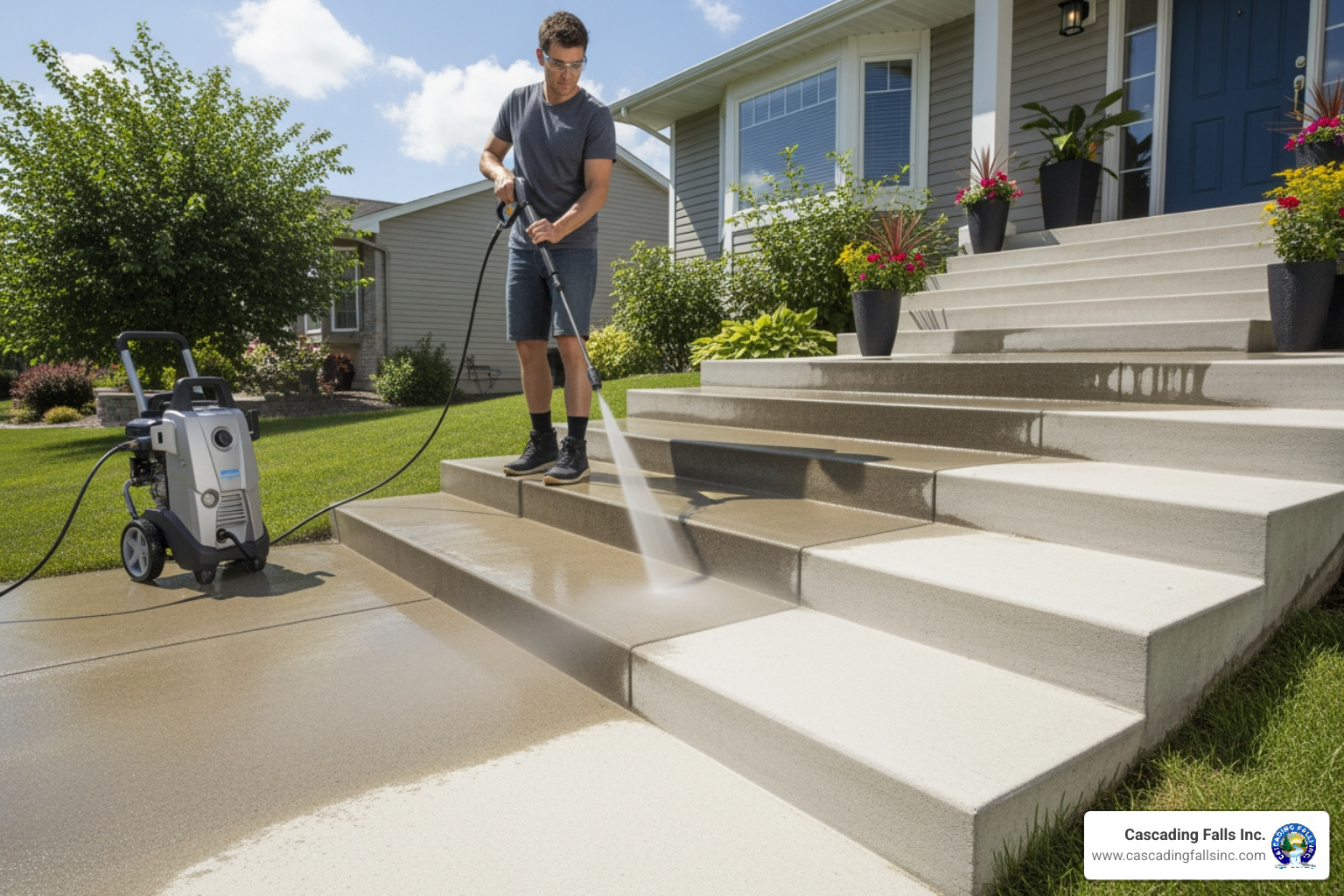
Properly built concrete is low-maintenance, but following a few simple guidelines will keep your steps looking great for generations.
How do I maintain my new concrete steps?
- Regular Cleaning: Sweep away debris regularly. For deeper cleaning, use a garden hose or a pressure washer on a low setting with a mild detergent.
- Sealing: This is the most important task. Apply a high-quality concrete sealer every 2-3 years to protect against moisture, stains, and UV damage.
- De-Icer Warning: Avoid using de-icing salts on new concrete for at least the first two years, as they can cause surface flaking (spalling). Afterward, use calcium chloride-based products sparingly instead of rock salt.
- Stain Prevention: Clean up spills like oil, grease, or rust promptly to prevent permanent discoloration.
For more tips on maintaining your property's outdoor surfaces, see More about our property Services.
How does a concrete steps builder handle repairs vs. replacement?
Knowing when to repair or replace is key to safety and cost-effectiveness.
- Assessing Damage: We first determine the root cause of the problem.
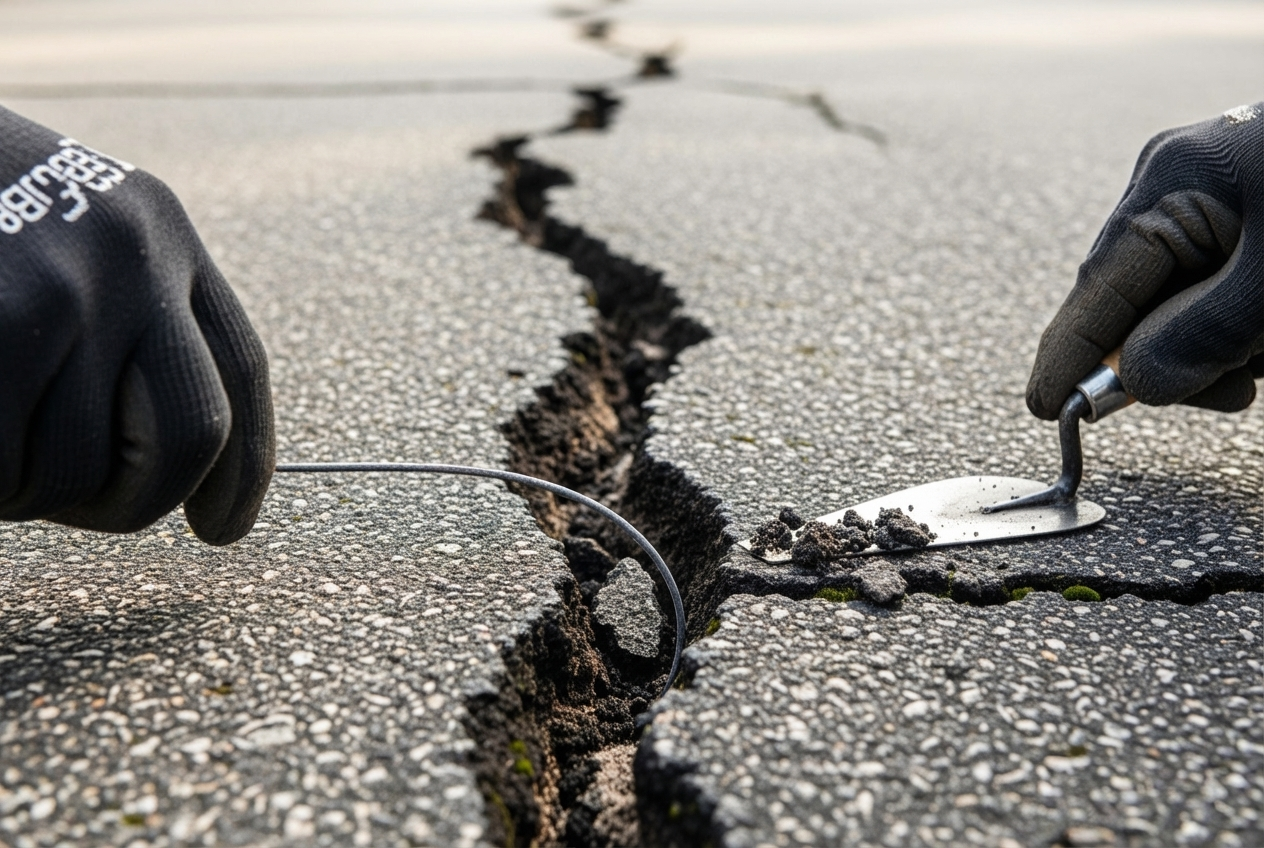
- Cracks: Hairline cracks are often cosmetic and can be sealed. Large, expanding, or uneven structural cracks indicate a deeper problem that may require replacement.
- Spalling: Minor surface flaking can sometimes be patched. Widespread spalling often calls for resurfacing or replacement.
- Unevenness/Settling: This is a red flag for foundation issues. Patching the surface is a temporary fix; the underlying problem must be addressed, which usually means replacement.
- Pouring Over Existing Steps: This can be a cost-effective option if the original steps are structurally sound. We must first assess their stability to see if this is a viable solution.
Our primary concern is structural integrity. For severe issues, full replacement is the safest long-term solution.
What factors influence the final cost?
The cost of concrete steps varies based on several factors. We provide a transparent, itemized quote so you know exactly what you're paying for.
- Materials: The cost of the concrete mix, steel rebar, and any color pigments.
- Labor: This is often the largest cost, covering demolition, form-building, pouring, finishing, and cleanup.
- Project Complexity: Simple, straight steps are more affordable than designs with curves, landings, or custom features like floating steps.
- Finish Type: A standard broom finish is economical, while decorative finishes like stamped or exposed aggregate cost more.
- Demolition: Removing and hauling away old steps adds to the cost.
- Site Access: Difficult-to-reach sites may require more labor or specialized equipment, affecting the price.
- Sustainable Practices: We follow modern, efficient processes, such as those outlined in Sustainable construction practices, to reduce waste and optimize value.
Frequently Asked Questions about Concrete Step Construction
Can you pour new concrete over my old steps?
Yes, this is often possible if the existing steps are structurally sound. A professional concrete steps builder must first assess the old structure for major cracks or instability. If the foundation is solid, pouring over can be a cost-effective way to get a new look. If not, a full replacement is the safer option.
How long until I can walk on my new concrete steps?
For poured-in-place steps, you can typically allow light foot traffic after 24-48 hours. However, we recommend waiting at least 7 days for heavy use, as the concrete needs about 28 days to reach full strength. If you choose precast steps, you can walk on them immediately after installation.
What makes floating concrete steps different?
Floating steps are a high-end, contemporary design feature that creates the illusion of levitating treads. This effect requires significant structural engineering, internal bracing, and expert craftsmanship. Due to their complexity, they are a more costly option than traditional steps but offer a dramatic, modern architectural statement.
Conclusion
You are now equipped to make an informed decision about your concrete step project. Choosing the right concrete steps builder is about finding a partner who understands your vision and is committed to building a structure that is safe, beautiful, and will last for decades.
We've covered the key choices: poured-in-place vs. precast, design and finish options, and the critical importance of safety, code compliance, and proper construction methods.
At Cascading Falls Inc., we have been serving homeowners in Roseville, Sacramento, and throughout California with a "Whatever It Takes..." commitment since 2005. Our approach combines technical expertise with true craftsmanship to ensure your steps improve your curb appeal and add lasting value to your property. We handle the entire process, from design and permits to final cleanup, with clear communication and transparent pricing.
Your home's entrance is its first impression. It deserves steps that reflect quality and care.
Ready to take the next step? Transform your entryway with our expert concrete services and let's create something exceptional together.