Why Concrete Gap Repair Matters for Your Property
Concrete gap repair is essential for maintaining the safety, appearance, and longevity of your concrete surfaces. Here's what you need to know:
Quick Answer: How to Repair Concrete Gaps
- Assess the gap - Determine its size, location, and whether it's structural.
- Prepare the surface - Clean out debris and properly condition the surface.
- Fill the gap - Select the right material (epoxy for structural, polyurethane for flexible, cementitious for general patching).
- Cure properly - Follow material-specific curing requirements for maximum strength.
Properly installed concrete should last indefinitely, but gaps and cracks are common. They form from drying shrinkage, freeze-thaw cycles, soil settlement, and rebar corrosion. Untreated gaps allow water intrusion, which accelerates deterioration, especially in freeze-thaw climates. What starts as a cosmetic issue can quickly become a structural concern.
Fortunately, most repairs are manageable DIY projects with the right knowledge and materials. Epoxy fillers offer impressive strength (over 7,800 psi), often stronger than the concrete itself. For moving cracks, flexible polyurethane sealants prevent water entry while allowing movement. For larger voids, rapid-setting cementitious mortars can reach 7,250 psi in four hours.
I'm David Shelly. With nearly two decades in construction and landscape design since 2005, I've handled countless concrete repairs for residential and commercial clients. My experience, from simple crack fills to structural reinforcement, gives me deep insight into what works for lasting concrete gap repair.
Understanding Why Concrete Gaps Form
Unwelcome cracks and gaps on a concrete patio or driveway are a common sight. Understanding the root causes is the first step toward effective concrete gap repair. Issues can arise from the initial installation, weather, or the ground itself.
Common culprits include:
- Drying Shrinkage: As concrete hardens and loses moisture, it naturally shrinks. If this shrinkage is restrained, it can cause cracks.
- Soil Settlement: The ground beneath a slab can shift or settle, stressing the rigid concrete and causing gaps. This is common in areas like Roseville and Sacramento with changing soil conditions.
- Freeze-Thaw Cycles: In seasonal climates, water enters concrete pores, freezes, and expands by about 9%. This immense pressure widens existing cracks and creates new ones, accelerating wear.
- Heavy Loads: Excessive weight or heavy traffic can crack concrete, especially if the slab is too thin or the subgrade is poorly prepared.
- Rebar Corrosion: Moisture and salts can corrode internal steel rebar. Rusting steel expands dramatically, cracking the surrounding concrete from within.
- Alkali-Aggregate Reaction (AAR): A less common chemical reaction between cement and certain aggregates. It creates a gel that swells with water, causing internal pressure and cracking.
For more detailed information on preventing and repairing issues with your concrete, explore our dedicated services: More info about our concrete services.
Plastic vs. Drying Shrinkage Cracks
Not all shrinkage cracks are the same. They are categorized based on when they appear:
- Plastic Shrinkage Cracks: These shallow, irregular cracks appear on fresh concrete when the surface dries too quickly due to wind, sun, or low humidity. While usually not structural, they are unsightly and can allow water entry.
- Drying Shrinkage Cracks: These deeper cracks form over weeks or months as the concrete cures and shrinks. If this movement is restrained by other structures, stress builds and causes cracks that can be more serious, especially if they are wide.
Structural vs. Non-Structural Gaps
Distinguishing between structural and non-structural gaps is critical to choosing the right repair.
- Non-Structural Gaps: These are cosmetic and don't affect the concrete's load-bearing capacity. However, they should be sealed to prevent water intrusion, which can lead to more severe issues like freeze-thaw damage or rebar corrosion. Repairing them is a smart preventative measure.
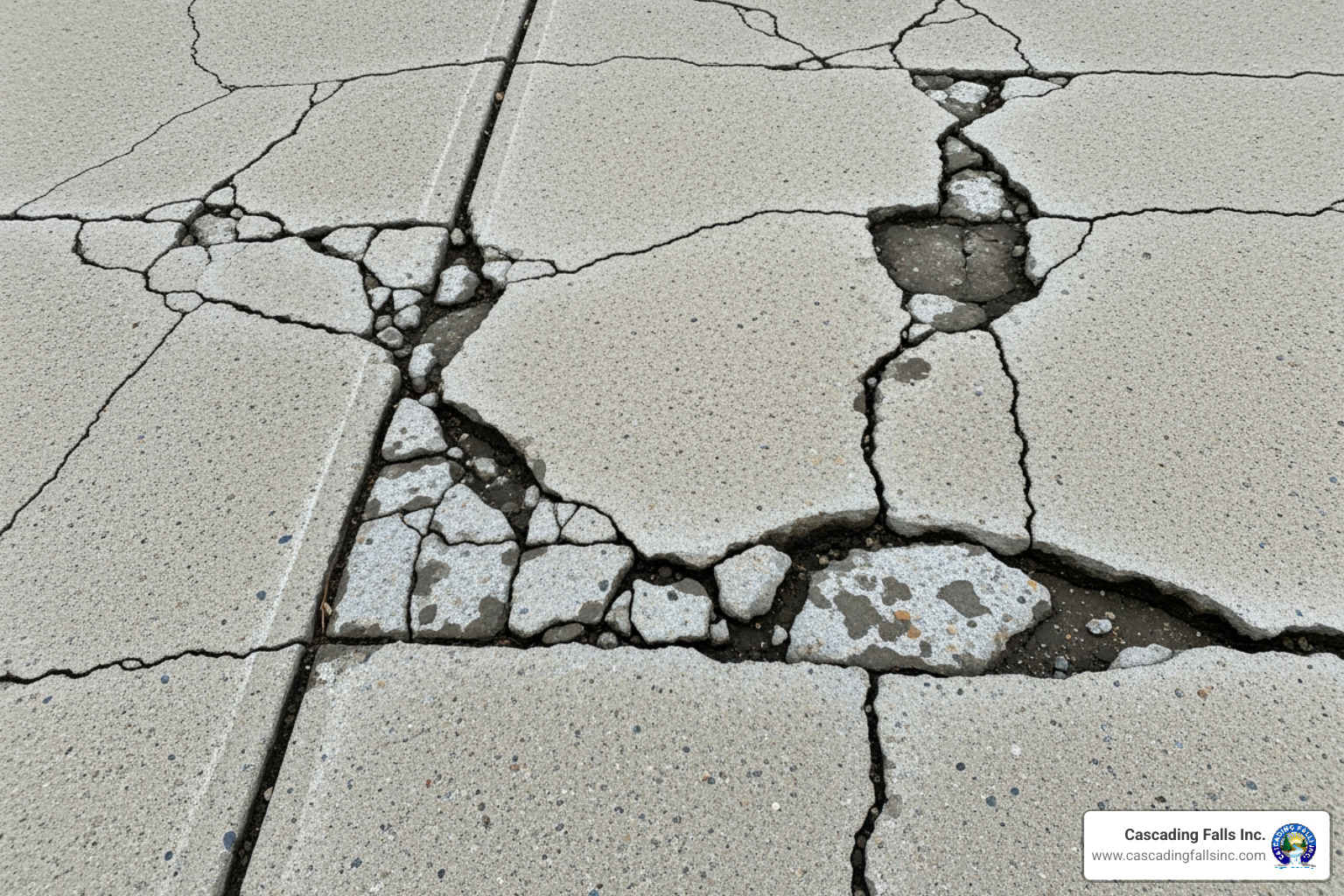
- Structural Gaps: These gaps indicate a problem with the concrete's ability to support weight, caused by overloading, foundation issues, or severe rebar corrosion. Signs include wide, deep cracks, differential settlement (one side higher than the other), and rapid growth. They are a safety risk requiring immediate professional assessment. As the Bureau of Reclamation notes, understanding the cause is key before any repair.
Your Repair Toolkit: Choosing the Right Materials and Methods
Choosing the right material for concrete gap repair is crucial. The decision depends on the crack type, its location, and whether the repair is structural or for sealing. A structural crack needs a different solution than a flexible expansion joint.
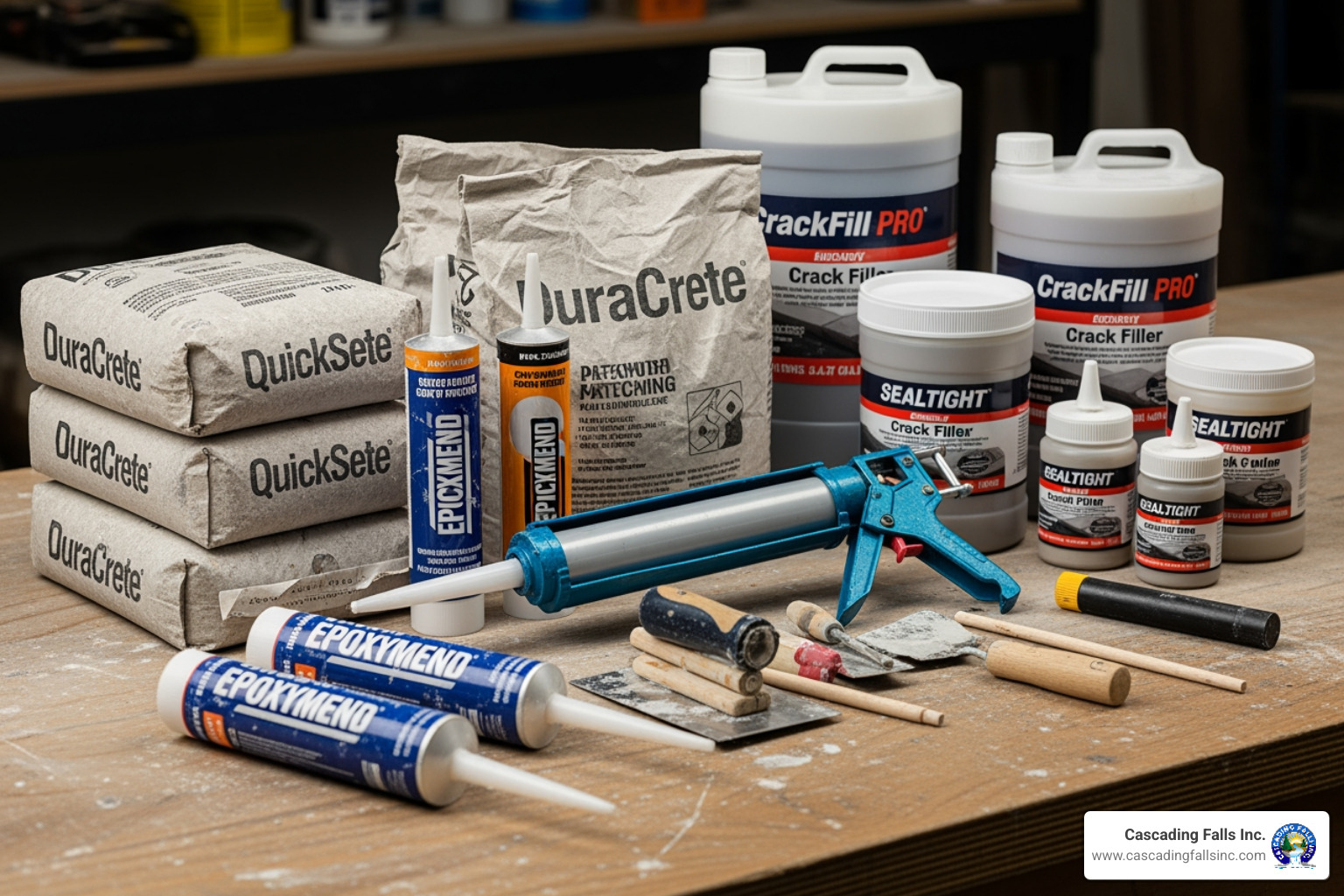
Here's how the main repair materials stack up against each other:
| Material Type | Strength | Flexibility | Cure Time | Best Use |
|---|---|---|---|---|
| Epoxy Mortars | Very High (7800+ psi compressive) | Rigid | ~24 hours (full cure 7 days) | Structural cracks, bonding, high-traffic areas, patching |
| Polyurethane Sealants | Moderate | Very High | ~24 hours (tack-free 1-2 hours) | Moving cracks, expansion joints, water-stopping, flexible applications |
| Cementitious Mortars | High (7250 psi in 4 hrs) | Rigid | Rapid (minutes to hours for initial set) | General patching, spall repair, non-moving cracks, matching existing concrete |
Epoxy-Based Fillers
For serious strength, epoxy-based fillers are the top choice. These two-part systems (resin and hardener) create an incredibly strong bond, ideal for structural repairs or high-load areas. Quality epoxies can exceed 7800 psi in compressive strength—stronger than the original concrete (typically 3000-5000 psi). Some polyester mortars achieve 7,250 psi in just four hours, ensuring a durable repair.
Epoxy bonds fractured concrete, restoring structural capacity. As noted in the Guide to Concrete Repair, it can be injected into cracks to form a polymer plug. Its low shrinkage prevents new cracks from forming at the repair edge. Correct mixing ratios are vital for these two-part systems, but many products simplify this with cartridges and static mixing nozzles.
Polyurethane and Flexible Sealants
For cracks that move with temperature or traffic ("active cracks"), a rigid filler will fail. Flexible polyurethane sealants are the solution. These materials stretch and compress with the concrete, maintaining a watertight seal. This makes them ideal for active cracks and expansion joints, which are designed to accommodate movement.
Instead of fighting movement, flexible sealants accommodate it. Some polyurethane formulations are hydrophilic, reacting with water to form a foam or gel, which is excellent for stopping active water leaks in areas like basements. The key is to match the sealant's flexibility to the crack's expected movement.
Cementitious and Polyester Mortars
For a seamless blend in appearance and performance, cementitious and polyester mortars are ideal. They are perfect for patching spalls (surface chips), filling large voids, and repairing non-moving cracks. A key advantage of cement-based mortars is their thermal compatibility; they expand and contract like the original concrete. This reduces stress at the bond line and helps the patch blend in, creating a durable, less visible repair.
ACI guidelines recommend repair materials stronger than the original concrete (at least 4000 psi). Modern rapid-set products, like some polyester mortars, can gel in minutes and cure in under an hour, allowing for a quick return to service. The strength gain is impressive. For example, Sikacryl® PowerSet reaches 7,250 psi in just four hours, with flexural and tensile strengths that rival structural concrete, making it suitable for demanding repairs.
Whether you're dealing with a hairline crack or a significant spall, choosing the right material makes all the difference. For projects that extend beyond concrete work into broader outdoor improvements, explore more info about our landscaping services.
A Step-by-Step Guide to Flawless Concrete Gap Repair
Many concrete gap repair projects are manageable for a diligent homeowner, but proper technique and safety are crucial. This guide will help you repair the problem correctly for long-term results.
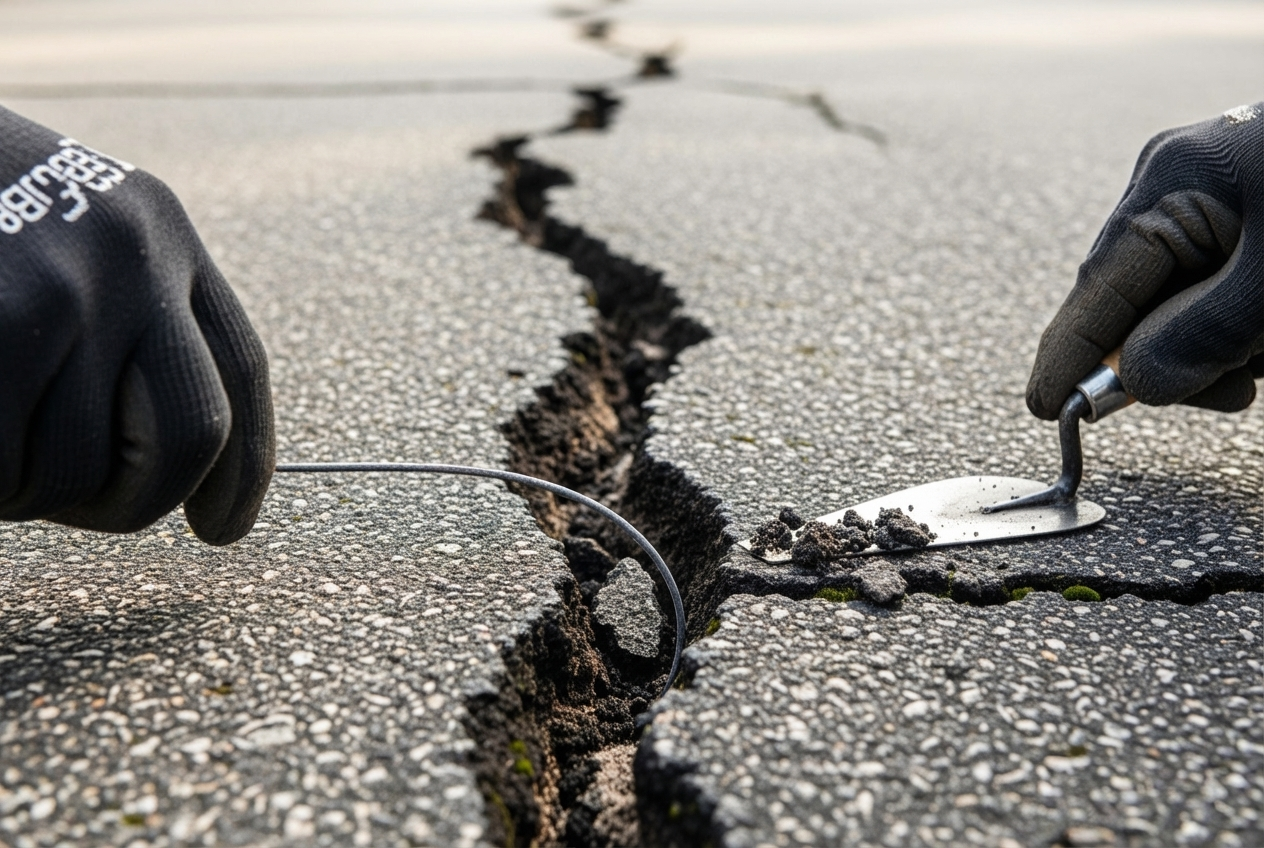
Before you start, gather your tools: safety glasses and gloves, a chisel and hammer, a wire brush, and a vacuum or compressed air. You may also need a caulk gun, trowel or putty knife, backer rod for deep gaps, mixing buckets, and measuring tools. Water and sponges are also helpful for cleanup.
Step 1: Surface Preparation is Key
This is the most crucial step. As the ACI 546R-96 guide states, the success of a repair depends on surface preparation. Poor prep is a leading cause of repair failure.
First, remove all loose and deteriorated concrete with a chisel and hammer until you reach a solid base. For narrow cracks, widen them into a "V" or "U" shape to give the repair material a better grip and sufficient thickness. For larger areas, saw-cutting the edges vertically prevents "feather edges" that can chip.
Next, clean the crack thoroughly. Use a wire brush to scrub the surfaces, then remove all dust and debris with a vacuum or compressed air. For many repairs, a Saturated Surface-Dry (SSD) condition is required. This means the concrete is damp with no standing water. Pre-wet the area, then remove excess water just before application. This prevents the old concrete from drawing moisture from the new material, ensuring a strong bond. However, always check the product instructions, as some materials require a completely dry surface. The 546R-96 Concrete Repair Guide details these critical steps.
Step 2: Mixing and Application for Concrete Gap Repair
With the surface prepped, you can begin the repair. Follow manufacturer instructions precisely. Each product has specific mix ratios, working time ("pot life"), and temperature requirements. Ignoring them can cause the repair to fail.
For two-part materials, measure accurately and mix thoroughly. Cartridges with static mixing nozzles automate this process. Be mindful of the pot life —the time you have to work before the material hardens. Some rapid-set products have a pot life of only a few minutes, so you must work quickly.
For cracks deeper than half an inch, insert a foam backer rod. This saves material, prevents the filler from sinking too deep, and ensures a proper two-sided bond for sealants.
Use a trowel to press the patching compound firmly into the void, ensuring it's completely filled. Overfill slightly and smooth it flush. For very fine cracks (0.002-0.01 inches), resin injection is most effective. This involves sealing the surface and pumping epoxy or polyurethane into the crack through ports to create a structural bond.
Step 3: Curing for Long-Term Durability
Curing is the final, vital step that allows the repair material to achieve its full strength and durability. For cement-based materials, proper curing is essential. It prevents rapid drying, which can cause shrinkage cracks and a weak bond. Curing ensures the cement has enough moisture to hydrate and gain maximum strength.
To prevent rapid drying of cement-based repairs, keep the surface moist for several days. Common methods include:
- Water Curing: Regularly mist the surface or cover it with wet burlap and plastic sheeting. ACI recommends at least 7 days for this method.
- Membrane-Curing Compounds: Spray-on liquids that form a film to trap moisture, allowing for effective curing.
Always follow the manufacturer's recommended curing times before subjecting the repair to traffic. While some materials like Sikacryl® PowerSet cure in under an hour, others need days or weeks to reach full strength. Patience ensures a durable concrete gap repair.
Advanced Solutions and When to Call a Professional
While many repairs are DIY-friendly, some concrete gap repair situations require professional expertise to avoid costly mistakes. Call a professional if you see structural cracks (moving, in a foundation), widening gaps, or need advanced reinforcement. Vertical and overhead repairs on important structures also warrant an expert.
Reinforcing Gaps with Carbon Fiber
For serious structural cracks in foundations or load-bearing walls, we often use modern carbon fiber reinforcement. Carbon fiber "stitches" or "locks," like those from Rhino Carbon Fiber, are installed in slots cut across a crack. Embedded in epoxy, these locks use carbon fiber's immense tensile strength to transfer stress away from the crack to the surrounding solid concrete.
Carbon fiber is 10 times stronger than steel and, unlike steel rebar, it is non-corrosive. This prevents future damage from rust and ensures a long-lasting repair. This versatile solution is effective for everything from basement cracks to commercial structures, providing long-term durability and peace of mind.
Tackling Vertical and Overhead Concrete Gap Repair
Gravity makes vertical and overhead repairs challenging, so specialized materials are essential. For these applications, we use non-sag epoxies that can fill voids up to 1/2" wide without slumping. These materials, such as ArmorGarage's Vertical Concrete Crack Repair Patch, cure to exceptional strengths (e.g., 7800 psi compressive strength), often making the repair stronger than the original concrete.
Excellent adhesion is critical for vertical and overhead repairs to resist gravity and structural stress. This makes proper surface preparation even more important; skipping it guarantees failure. Beyond crack filling, these products can be used to build curbs or create structural "stitches" with embedded metal rods.
The Implications of Improper Repair
Improper repairs often fail within months, leading to expensive and potentially dangerous consequences. An unsealed crack allows water intrusion, which leads to freeze-thaw damage and rebar corrosion. A hairline crack can quickly evolve into a large spall as rusting rebar expands and breaks the concrete apart.
Using the wrong material on a structural crack is a temporary fix that hides the problem without addressing the underlying stress. The crack will reappear, often worse, compromising the structure's integrity. Poor cosmetic repairs can also fail, looking worse than the original damage.
Improper repairs always cost more long-term. As the Bureau of Reclamation emphasizes, you must fix the root cause, not just the symptom. A simple fix can turn into a major demolition and replacement project. This is why we encourage property owners in Roseville and Sacramento to call us when uncertain. When your property's integrity is at stake, professional expertise is an investment, not an expense.
Get a professional assessment for your concrete repair needs and let us help you avoid the costly mistakes we see far too often.
Conclusion
This guide has covered the essentials of concrete gap repair, from the causes—like shrinkage and freeze-thaw cycles—to choosing the right material, whether it's strong epoxy, flexible polyurethane, or a cementitious patch. Success hinges on four key steps: assess, prepare, fill, and cure. Meticulous surface preparation is the foundation of a durable repair that lasts for years.
You can confidently tackle small, cosmetic repairs on your own. However, knowing when to call a professional is wisdom, not weakness.
Structural cracks, foundation issues, or widening gaps signal a deeper problem, such as soil settlement or chronic water intrusion. These require professional assessment and advanced solutions like carbon fiber reinforcement.
At Cascading Falls Inc., our nearly two decades of experience in Roseville and Sacramento means we understand local conditions and what it takes to protect your concrete investment. Our "Whatever It Takes..." approach ensures your repair is done right, from simple fills to complex structural work.
The cost of an improper repair is always higher in the long run. It can lead to accelerated water damage, worsening structural problems, and the need for a major replacement. We can help you avoid that costly headache.
If you're unsure about a crack, reach out to us. We provide honest guidance. When professional expertise is needed, we bring our experience and commitment to craftsmanship to ensure your concrete is protected for the long haul.
Get a professional assessment for your concrete repair needs and let's make sure your property's concrete stays strong, safe, and looking great for years to come.