Why Patio Overlay Concrete is Revolutionizing Outdoor Spaces
Patio overlay concrete is a thin layer of polymer-modified cement applied directly over your existing concrete surface to create a beautiful, durable finish without demolition or replacement. Here's what you need to know:
Quick Answer: What is Patio Overlay Concrete?
- What it is: A 1/4" to 1/2" layer of specialized concrete applied over existing slabs
- Cost: $3-$10 per square foot (vs. $3-$15+ for replacement)
- Timeline: Most projects complete in 1-3 days
- Durability: Lasts 10-20 years with minimal maintenance
- Best for: Patios with minor cracks, stains, or surface wear
- Not suitable for: Severely cracked, settling, or structurally damaged concrete
Nothing makes a home look more dated than a tired-looking concrete slab. Stains, cracks, mold, and discolorations detract from curb appeal and make your outdoor space less inviting. But the time and expense of removing a concrete slab keeps most homeowners from replacing it entirely.
That's where patio overlay concrete changes the game. Instead of the mess and cost of demolition, you can transform your existing patio in just a few days with a durable, customizable surface that mimics natural stone, brick, wood, or sleek modern finishes. For most homeowners, a 1,000 square foot restoration runs between $6,000 and $12,000—a fraction of full concrete replacement, which can exceed $15,000 to $20,000.
Whether your patio has hairline cracks, surface discoloration, or simply looks worn and outdated, an overlay system offers a practical solution. The polymer-modified formulas bond tightly to your original slab, creating a surface that's actually stronger than standard concrete—rated to withstand up to 5,000 PSI of pressure in some systems.
I'm David Shelly, and with nearly two decades of hands-on experience in landscape construction and project management, I've helped countless property owners transform their outdoor spaces using patio overlay concrete systems. This guide will walk you through everything you need to know to make an informed decision about resurfacing your patio.
What is a Concrete Patio Overlay and Why Choose It?
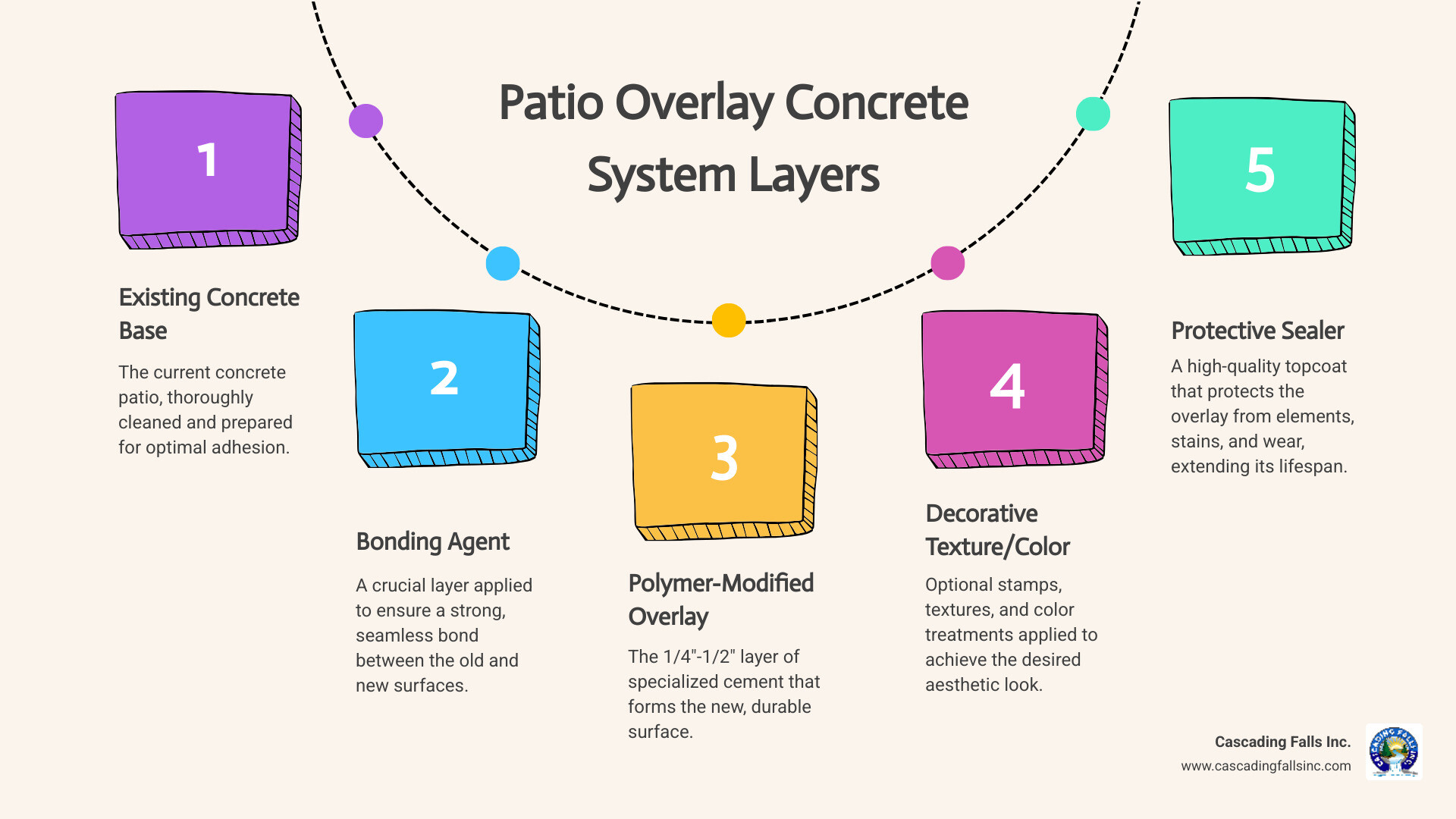
A patio overlay concrete system is fundamentally a thin layer of specialized, polymer-modified cement that we apply directly over an existing concrete slab. Think of it as giving your patio a fresh, new skin. Unlike traditional concrete, which is typically poured in thicker slabs (4 inches or more), an overlay is much thinner, usually ranging from 1/4 inch to 1/2 inch. This allows us to refresh your patio without the significant structural work or material volume of a full replacement.
The "polymer-modified" aspect is key here. These polymers improve the concrete's flexibility, adhesion, and strength, allowing it to bond seamlessly with the existing surface and withstand the elements, including California's varied climate. This advanced concrete technology is making a significant impact on modern construction and aesthetics, providing transformative solutions for outdoor renovations. Learn more about the impact of advanced concrete technologies on construction and aesthetics at engineering research.
The Core Benefits of Resurfacing
Choosing to resurface your patio with a concrete overlay offers a wealth of advantages:
- Cost Savings: Without a doubt, one of the biggest draws of an overlay is the significant cost reduction compared to demolishing and replacing an entire patio. You save on labor, disposal fees, and new material costs.
- Less Disruptive Process: Tearing out an old concrete patio is a messy, noisy, and time-consuming endeavor. With an overlay, the process is far less invasive, often completed in just a few days, minimizing disruption to your home and landscaping.
- Covers Minor Imperfections: Overlays are excellent for concealing minor surface damage like hairline cracks, chips, and discoloration, giving your patio a fresh, uniform appearance.
- Highly Customizable: This is where the fun begins! Overlays offer incredible design versatility. We can incorporate a wide range of colors, patterns, and textures to match your home's aesthetic or create a completely new look.
- Eco-Friendly: By utilizing your existing concrete slab, we significantly reduce the amount of construction waste that ends up in landfills. This sustainable approach is not only good for your wallet but also for the environment.
Cost Analysis: Overlay vs. Full Replacement
When considering any home improvement project, cost is a major factor. Let's break down how patio overlay concrete stacks up against a full patio replacement:
| Feature | Patio Overlay Concrete | Full Patio Replacement |
|---|---|---|
| Cost per sq. ft. | $3 - $10 | $3 - $15+ |
| Demolition | Not required (significant savings) | Required (adds to cost and mess) |
| Installation Time | Most projects 1-3 days | Weeks, depending on size and complexity |
| Preparation | Surface cleaning, minor repairs | Excavation, sub-base preparation |
| Disruption | Minimal | High |
| Permits | Often not required for resurfacing | Often required for new construction |
Resurfacing typically costs between $3 and $10 per square foot, making it a budget-friendly way to achieve the look and feel of a new patio. In contrast, a new pour patio can cost anywhere from $3 to $15, or more, per square foot, depending on the size and detail of the design. When you factor in the additional costs of demolition, waste removal, and potential sub-base preparation for a new pour, the savings of an overlay become even more apparent.
Is Your Patio a Good Candidate for an Overlay?
Before we jump into the exciting design options, it’s crucial to assess your existing patio. While patio overlay concrete is a versatile solution, it's not a magic bullet for every situation. The success and longevity of an overlay largely depend on the structural integrity of the slab underneath.
We always start by thoroughly inspecting your existing concrete. We're looking for stability and a solid foundation. If the underlying concrete is severely compromised, an overlay might only offer a temporary cosmetic fix and could fail prematurely. Think of it like painting over rotten wood—it looks good for a moment, but the underlying problem remains.
Damage an Overlay Can Fix
If your patio exhibits any of the following, it’s likely a great candidate for a concrete overlay:
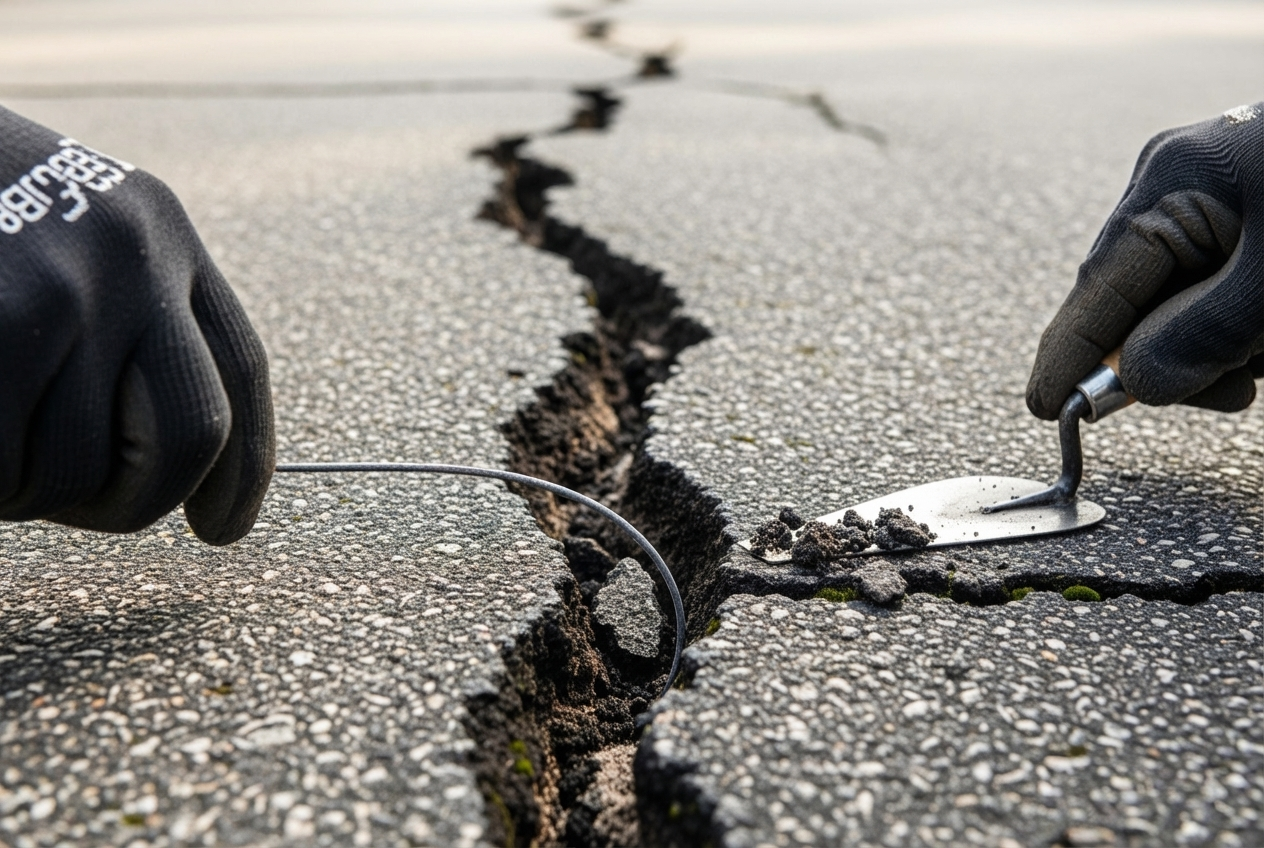
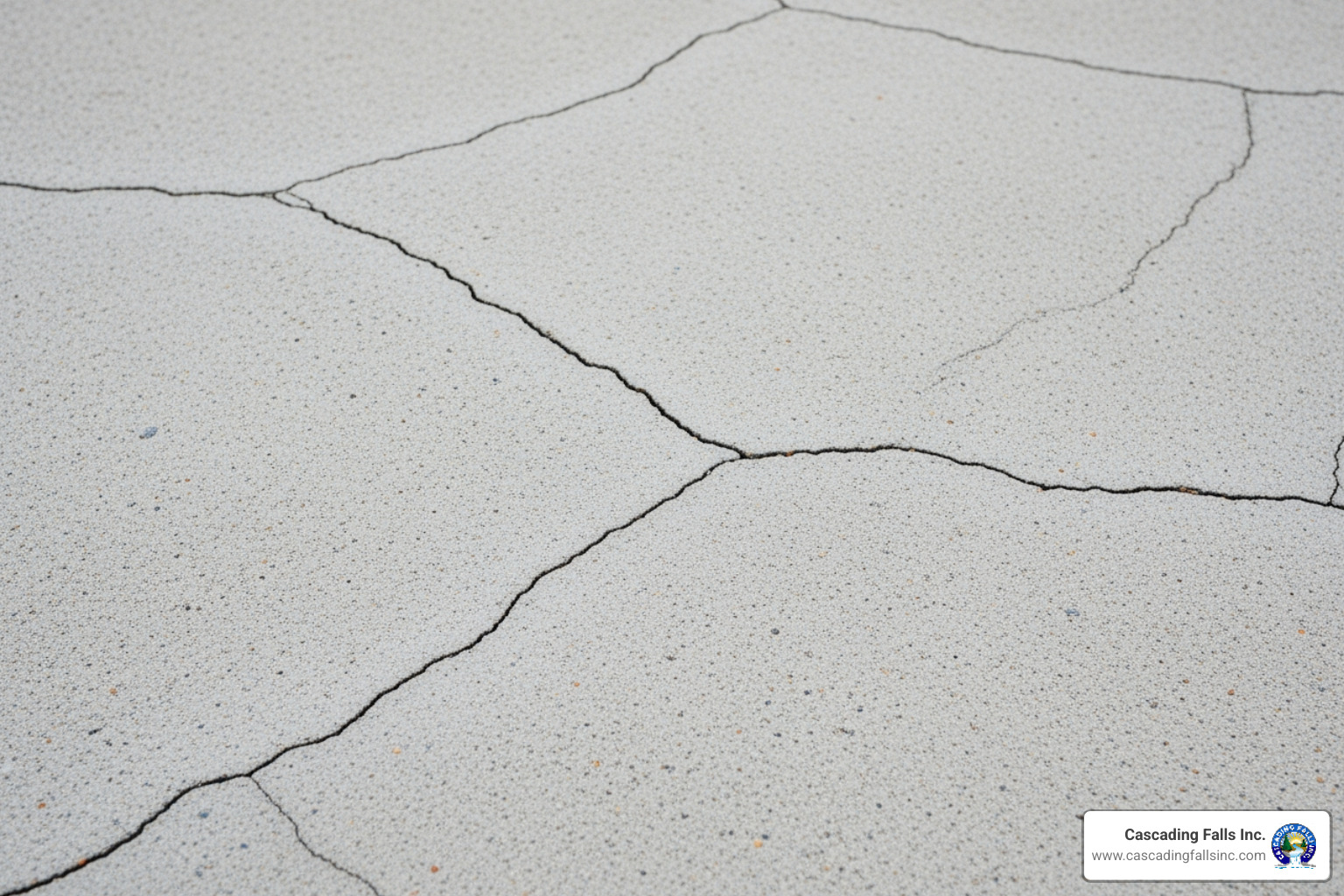
- Hairline Cracks: Small, non-moving cracks that are less than 1/8 inch wide are typically easy to repair and cover with an overlay.
- Minor Spalling: This refers to small, shallow divots or flaking on the surface, usually caused by freeze-thaw cycles or poor finishing. Overlays can smooth these out.
- Surface Discoloration: Fading, uneven coloring, or blotches from spills or sun exposure can be completely hidden and replaced with a fresh, uniform color.
- Stains: Stubborn oil stains, rust marks, or mildew that won't come clean can be permanently covered.
- Worn Textures: If your patio's original broom finish has worn smooth, making it slippery or dull, an overlay can restore or introduce a new, appealing texture.
When to Avoid a Patio Overlay Concrete Project
While overlays are fantastic, there are situations where we would advise against them. In these cases, a full replacement or more extensive repair might be the only viable, long-term solution:
- Large, Moving Cracks: Cracks wider than 1/8 inch, especially if they show signs of movement (one side higher than the other), indicate structural instability in the slab. An overlay will likely crack in the same spots.
- Severe Heaving or Settling: If sections of your patio have significantly lifted or sunk, it points to issues with the sub-base. An overlay won't address these foundational problems.
- Major Structural Damage: Extensive crumbling, large potholes, or sections that are breaking apart mean the original slab lacks the integrity to support an overlay.
- Poor Drainage or Water Pooling: If water consistently pools on your patio, applying an overlay without addressing the drainage issue will only lead to further problems, potentially trapping moisture and causing future damage.
Types and Aesthetics of Patio Overlay Concrete
Once we've determined your patio is a good candidate, the fun part begins: choosing the right system and design! Patio overlay concrete offers an unparalleled range of aesthetic options, allowing us to truly customize your outdoor space to reflect your style and complement your home. We understand that your outdoor areas are an extension of your living space, and we're dedicated to helping you create something truly special. For more inspiration on designing your outdoor space, explore More info about landscaping design.
Common Concrete Overlay Systems
The type of overlay system we choose will depend on the desired look, texture, and functionality:
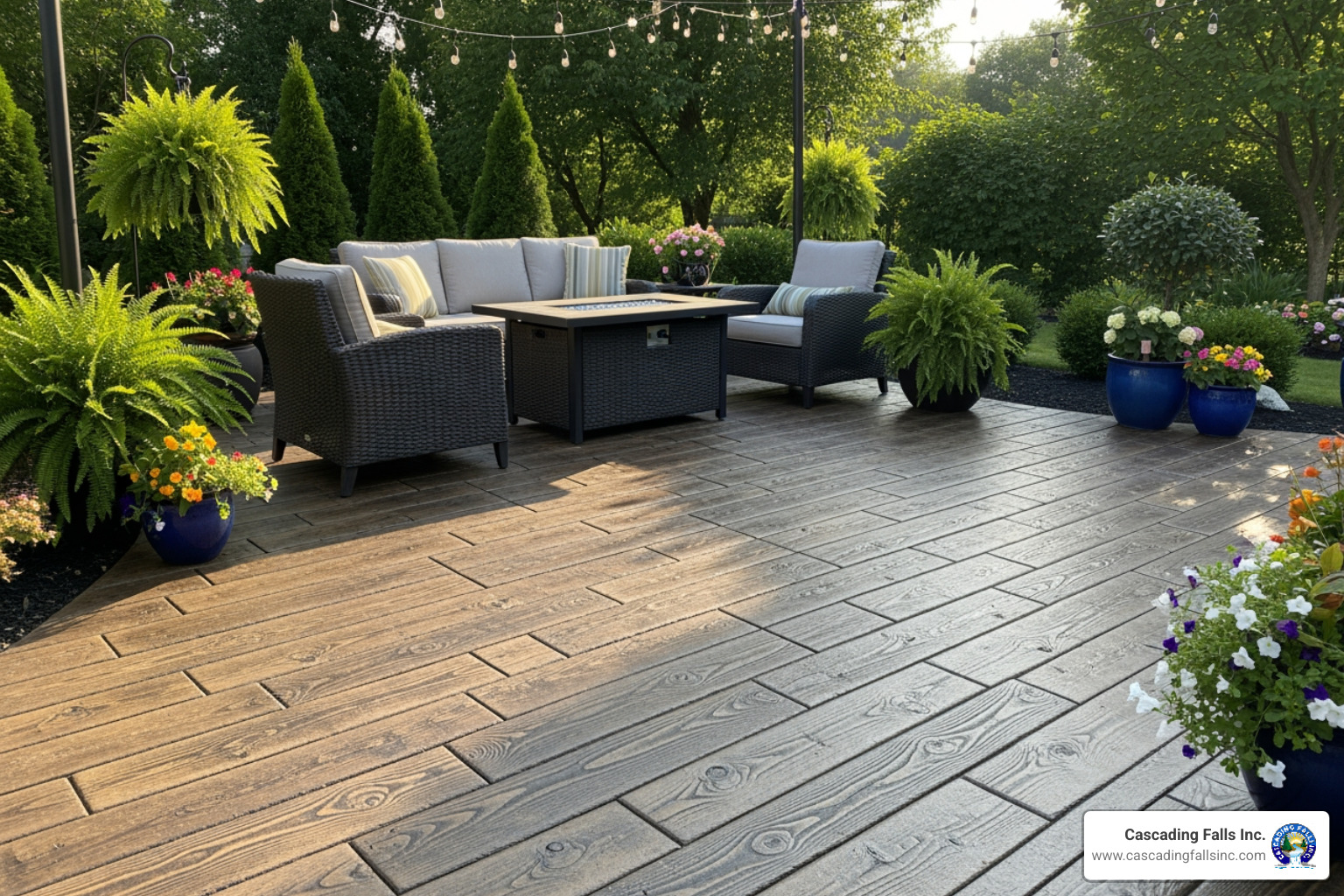
- Stamped Overlays: These are incredibly popular for mimicking natural materials. A thicker overlay is applied, and then specialized mats or "stamps" are pressed into the wet surface to replicate the look and texture of brick, cobblestone, slate, flagstone, or even wood planks.
- Microtoppings: These are very thin, smooth overlays, often applied in multiple coats. They create a sleek, minimalist finish, perfect for a modern aesthetic or for simply refreshing a dull surface with a new color. They can also be lightly textured for slip resistance.
- Spray-Down Systems: Applied with a hopper gun, these overlays create a textured, often non-slip, surface. They are excellent for pool decks or areas where improved traction is desired. They can be sprayed freehand or through stencils to create patterns.
- Self-Leveling Overlays: As the name suggests, these overlays are designed to flow out and create a perfectly smooth, level surface. They are ideal for correcting minor unevenness in the existing slab before applying further decorative treatments or as a final, polished finish.
Endless Aesthetic Possibilities
The beauty of patio overlay concrete lies in its versatility. We can achieve virtually any look you desire:
- Colors: We can integrate pigments directly into the overlay mix for a solid, consistent color. Alternatively, after the overlay cures, we can apply acid stains for variegated, natural-looking tones, or water-based dyes for vibrant, translucent effects.
- Patterns: Beyond stamping, we can use saw cuts, stencils, or even hand-troweled designs to create intricate patterns, borders, or faux grout lines.
- Textures: From a classic broom finish for slip resistance to a hand-troweled, rustic look, or the deep, authentic textures replicated by stamping mats, the tactile possibilities are vast.
- Borders and Accents: Contrasting colors or patterns can be used to create decorative borders, defining spaces or adding a touch of elegance. We can also embed decorative elements for unique accents.
Popular Design Trends for Overlays
Homeowners in Roseville, Sacramento, and across California are embracing these popular trends for their patio overlays:
- Natural Flagstone or Slate Look: Replicating the organic shapes and varied textures of natural stone creates a timeless, neat aesthetic that blends beautifully with landscaping.
- Modern Minimalist Gray: A sleek, solid gray microtopping or self-leveling overlay provides a clean, contemporary foundation for modern outdoor furniture and decor.
- Faux Wood Planks: Achieving the warmth and charm of wood decking without the maintenance. Stamped overlays can convincingly mimic the grain and texture of various wood species.
- Stenciled Tile Patterns: For a more intricate, European-inspired look, stenciled patterns can replicate the appearance of ceramic or encaustic tiles.
- Two-Tone Designs: Using two complementary colors, perhaps one for the main patio area and another for a border or accent, adds depth and visual interest.
The Step-by-Step Overlay Application Process
The magic of patio overlay concrete isn't just in the materials; it's in the meticulous application process. Proper procedure is paramount to ensure a beautiful, durable, and long-lasting finish. We adhere to industry best practices, using the right tools and materials for each step. Safety is always a priority for our team and your property. You can even get a visual idea of the process by watching this Watch– Video for How-To Instructions.
Step 1: Thorough Surface Preparation
This is arguably the most critical step. A successful overlay depends entirely on how well it bonds to the existing concrete, and that bond relies on a clean, sound surface.
- Cleaning and Degreasing: We begin by thoroughly cleaning the patio, removing all dirt, grime, grease, oil, and mildew using industrial-grade cleaners and degreasers. Power washing is often employed to ensure a pristine surface.
- Removing Old Sealers or Paint: Any existing sealers, paints, or coatings must be completely removed. This often involves grinding or chemical stripping to expose the bare concrete, allowing for maximum adhesion.
- Grinding the Surface for Proper Adhesion: Mechanical grinding or shot blasting creates a rough profile on the concrete surface, giving the new overlay something strong to grip onto. This is essential for preventing delamination.
- Repairing Minor Cracks with Filler: Hairline cracks and small spalling are filled with specialized concrete repair compounds. This creates a smooth, stable base for the overlay.
Step 2: Mixing and Applying the Overlay
With the surface prepped, we move to mixing and application:
- Following Product Instructions: Each overlay product has specific mixing ratios and application guidelines. Our experienced team carefully follows these instructions to ensure optimal performance.
- Mixing Overlay Components: The polymer-modified cement, water, and any integral color are thoroughly mixed to a consistent, lump-free slurry.
- Applying with a Gauge Rake or Squeegee: Depending on the type of overlay, we apply the material evenly across the patio surface using a gauge rake to control thickness or a squeegee for thinner applications.
- Troweling for a Smooth Base: The freshly applied overlay is then carefully troweled to create a smooth, consistent base layer, ready for texturing or further coats.
Step 3: Texturing and Curing
This is where the decorative aspect truly comes to life:
- Applying Texture Skins or Stamps: For stamped overlays, after the material has reached the right consistency (often called "plastic state"), large, flexible rubber mats (texture skins or stamps) are pressed into the surface to impart the desired pattern and texture.
- Broom Finishing: For a more traditional, slip-resistant finish, a special broom is dragged across the wet overlay to create subtle grooves.
- Allowing for Adequate Curing Time per Product Specs: Once textured, the overlay needs time to cure and harden. This can take anywhere from 24 hours to several days, depending on the product and environmental conditions. We ensure sufficient time before proceeding to the next steps.
Step 4: Coloring and Sealing
The final touches bring out the patio's full beauty and protect your investment:
- Applying Stains or Antiquing Agents: Once the overlay is cured, we can apply reactive acid stains for deep, mottled effects, or water-based dyes for more uniform color. Antiquing agents can be used to highlight stamped textures, giving them a natural, aged look.
- Applying a High-Quality Protective Sealer: A crucial final step is applying a durable, UV-resistant sealer. This protects the overlay from stains, abrasion, and weathering, enhancing its longevity and making it easier to clean.
- Choosing a Sealer (Gloss vs. Matte, Slip-Resistance): We'll discuss options like high-gloss sealers that make colors pop, matte finishes for a more subdued look, and sealers with anti-slip additives for improved safety, especially around pools or high-traffic areas.
DIY vs. Hiring a Professional
While some DIY kits are available, we generally recommend hiring a professional for patio overlay concrete projects, especially for larger or more complex designs.
- DIY Challenges: The learning curve for proper surface preparation, mixing, and application techniques can be steep. Renting specialized equipment can be costly, and mistakes in application can lead to costly repairs or a less-than-satisfactory finish.
- Professional Advantages: Our team at Cascading Falls Inc. brings expertise, efficiency, and specialized equipment to every project. We understand the nuances of different overlay systems, ensure proper surface preparation, and guarantee a high-quality, long-lasting result. We also provide warranties for our work, giving you peace of mind. For more information on our commitment to quality, explore More info about our professional services.
Durability, Maintenance, and Longevity
Investing in a patio overlay concrete is a smart choice for enhancing your home's value and enjoyment. To protect that investment, understanding its durability, expected lifespan, and simple maintenance requirements is key. These systems are designed to withstand the rigors of outdoor living, including California's climate, with proper care.
How Long Does a Patio Overlay Concrete Surface Last?
A properly installed patio overlay concrete can deliver 10-20 years of lifespan with minimal maintenance. This impressive longevity is due to several factors:
- Durability: Many high-quality overlay systems are rated to withstand 5,000 PSI of pressure, making them significantly stronger than standard concrete. This superior strength helps them resist chipping, cracking, and abrasion from foot traffic and patio furniture.
- Resistance to Freeze-Thaw Cycles: While less common in much of California than in colder climates, temperature fluctuations can still affect concrete. Polymer-modified overlays are engineered to maintain integrity under expansion and contraction, reducing the risk of damage.
- UV Stability: The sealers and integral colors used in our overlays are designed to resist fading and degradation from the intense California sun, ensuring your patio's vibrant look lasts for years.
Simple Maintenance for a Lasting Finish
One of the great advantages of patio overlay concrete is its relatively low maintenance. A little care goes a long way in preserving its beauty and extending its lifespan:
- Regular Sweeping: Simply sweeping your patio regularly will remove loose dirt, leaves, and debris that could otherwise grind into the surface and cause abrasion over time.
- Gentle Washing with Mild Soap: For a deeper clean, a hose and a mild detergent (like dish soap) with a soft-bristle brush are usually all that's needed. Avoid harsh chemicals or abrasive cleaners, as these can damage the sealer.
- Prompt Spill Cleanup: Address spills, especially those from oil, grease, or acidic substances, as quickly as possible to prevent staining.
- Re-sealing Every 2-4 Years: The protective sealer is your patio's first line of defense. Depending on foot traffic and sun exposure, we recommend re-applying a fresh coat of sealer every 2 to 4 years. This simple step is vital for maintaining the overlay's appearance and protective qualities.
Conclusion: A Smart and Stylish Patio Upgrade
As we've explored, patio overlay concrete offers a truly transformative solution for refreshing and revitalizing your outdoor living spaces. It's a testament to how innovation in concrete technology can provide both functional and aesthetic benefits. We've seen how it stands out as a cost-effective, less disruptive, and highly customizable alternative to full patio replacement.
From repairing minor imperfections to completely reinventing your patio's style, overlays provide exceptional durability and a long lifespan with minimal maintenance. It's a sustainable choice that not only improves your home's curb appeal but also reduces waste, aligning with modern environmental consciousness.
At Cascading Falls Inc., we are passionate about delivering quality, customer satisfaction, and best craftsmanship. Our "Whatever It Takes..." approach means we're committed to changing your vision into reality, ensuring your new patio overlay concrete is a source of pride and enjoyment for years to come.
For a professional consultation on your concrete project in Roseville, Sacramento, or anywhere in California, contact us today. Let us help you open up the full potential of your outdoor space with a beautiful, durable, and stylish patio overlay.