Why Building an Outdoor Kitchen Transforms Your Backyard Experience
Learning how to build an outdoor kitchen creates the ultimate backyard entertainment space, increasing your home's value by 10-20% with a return on investment of 55-200%. It eliminates the constant trips between your indoor kitchen and backyard grill, creating a dedicated hub for prepping, cooking, and entertaining all in one location.
Essential Steps to Build an Outdoor Kitchen:
- Plan your layout- Choose location, size, and zones (prep, cooking, serving, entertainment)
- Set your budget- Costs range from $5,000 for basic DIY to $30,000+ for luxury installations
- Obtain permits- Check local building codes and utility requirements
- Build the foundation- Pour concrete slab and run utility lines
- Construct the frame- Use wood, steel, or cinder block construction
- Install cladding and countertops- Apply weather-resistant materials
- Add appliances and finishing touches- Install grill, sink, lighting, and storage
The project typically takes two weekends for DIY builders with moderate skills, though utility hookups require licensed professionals. The key to success is proper planning and choosing durable materials that can withstand the elements. Whether you opt for a simple portable setup or a custom built-in design, the right outdoor kitchen transforms your property into an entertainment destination.
I'm David Shelly, and with nearly two decades of hands-on expertise in construction and landscape design, I've guided countless property owners through complex outdoor projects including how to build an outdoor kitchen that maximizes both function and value. My experience ranges from simple weekend DIY builds to elaborate custom installations that seamlessly integrate with existing landscapes.
Planning Your Perfect Outdoor Kitchen
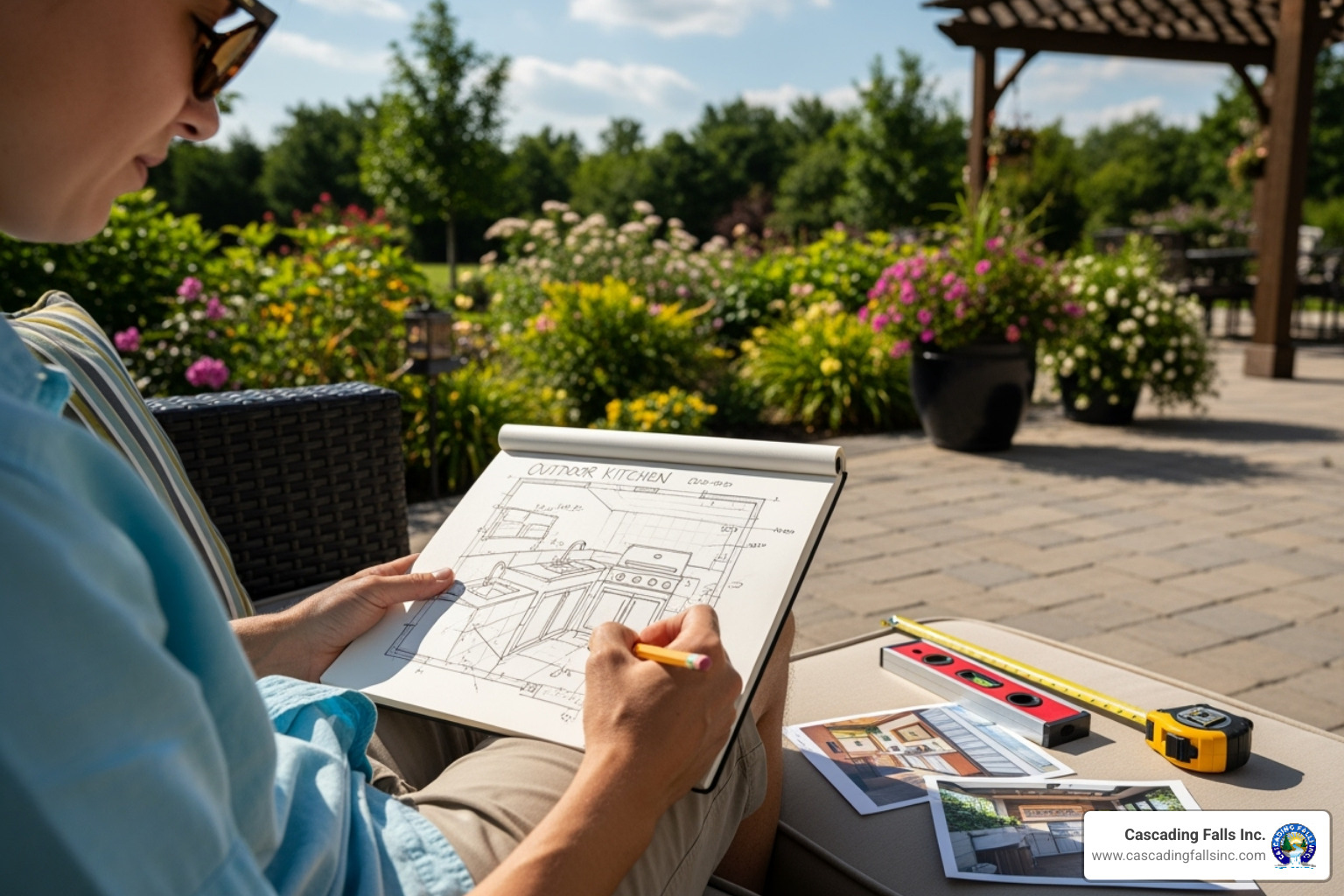
Smart planning is the first step to your dream outdoor kitchen. Before you pick up a tool, you need to establish your budget, choose the perfect spot, design an efficient layout, and understand permit and utility requirements. Skipping these steps can lead to expensive headaches. That's why we offer a Free Outdoor Kitchen Design Consultation with Cascading Falls Inc. – a professional eye can save you time and money.
Planning Your Layout: The First Step in How to Build an Outdoor Kitchen
The golden rule of placement is to stay close to home. Building within 15-20 feet of your house simplifies utility runs for gas, water, and electricity, saving you money. Also, consider prevailing winds to keep grill smoke away from dining areas and your house.
Apply the kitchen triangle concept to keep your grill, sink, and refrigerator within easy reach. For layouts, you have several options:
- L-shaped: Offers ample counter space and naturally separates cooking and serving areas.
- U-shaped: Provides maximum storage and workspace but requires more room.
- Linear: Works well in smaller spaces or against an existing wall.
- Island: Creates a central gathering spot for guests.
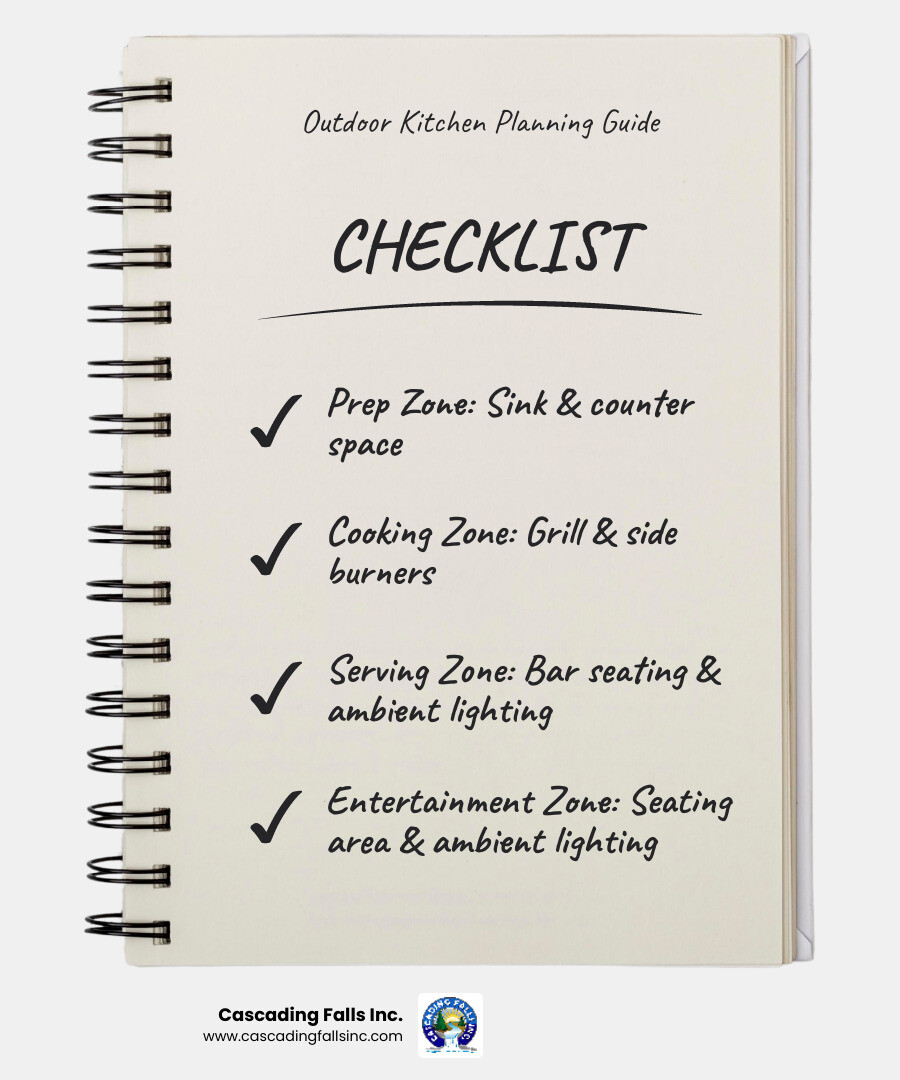
Think of your space in four zones: a prep zone with counter space and a sink, a cooking zone for your grill, a serving zone for plating, and an entertainment zone with seating. For help integrating your kitchen with your landscape, check out more info about our Landscaping Services.
Setting a Budget and Saving Money
Outdoor kitchens can range from $5,000 for a solid DIY setup to over $30,000 for high-end custom builds. Smart planning keeps costs reasonable.
- Build close to your house to shorten expensive utility runs.
- Minimize utility needs. A propane grill avoids gas plumbing, and solar lights eliminate electrical wiring.
- Prioritize multi-function appliances over single-use gadgets.
- Consider versatile solutions like portable carts instead of all built-in cabinetry.
- Go the DIY route if you have moderate construction skills to save on labor costs.
Navigating Permits and Local Codes
Before digging, contact your local building department in Roseville, Sacramento, or your specific California municipality. They'll provide building codes, setback requirements, and permit information. Don't forget to check with your HOA for their specific rules.
Generally, any structural work or utility installation (electrical, gas, plumbing) requires a permit. A simple movable grill island might not, but connecting it to utilities changes that. The golden rule: always hire licensed professionals for utility hookups. It's a matter of safety, not just compliance. Permits add time and cost, but they ensure your kitchen is safe, legal, and won't cause issues when you sell your home.
Construction Methods and Materials
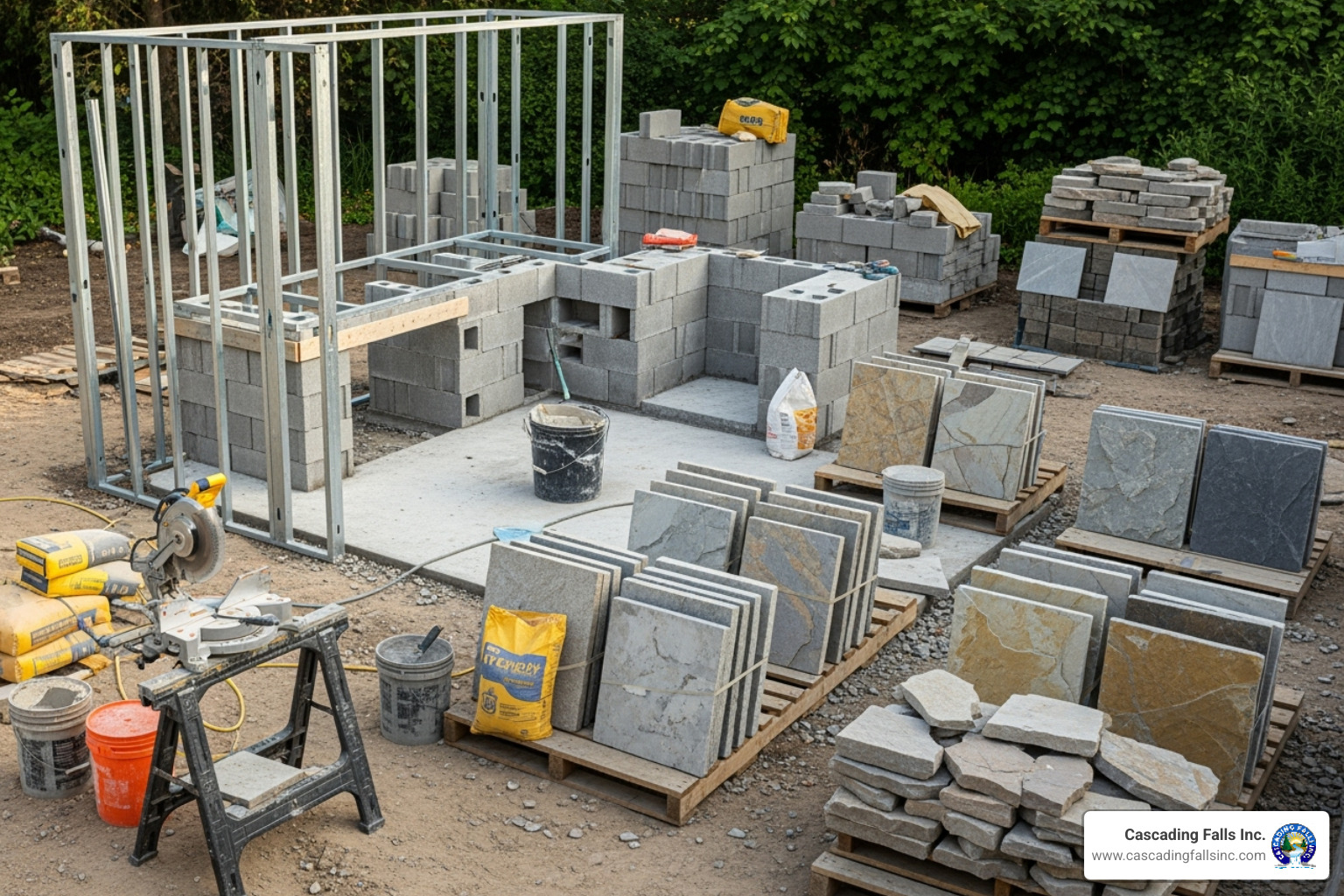
When learning how to build an outdoor kitchen, choosing the right construction materials is critical. Your outdoor kitchen must withstand scorching heat, driving rain, and everything in between. The frame, cladding, and countertops you select will determine its longevity and appearance for years to come.
Framing and Foundation: The Core of How to Build an Outdoor Kitchen
The frame is your kitchen's backbone. You have several excellent options:
- Wood frames are affordable and use familiar carpentry skills, but require pressure-treated lumber and must be covered with cement backer board for fire protection.
- Steel frames are heat-resistant, won't rot, and often come in kits. They are a modern, durable choice.
- Cinder block construction is incredibly durable, budget-friendly, and naturally fire-resistant, but requires a solid concrete slab foundation.
- Brick masonry offers a timeless look and exceptional durability but requires advanced skills or professional installation.
Here's how these options compare:
| Frame Type | Pros | Cons | Average Cost | Skill Level |
|---|---|---|---|---|
| Wood Frame | Affordable, familiar tools, readily available | Requires cement board sheathing, potential rot issues | Low | Moderate |
| Steel Frame | Heat resistant, lightweight, kit options available | Higher material cost, specialized tools needed | Medium | Moderate |
| Cinder Block | Very affordable, extremely durable, fire-resistant | Requires concrete slab, heavy materials | Low-Medium | Moderate-Advanced |
| Brick Masonry | Beautiful appearance, highly durable, low maintenance | Expensive, complex installation, requires slab | High | Advanced |
You can see examples of these methods in our project galleries: Wood-Frame Example, Steel-Frame Example, and Cinder Block Example.
Every great outdoor kitchen starts with a proper foundation, typically a level concrete slab, to prevent settling and cracking. For expert foundation work, explore More info about our Concrete Services.
Choosing Durable Countertops and Cladding
These surfaces face the toughest conditions.
- Countertops: Granite is the gold standard for its heat resistance and durability. Concrete offers a sleek, modern look but requires expert installation and sealing. Outdoor-rated ceramic tile is a budget-friendly DIY option for moderate climates. Our team specializes in Concrete countertops by Cascading Falls Inc..
- Cladding: Stone veneer provides the look of natural stone without the weight and is very low-maintenance. Brick is classic, durable, and requires little upkeep. Stucco works well in dry climates and can be tinted to match your home.
Choose materials that create a cohesive look with your home and landscape. For expert installation, consider professional Stonework by Cascading Falls Inc..
The Step-by-Step Guide on How to Build an Outdoor Kitchen
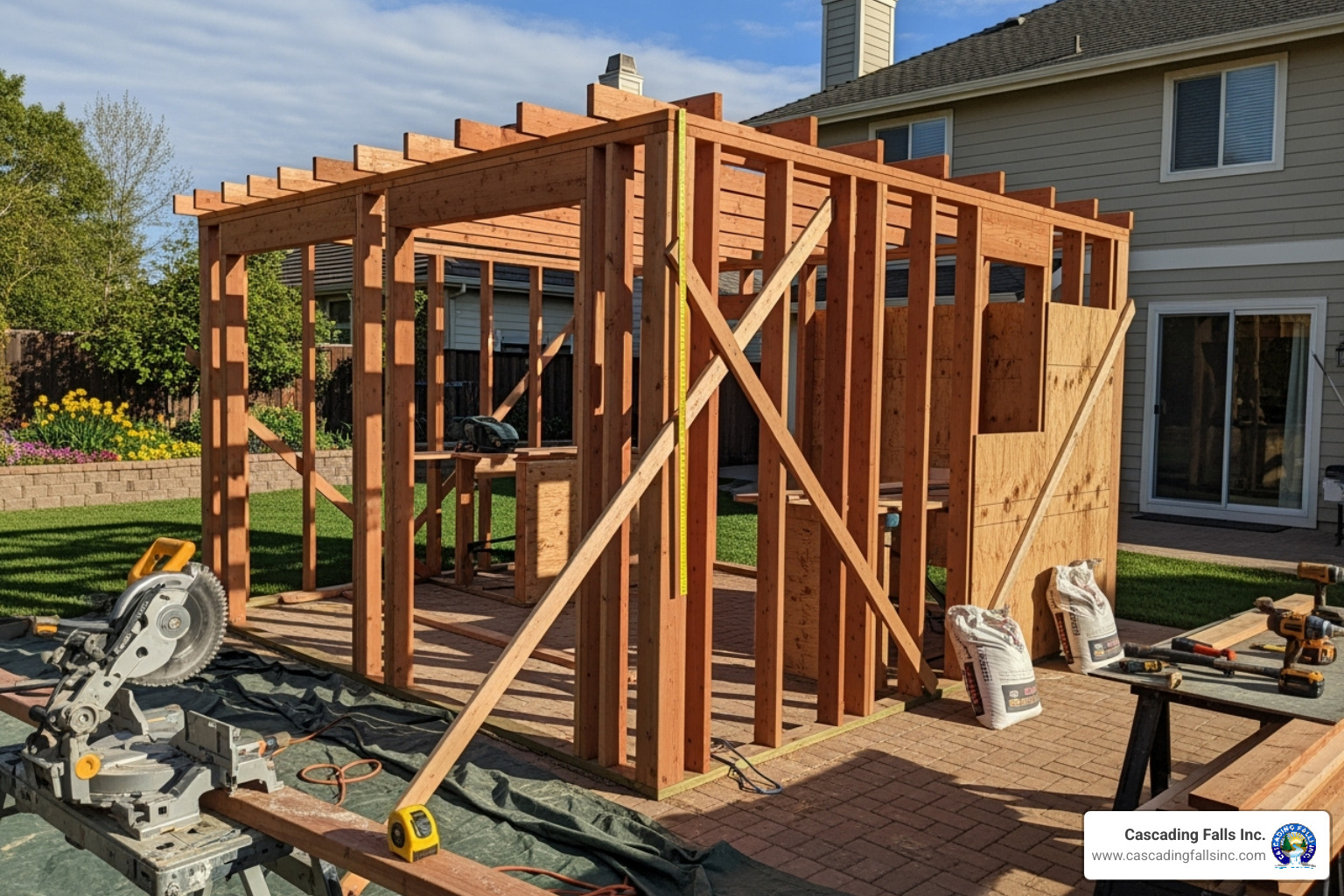
Ready to build? This is where your vision for how to build an outdoor kitchen becomes reality. This phase requires patience and precision. While it can be a rewarding DIY project, gas, electrical, and plumbing connections must be handled by licensed professionals.
For this project, you'll need essential tools like a circular saw, drill/driver, level, various trowels, and tin snips for steel frames. Always use safety gear, including glasses, gloves, and a dust mask.
Step 1: Prepare the Site and Run Utilities
Proper site prep is the foundation of success. Ensure the area has proper drainage to prevent water from pooling around the base. For most kitchens, pouring a level concrete slab is necessary to provide a stable, solid base that prevents shifting.
When trenching for utilities, plan your routes carefully. Gas, water, and electrical lines have specific depth requirements. Before you dig, call 811 to have existing underground utilities marked—this is a critical safety step. While you can dig the trenches, always hire licensed professionals for the final utility hookups to ensure safety and code compliance in Roseville, Sacramento, and across California.
Step 2: Build the Island Frame
With the foundation ready, it's time to build the frame.
- Wood Frame: Use pressure-treated 2x4s and exterior-grade screws. Create precise openings for appliances.
- Steel Frame: Assemble using 20-gauge steel studs and self-tapping screws. Place composite decking material underneath the frame to prevent rust from ground contact.
- Cinder Block/Brick: Start with a perfectly level and square first course on your slab. Work methodically, checking for level as you go.
Use your level constantly. After framing, sheath the structure with cement board over builder's felt and wire lath. This provides a crucial fire and water-resistant barrier.
Step 3: Install Cladding, Countertops, and Appliances
This is the finishing phase. First, apply a scratch coat of mortar to the cement board to create a bonding surface for your cladding. After it cures, install your stone veneer or other cladding material, working from the corners.
Next, place the countertops, ensuring they are perfectly level and secured with silicone adhesive. Finally, install your appliances, like the built-in grill, sink, and storage drawers, into their designated cutouts. Seal all stone and grout surfaces to protect your investment from weather and stains.
For complex installations, explore More info about Our Services to ensure your project exceeds expectations.
Appliances, Safety, and Finishing Touches
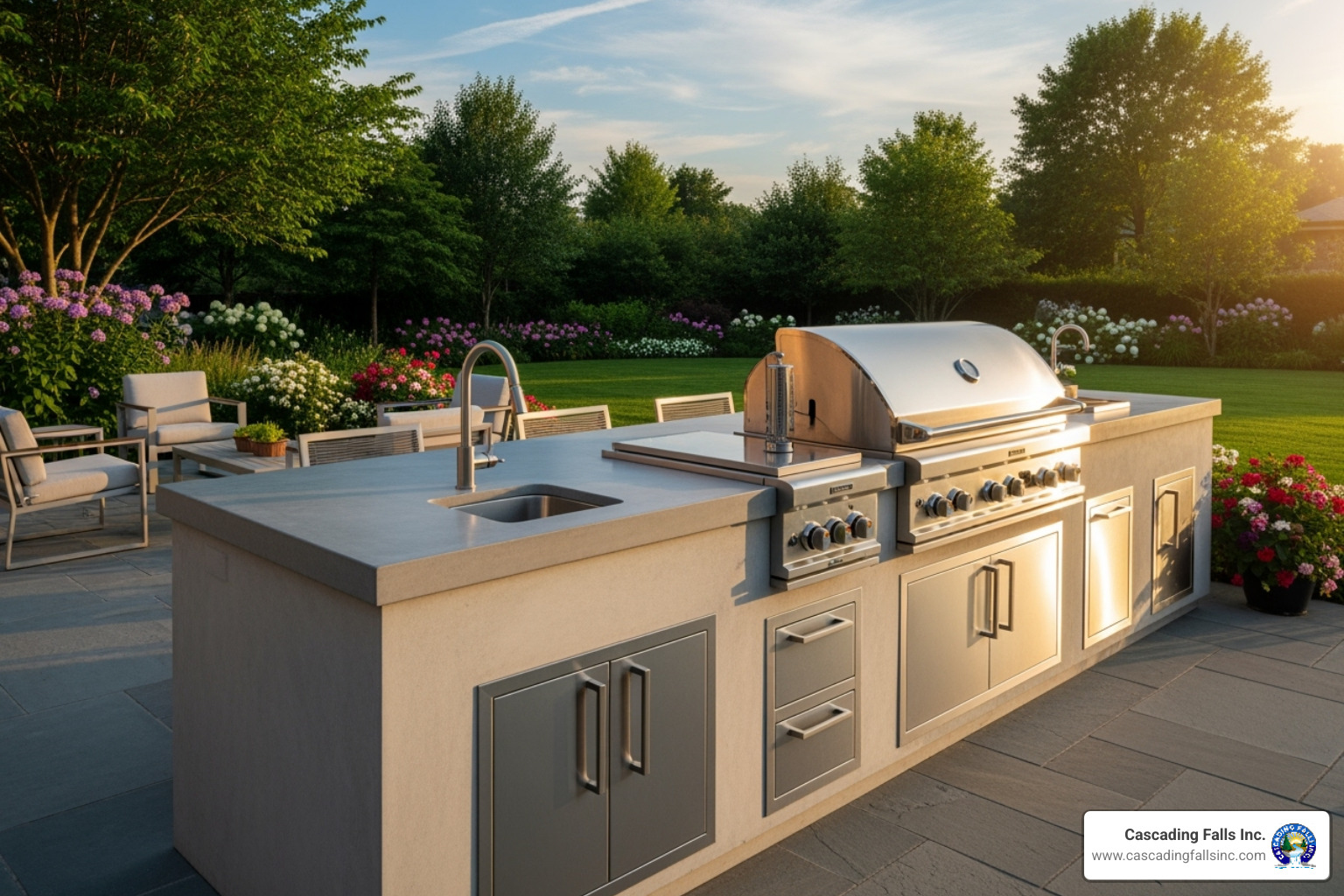
With the structure complete, it's time to bring your outdoor kitchen to life with appliances, lighting, and other finishing touches that make the space safe and inviting.
Best Practices for Appliance Selection
The golden rule is to always choose outdoor-rated appliances. Indoor units are not built to withstand humidity, temperature swings, and UV rays. Look for the UL rating for outdoor use.
- Grill: This is the centerpiece. Gas grills offer convenience, while pellet grills provide smoky flavor. Kamado and charcoal grills are favorites for their heat retention and authentic taste.
- Side Burners & Griddles: These expand your cooking capabilities, allowing you to prepare sauces or breakfast outdoors.
- Refrigeration & Sinks: An outdoor refrigerator and sink are essential for a true kitchen experience, keeping ingredients and drinks cold and cleanup simple.
- Storage: Stainless steel drawers are a must for durability. Consider specialized drawers for trash, propane tanks, or pellets to keep your space organized and clean.
Pro Tip: Triple-check the manufacturer's cutout dimensions for each appliance before you build the frame to avoid costly mistakes.
Safety First: Ventilation and Clearances
Safety is non-negotiable.
- Insulated Grill Jackets: These are mandatory for kitchens built with combustible materials like wood. They shield the structure from intense heat and prevent fires.
- Ventilation: Proper airflow is critical for gas appliances. Install vent panels every 4-6 feet. Place them high for natural gas (which rises) and low for propane (which sinks).
- Clearances: Maintain a 10-foot clearance between your grill and any combustible structures like your house, fences, or deck.
- Appliance Placement: Never place a refrigerator directly next to a grill. The heat will force the fridge to overwork, leading to premature failure.
- Fire Safety: Keep a fire extinguisher nearby and ensure all electrical outlets are GFCI protected.
Incorporating Lighting and Ambiance
Good lighting transforms your kitchen into a magical evening space.
- Task Lighting: Use bright, focused lights over prep and cooking areas for safety.
- Ambient Lighting: String lights, lanterns, or uplighting create a welcoming atmosphere.
- Safety Lighting: Illuminate pathways and steps to prevent trips.
An overhead structure like a pergola or retractable awning provides shade and an anchor for lighting. Arrange seating to encourage conversation, with options like a dining table or bar seating at the island. Final touches like weather-resistant furniture and planters make the space feel like a true extension of your home.
Frequently Asked Questions about Building an Outdoor Kitchen
Here are answers to the most common questions we receive about building an outdoor kitchen.
How much does it cost to build an outdoor kitchen?
Costs vary widely based on your vision. A simple DIY setup for how to build an outdoor kitchen might cost $800 (plus appliances), while most projects fall between $5,000 and $15,000. High-end custom installations can exceed $30,000. The main cost drivers are materials, appliances, and whether you DIY or hire professionals. Despite the cost, an outdoor kitchen is a great investment, with a typical ROI of 55-200% and priceless lifestyle benefits.
What are the best materials for an outdoor kitchen to withstand weather?
Durability is key. For frames, choose non-combustible materials like steel, cinder block, or brick. For countertops, granite is the top choice for its heat resistance and durability. Concrete and outdoor-rated porcelain tile are also great options. For cladding, stone veneer, brick, and stucco offer excellent weather protection and low maintenance. Our experts in Concrete countertops by Cascading Falls Inc. and Stonework by Cascading Falls Inc. can help you choose materials that last.
Can I build an outdoor kitchen myself?
Yes, if you have moderate to advanced construction skills. A skilled DIYer can handle the site prep, framing, cladding, and appliance installation, often over two weekends. However, always hire licensed professionals for utility connections. This includes all gas, electrical, and plumbing work. It is essential for safety, code compliance, and protecting your home. This hybrid approach allows you to save on labor while ensuring the most critical parts are done safely and correctly.
Your Dream Outdoor Kitchen Awaits
You now have a complete roadmap for how to build an outdoor kitchen, from initial planning to the final, rewarding touches. This project is about more than just a high return on investment of 55-200%; it's about creating a space for family gatherings, celebrations, and quiet evenings under the stars.
Your success hinges on three principles: start with a solid plan, choose durable materials, and never compromise on safety. Whether you build a simple linear kitchen or a full U-shaped design, materials like steel frames, granite countertops, and stone veneer will ensure your investment lasts for decades. Safety measures, especially hiring licensed professionals for utility hookups, are what make your outdoor oasis secure.
For complex projects in the Roseville and Sacramento areas that demand custom concrete work and seamless landscape integration, the experts at Cascading Falls Inc. bring decades of experience. Our "Whatever It Takes..." philosophy means we craft outdoor experiences that become the heart of your home.
Ready to transform your backyard? Explore our Landscaping Services to get started on the outdoor living space you've always imagined.