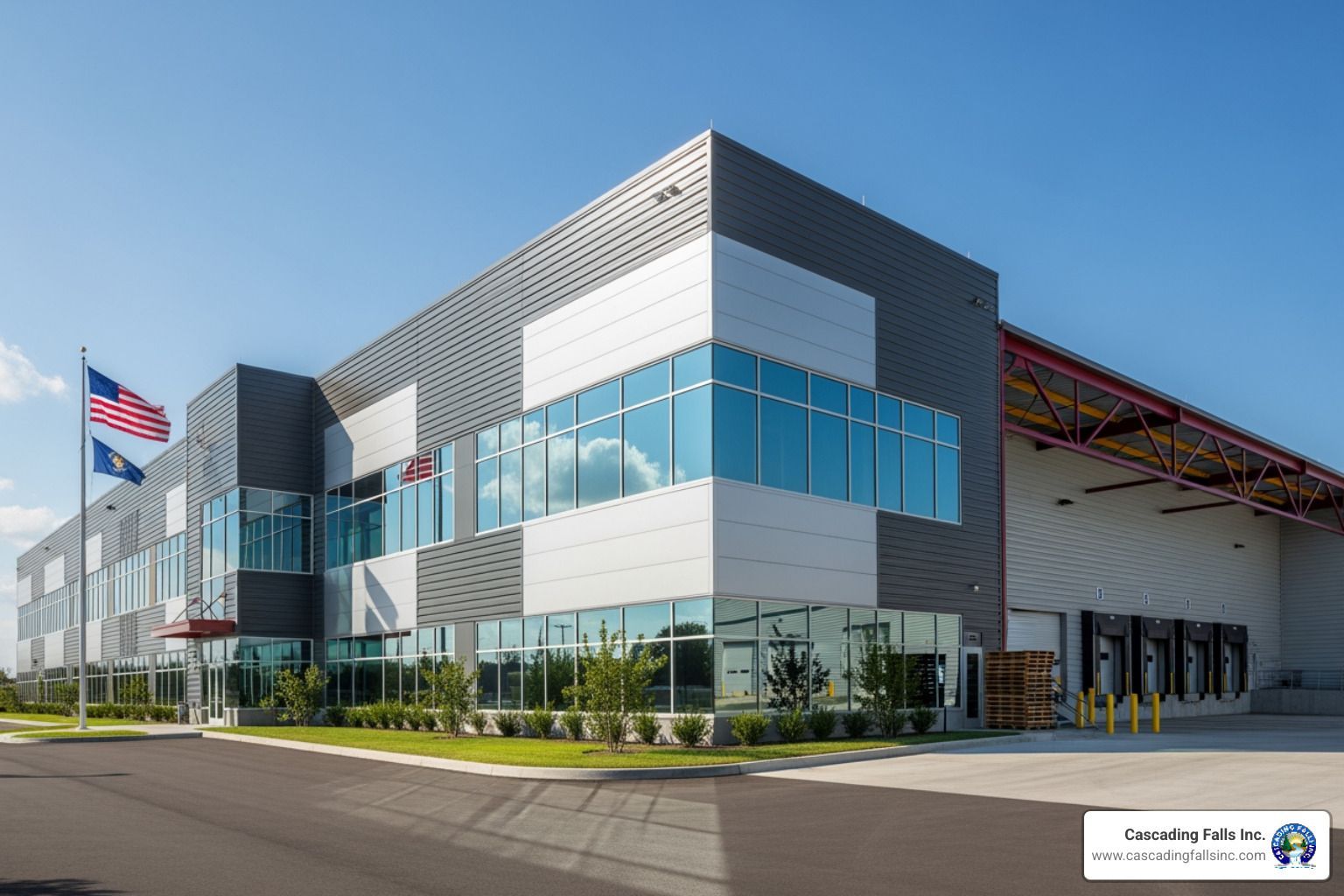
Why Aircraft Hangar Construction Demands Careful Planning
Aircraft hangar construction is a specialized process requiring careful coordination of design, materials, and regulatory compliance to protect high-value aircraft and support maintenance operations. Far more than just "garages for airplanes," these structures range from simple shelters to complex, climate-controlled maintenance facilities with massive clear-span designs.
Key Phases of Aircraft Hangar Construction:
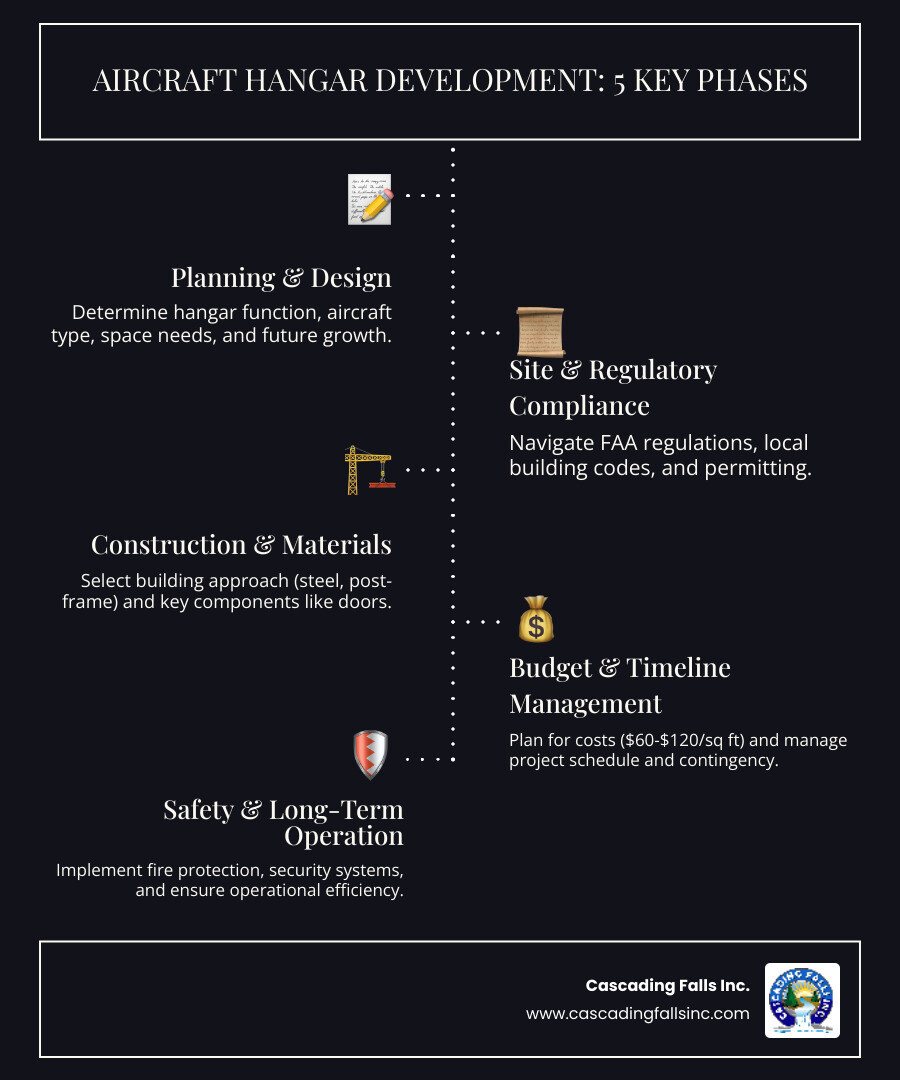
- Planning & Design- Determine hangar type, aircraft requirements, and space needs.
- Site & Regulatory Compliance- Steer FAA regulations, local codes, and permitting.
- Construction & Materials- Select a building approach (steel-frame, post-frame, or custom).
- Budget & Timeline Management- Plan for costs ranging from $60-$120 per square foot.
The process involves unique challenges. Structural engineering must accommodate clear spans of up to 300 feet, and specialized hangar doors can cost $15,000 to $30,000 each. Fire protection must adhere to strict NFPA 409 standards, and electrical systems are designed for hazardous locations. A standard 15,000-square-foot hangar can cost between $900,000 and $1,800,000, while large commercial facilities can exceed $8 million.
Successful projects also account for operational needs like maintenance shops, parts storage, and office space, with annual upkeep costing $5,000 to $15,000. With nearly two decades in construction, I'm David Shelly, and my experience in aircraft hangar construction has shown that expertise in structural engineering, regulatory compliance, and long-term planning is non-negotiable from day one.
Phase 1: Planning and Design Essentials
Before breaking ground on any aircraft hangar construction project, you must define its purpose. What aircraft will it house? What maintenance operations will occur? And critically, how will you accommodate future growth? Planning for a slightly larger hangar than currently needed is often a smart long-term financial move, preventing costly expansions later.
Hangar Types and Their Purpose
Choosing the right hangar type is fundamental to your budget and operational efficiency.
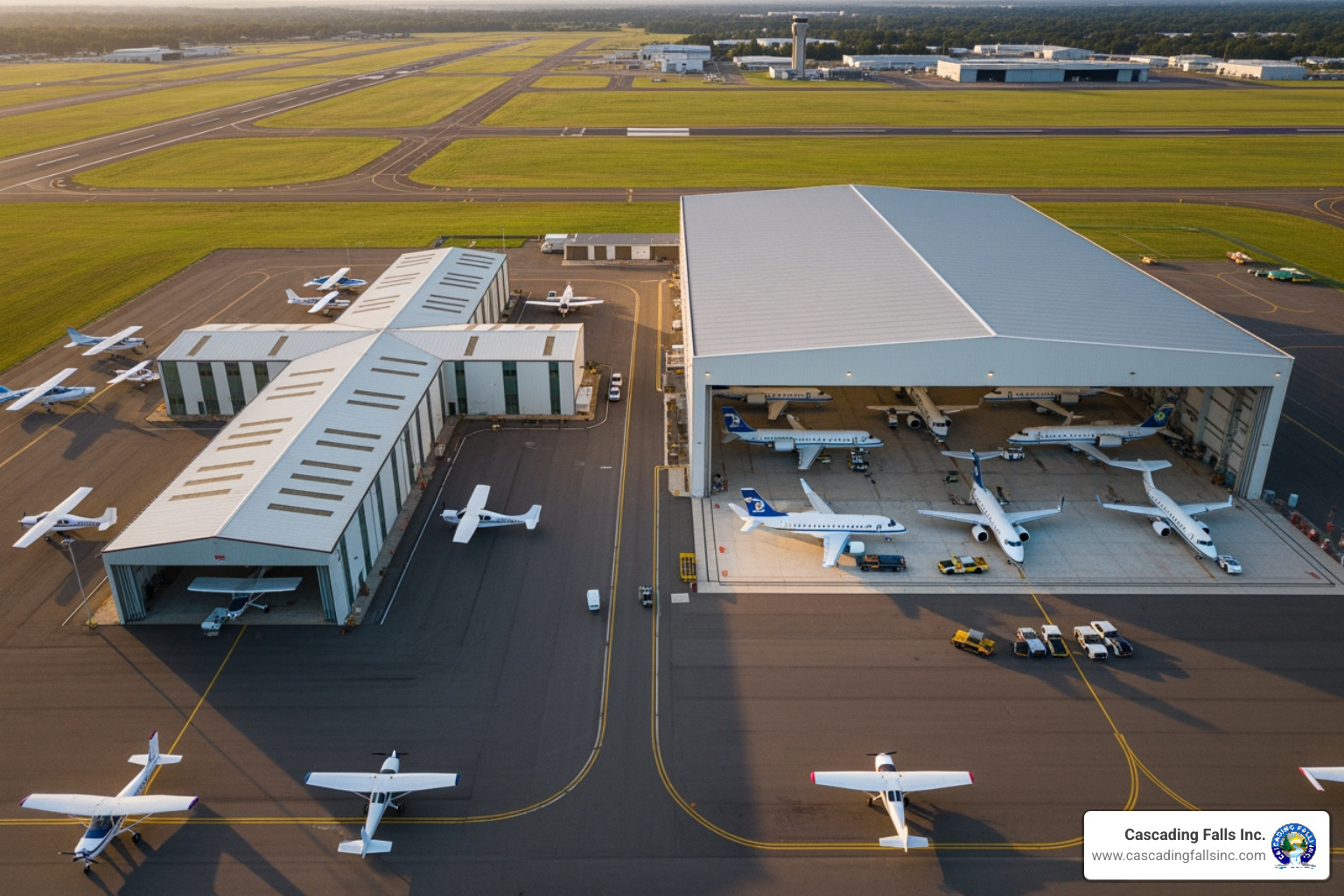
- Box hangars are versatile, rectangular structures for one or more aircraft. A standard 15,000 sq. ft. box hangar costs between $900,000 and $1,800,000.
- T-hangars use a nested "T" shape to maximize space for smaller, single-engine aircraft, making them a cost-effective choice for individual owners at $50 to $100 per square foot. Their shape can limit maintenance work.
- Executive hangars are designed for corporate jets and often include offices, lounges, and dedicated maintenance areas. These facilities typically cost between $1 million and $3 million.
- Maintenance, Repair, and Overhaul (MRO) facilities are the most complex, built for multiple commercial or military aircraft. Costs for these large-scale operations can range from $2 million to over $8 million.
- Nested T-hangars are a variation that further optimizes space for multiple small aircraft.
Your choice directly impacts workflow. A box or executive hangar allows for comprehensive maintenance, while a T-hangar is better suited for storage and basic inspections.
Key Design and Space Considerations
Detailed planning must account for the specific aircraft being housed.
- Aircraft dimensions(wingspan, tail height, length) dictate the hangar's size and, crucially, the clear opening for hangar doors. Manufacturers like Boeing provide facility planning criteria.
- Turning radius is essential for safe maneuvering of aircraft by tow vehicles, impacting both apron and internal layout design.
- Minimum separation distances between aircraft and walls are often regulatory requirements for safety during movement and maintenance.
- Ancillary spaces are vital for operations. Plan for a shops area for specialized repairs, a warehouse for parts and equipment, and office space for staff. A common guideline is 175 to 250 square feet of office space per person, according to Office Finder. A dedicated utilities area is also necessary.
Start by identifying the aircraft and maintenance functions, then use scale templates to optimize the layout and ensure every square foot is functional.
Emerging Trends in Hangar Design
Aircraft hangar construction is evolving to meet new demands.
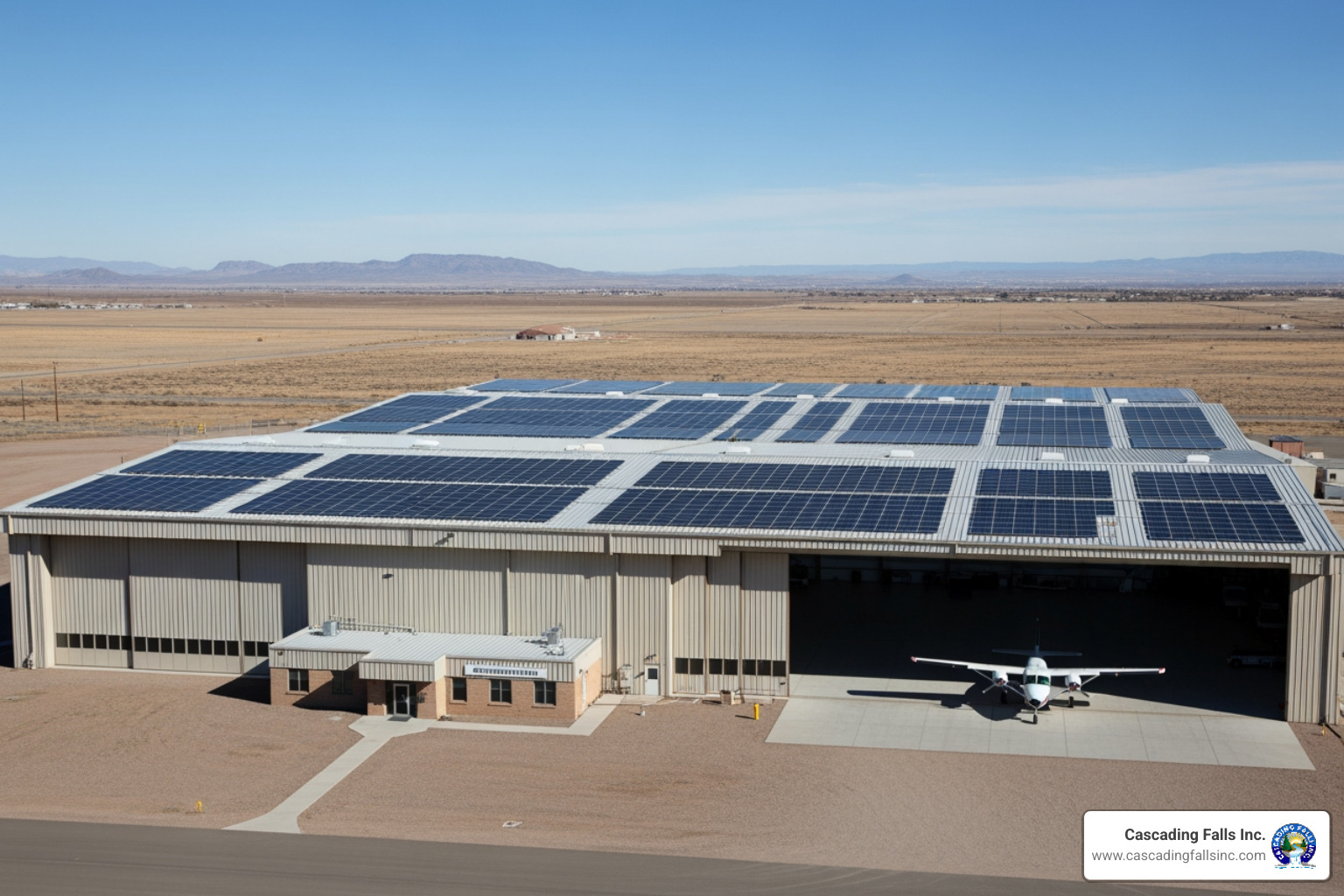
- Sustainable design is now a priority, with features like solar panels, natural lighting, and energy-efficient HVAC systems reducing long-term operational costs. Some projects even achieve LEED certification.
- Energy efficiency is critical. Quality insulation, like that found in post-frame hangars with wood framing, offers superior thermal performance and condensation control compared to uninsulated steel.
- Next-generation aircraft are larger and heavier, requiring designs with greater clear spans, higher tail clearances, and stronger foundations to ensure future-proofing.
- Composite material repair for modern aircraft requires specialized, environmentally controlled clean rooms and lab-like spaces within the maintenance facility.
Phase 2: Construction Approaches and Key Components
With a solid plan, the aircraft hangar construction phase begins. This involves selecting the right construction method and materials and integrating critical components like hangar doors and utilities.
Comparing Construction Approaches
Your choice of construction method impacts cost, timeline, and long-term performance.
- Steel-Frame Construction: Popular for large hangars, steel offers a high strength-to-weight ratio, enabling clear spans of up to 300 feet. It is robust and weathertight.
- Post-Frame Construction: Often used for smaller hangars, this method provides excellent natural insulation and condensation control due to its wood framing, making it highly energy-efficient.
- Pre-fabricated Metal Buildings: Engineered off-site and assembled on location, these offer faster construction and lower costs, especially for standard designs.
- Custom-Built Structures: For unique operational needs or specialized aircraft, a custom build offers complete design flexibility at a higher initial cost.
Here's a quick comparison:
| Feature | Steel-Frame Construction | Post-Frame Construction |
|---|---|---|
| Typical Span | Very large clear spans (up to 300 feet) | Moderate clear spans (often up to 80 feet for doors) |
| Insulation | Can be challenging to insulate efficiently (thermal conductor) | Excellent natural insulation; better condensation control |
| Cost | Varies, often higher for very large spans | Can be competitive, especially for smaller to medium sizes |
| Durability | Highly durable, robust | Very durable, especially with modern materials and techniques |
| Construction Speed | Efficient, especially with pre-engineered components | Can be very efficient, especially for smaller structures |
Essential Building Materials for your Aircraft Hangar Construction
Material selection is critical for longevity and safety.
- Steel: The cornerstone of most hangars, steel provides the strength for massive clear spans. Prices can range from $30 to $100 per square foot.
- Wood Framing: Used in post-frame construction, treated wood offers natural insulation and durability.
- Concrete Foundations and Slabs: A robust foundation is non-negotiable. Concrete slabs must withstand heavy aircraft loads and are sloped (0.5% to 1.5%) for drainage. Floors often have a reflective, fuel-resistive resinous coating.
- Insulated Panels: Wall and roof panels are key for energy efficiency and climate control, reducing long-term heating and cooling costs.
- Durable Roofing: Custom-engineered roofing systems like Galvalume or Standing Seam are vital for weather protection and often come with long-term warranties.
The Critical Role of Hangar Doors
Hangar doors are complex, engineered systems that are crucial to functionality.
- Bi-fold Doors: These doors fold upwards and are known for their reliability. Costs can range from $15,000 to $30,000 each.
- Hydraulic Doors: A single leaf lifts upwards, providing a wide, unobstructed opening ideal for larger aircraft.
- Sliding Doors: These doors slide horizontally and require significant side clearance for the panels to stack.
- Accordion Doors: Multiple panels fold or stack as they open, suitable for various opening sizes.
When selecting doors, consider aircraft size (clear opening height and width), available building clearance, cost, structural support requirements, and operational needs like opening speed.
Phase 3: The Financial Flight Plan: Budgeting for Aircraft Hangar Construction
Building an aircraft hangar construction project is a major financial undertaking. A clear budget is essential for success. As a baseline, expect costs between $60 to $120 per square foot. This means a 15,000 sq. ft. hangar could range from $900,000 to $1,800,000, while a large 20,000+ sq. ft. facility for jets can cost $2 million to $8 million.
Location is a major cost driver. Land acquisition in California markets like Roseville or Sacramento can range from $50,000 to $500,000. Poor soil conditions or a lack of nearby utilities will also increase site development costs.
Detailed Cost Breakdown for your Aircraft Hangar Construction
Understanding the budget components helps you make smart decisions:
- Material Costs: Steel, concrete, roofing, and insulation form the bulk of your expenses. Steel prices can fluctuate from $30 to $100 per square foot.
- Labor Costs: Budget $20 to $50 per square foot for skilled workers who understand hangar construction specifics.
- Utility Installation: Electrical, HVAC, and plumbing can run from $20,000 to $100,000. Electrical work alone often accounts for 10-20% of the total construction budget.
- Design and Engineering Fees: Expect to pay 10-15% of total construction costs for professional plans that ensure safety and code compliance.
- Permits and Regulatory Compliance: Allocate $5,000 to over $30,000 for approvals from local authorities and adherence to FAA regulations.
- Custom Features: Specialized hangar doors ($15,000-$30,000 each), security systems, and other amenities can add $15,000 to $100,000 or more.
Budget Planning and Cost-Saving Strategies
Smart planning prevents cost overruns. Start with a comprehensive budget and always include a contingency fund of 10-15% for unexpected issues. Also, plan for long-term maintenance, which typically costs $5,000 to $15,000 annually.
To save money without sacrificing quality, consider these strategies:
- Standardized Designs: Pre-engineered metal building components reduce design costs and construction time. As specialists in metal buildings, we at Cascading Falls Inc. can help you find efficient and durable solutions.
- Strategic Purchasing: Timing material purchases during off-peak seasons can sometimes yield discounts.
- Pre-fabrication: Pre-fabricated steel buildings offer quicker assembly and lower overall costs while maintaining the necessary strength and clear-span capabilities.
Viewing your hangar as a long-term investment in quality construction pays dividends in lower maintenance and higher reliability for decades. That's the "Whatever It Takes..." approach we bring to every project.
Phase 4: Navigating Regulations and Ensuring Long-Term Safety
The final phase of aircraft hangar construction involves navigating complex regulations and implementing robust safety systems. This is the critical pre-flight check for your facility, ensuring the protection of your aircraft, your personnel, and your investment.
Regulatory and Compliance Requirements
Adhering to codes is non-negotiable. Key regulations include:
- International Building Code (ICC IBC): This forms the basis for most local California building codes, covering structural integrity, fire safety, and general construction practices.
- Local Zoning Laws: Municipalities like Sacramento and Roseville have specific rules for location, height, and land use. We work with local experts to ensure smooth project approval.
- FAA Regulations: The FAA's guidelines influence clear zones, obstruction lighting, and operational safety, especially for hangars at federally funded airports.
- Environmental Regulations: Depending on the project, assessments for stormwater management and hazardous material storage may be required.
The permitting process can cost between $5,000 and $30,000+ and take several weeks to months.
Fire Protection and Safety Systems
Given the presence of aircraft and fuel, fire protection is paramount.
- NFPA 409 (Standard on Aircraft Hangars): This is the definitive guide, categorizing hangars and specifying fire protection requirements. Most hangars require systems using water mixed with Aqueous Film Forming Foam (AFFF), delivered via overhead sprinklers or water cannons.
- NFPA 70 (National Electrical Code®): Hangar spaces are often classified as hazardous areas, requiring specially rated electrical equipment (e.g., NEMA Type 4) to prevent ignition of flammable vapors.
- NFPA 101 (Life Safety Code): This code governs emergency egress, ensuring everyone can exit safely via properly designed exits and emergency lighting.
Security and Operational Safety
Beyond fire protection, a comprehensive safety plan is essential.
- Physical Security: Measures like perimeter fencing, access control systems, surveillance cameras, and adequate lighting are vital to protect high-value assets. Anti-terrorism and force protection standards may apply to some facilities.
- Access Control: Limiting and monitoring who enters the hangar is fundamental to security.
- Foreign Object Debris (FOD) Prevention: Rigorous jobsite cleanliness and worker training are critical to prevent debris from causing catastrophic damage to aircraft engines, especially when working near active flight lines.
At Cascading Falls Inc., our "Whatever It Takes..." approach means we never compromise on safety. We bring this commitment to every aircraft hangar construction, concrete, or metal building project.
Frequently Asked Questions about Aircraft Hangar Construction
Here are answers to some of the most common questions we receive about aircraft hangar construction.
What is the average cost to build an aircraft hangar?
Costs vary widely, but a typical range is $60 to $120 per square foot. A smaller 5,000 sq. ft. hangar might cost between $500,000 and $2 million, while a large 20,000+ sq. ft. facility can range from $2 million to $8 million. The final price depends on key factors like size, location (land costs in Roseville or Sacramento can be significant), materials, and included amenities like HVAC systems or office build-outs. Don't forget to budget for hangar doors ($15,000-$30,000 each), permits ($5,000-$30,000+), and a contingency fund of 10-15% for unexpected costs.
How long does it take to build an aircraft hangar?
A realistic timeline for a typical aircraft hangar construction project, from initial concept to completion, is twelve to twenty-four months. This can be longer for more complex, custom-built facilities. The timeline breaks down into several phases:
- Planning and Design: 3-6 months, depending on complexity.
- Permitting: This can be a variable, taking anywhere from a few weeks to several months.
- Site Preparation & Foundation: Several weeks to a few months.
- Construction: 3-6 months for a pre-fabricated metal building, or 9-18+ months for a large, custom structure.
What are the most important factors when choosing a hangar door?
Choosing the right hangar door is critical for operational efficiency and safety. Consider these key factors:
- Aircraft Size: The door's clear opening must safely accommodate the wingspan and tail height of your largest aircraft.
- Available Clearance: The building site dictates the feasibility of certain door types. Sliding doors need side room, while bi-fold and hydraulic doors need vertical clearance.
- Operational Needs: Consider opening speed for busy facilities and maintenance requirements for long-term planning.
- Structural Integrity: The door must have a proper wind load rating for your location, and the hangar frame must be engineered to support the door's weight and forces.
- Lifecycle Cost: Balance the initial purchase price against long-term durability and maintenance costs. A more expensive but reliable door can be more economical over the life of the hangar.
Conclusion
Building an aircraft hangar is a complex undertaking that creates a safe, functional home for high-value assets. From initial design and navigating FAA regulations to selecting the right construction materials and fire protection systems, every step demands expertise. As we've covered, aircraft hangar construction involves balancing costs, which can range from $60 to $120 per square foot, with long-term functionality and safety.
Here at Cascading Falls Inc., we understand the unique challenges of these projects. Our experience with metal buildings and concrete foundations in the Roseville and Sacramento areas provides the expertise needed to bring your vision to life. Our "Whatever It Takes..." philosophy is our commitment to quality workmanship and customer satisfaction, ensuring your investment stands the test of time.
Whether you're in the early planning stages or ready to break ground, we're here to help build a facility that exceeds your expectations.